Tour planners are capitalizing on America250 with engaging itineraries that transform the nation’s past into unforgettable group adventures
By Randy Mink
Historical attractions have always been a staple in group itineraries, but America250 celebrations sweeping the nation have renewed interest in the nation’s past, sparking the imaginations of tour planners.
Download the August Leisure Group Travel Edition and Subscribe to the Newsletter for FREE
Savvy organizers are capitalizing on the semiquincentennial, marketing packages that shine a light on American history. Spotlighting chapters that run the gamut from colonial days to the not-so-distant past, they’ve found ways to make heritage travel fun as well as educational. Museums, monuments, memorials, historic homes, battlefields, special events. All can be part of a tour product that is both enlightening and entertaining.
History museums have gone beyond musty, dusty glass cases and text-heavy walls, though old-school repositories are still around. More museums these days are truly state-of-the-art, offering touchscreens and other hands-on features, video theaters, stunning dioramas, larger-than-life photos, and chunks of text that are easy to digest.
In Philadelphia, the National Constitution Center brims with high-tech exhibits that bring to life our country’s guiding document. In a bowl-shaped theater with wraparound video walls, a 20-minute performance of “Freedom Rising” sets the stage for the museum experience as a live narrator and dramatic voiceovers, along with inspirational symphonic music and a multimedia display of images, tell the story of the U.S. Constitution. In Signers’ Hall, you can mingle with 42 life-size bronze statues of the Founding Fathers present at the Constitution’s signing on September 1, 1787.
Making the Most of a Museum Visit
Many museums offer an orientation movie, a good choice for beginning a visit. The overview puts things in focus and sets the stage for exploring the galleries.
A group visit can be enhanced with a behind-the-scenes session, an option offered by some museums. At the Buffalo Bill Center of the West in Cody, Wyoming, groups can book a private tour tailored to their interests and gain special access to artifacts not on display.
It’s wise to do some research ahead of time to scout out special museum features or check on temporary exhibitions that may be there during your visit.
For those who don’t mind noise and dark places, a must-do at Gettysburg Beyond the Battle Museum is “Caught in the Crossfire,” an immersive experience that puts guests in a typical home when gunfire, artillery shelling, and chaos came to the doorsteps of Gettysburg residents in early July 1863.
At train museums, such as the Galveston Railroad Museum in Texas, the National Transportation Museum in St. Louis, and the Georgia State Railroad Museum in Savannah, guests can ride in a vintage passenger car as well as view memorabilia and rolling stock.
Open-Air Museums
Open-air museums make history come alive, as walking among a collection of antique-filled buildings can be an attractive alternative to perusing exhibits inside the four walls of a traditional museum. It adds an extra dimension to the experience.
Costumed interpreters bring yesteryear to life at premier living history villages such as Indiana’s Conner Prairie, Virginia’s Colonial Williamsburg and Jamestown Settlement, and Old Sturbridge Village and Plimoth Plantation in Massachusetts. The interaction with craftspeople and other town citizens makes for memorable visits.
At the 19th-century Shaker Villages in New Hampshire and Kentucky, guests get a genuine feel of how the industrious Christian communal group lived by peeking into their living quarters and workrooms. Other popular open-air museums include Old Trail Town, Cody, Wyoming; Old Cowtown Museum, Wichita, Kansas; and Farmers’ Museum, Cooperstown, New York.
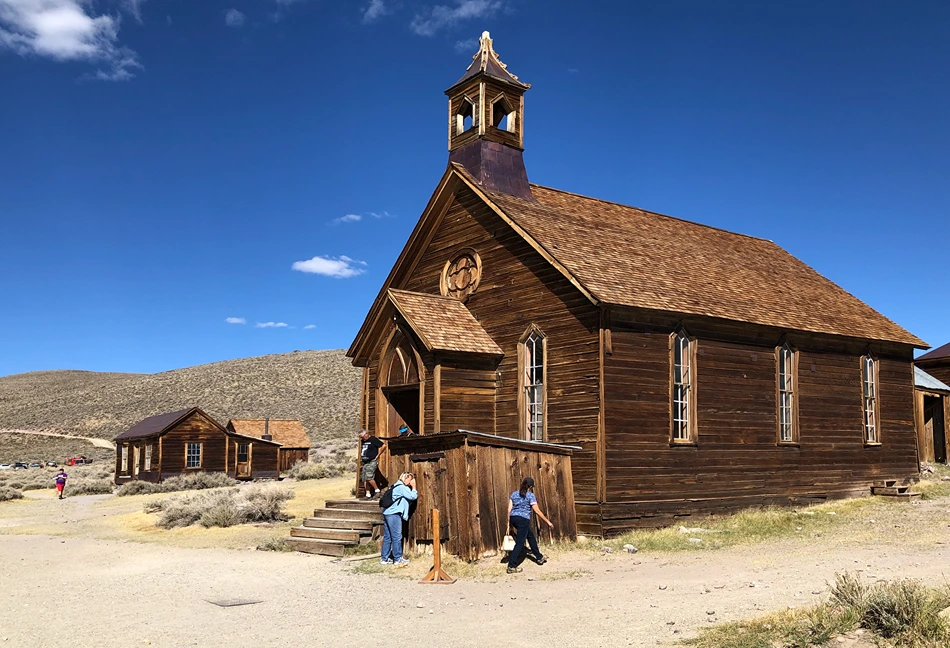
Ghost towns are a favorite with tour participants. Bodie State Historic Park, the site of California’s best Gold Rush-era ghost town, interprets what remains of a wild ’n’ woolly mining camp. On wide dirt paths, tourists pass weathered wooden houses and commercial buildings, including a saloon, hotel, and general store. They poke around a cemetery, inspect rusted vehicles and machinery, and peer through the windows of a schoolhouse, church, and jail.
Battlefield Re-enactments
To really engage travelers in military history, tour planners might schedule a battlefield stop on a weekend when a Revolutionary or Civil War re-enactment is being staged with rifles blazing and cannons booming. At Gettysburg National Military Park, tens of thousands of spectators attend the annual Battle of Gettysburg Re-enactment held around the Fourth of July. Guests can visit Union and Confederate camps, view artillery and cavalry demonstrations, and tour the farmhouse and barn that served as Confederate field hospitals. Each day ends in a full-scale battle scenario.
Download the August Leisure Group Travel Edition and Subscribe to the Newsletter for FREE
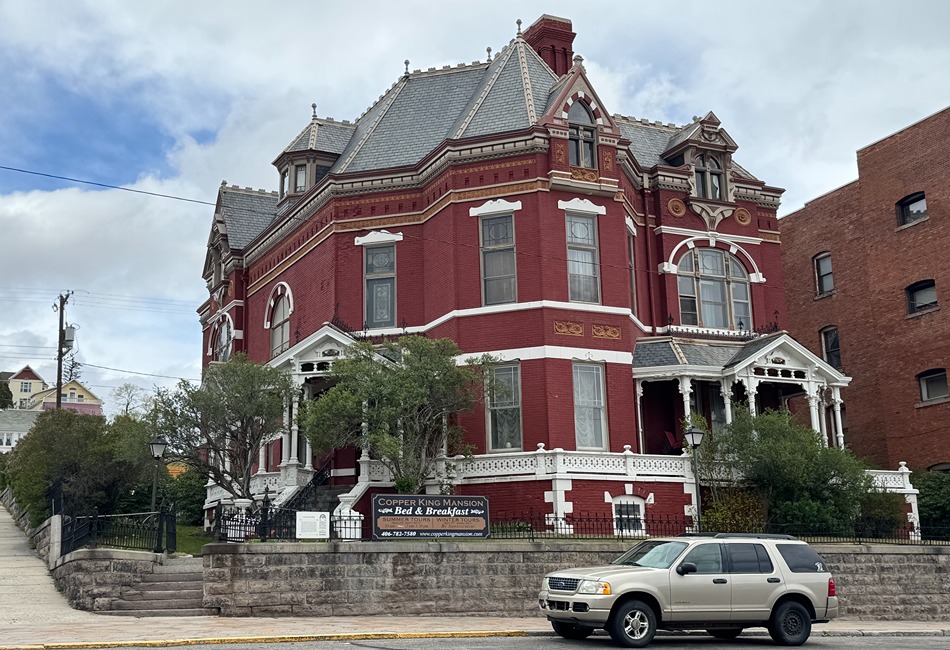
Copper King Mansion, Butte, Montana. (Randy Mink Photo)
Bedding Down with History
Travelers can immerse themselves in bygone days at a historic hotel or inn, an inviting alternative to a national chain property. Some antebellum mansions in the South double as museums and bed-and-breakfasts, lending a Gone With the Wind ambience. At the 1888 Copper King Mansion in Butte, Montana, overnight guests are free to explore the lavishly decorated public rooms at their leisure on a virtual trip back to Victorian times.
Hotel El Rancho in Gallup, New Mexico, lures nostalgia-seekers with rustic Western decor and movie lore from the days it served as a base camp for production crews during Hollywood’s Golden Age.
Classic lodges at national parks, such as Grand Canyon, Yosemite, Yellowstone, and Glacier, also evoke echoes from the past.
Recent History on Display
While many of America’s best-known museums focus on colonial days, pioneer life, wars, and other long-ago chapters in the American saga, some chronicle events that gallery-goers may remember when the history was being made.
Presidential libraries are good examples. Touring the William J. Clinton Presidential Library & Museum in Little Rock takes many of us back to the 1990s. Even more recent happenings surface at the new Barack Obama Presidential Center, which just opened in Chicago after years of delays.
For a look at mid-20th-century pop culture and the heyday of automobile travel, nothing beats reliving the glory days of Route 66, which is celebrating its centennial this year. Dozens of museums and attractions in eight states provide a nostalgia trip for those who recall the romance of road travel before the soulless interstates took over.
Not-so-happy recent events are showcased at places like the 9/11 Memorial & Museum in New York City, which revives painful memories of the day Middle Eastern terrorists crashed planes into the World Trade Center, Pentagon, and a field in Shanksville, Pennsylvania.
In the same vein, the Oklahoma City National Memorial & Museum captures the community spirit and resilience shown by Oklahomans as they grappled with their own tragedy, an event known as the Oklahoma City bombing. On-the-scene news reports, still photographs, and artifacts chronicle the devastation and carnage caused by a truck bomb that detonated outside the Alfred P. Murrah Federal Building on April 19, 1995. It was the deadliest homegrown terrorist attack on U. S. soil, claiming 168 lives and injuring 850.
The dark side of history is also told at prisons turned museums, where visitors are regaled with chilling tales of escapes, riots, executions, and life behind bars. Prominent examples are Alcatraz Island in San Francisco, Eastern State Penitentiary in Philadelphia, Old Montana Prison in Deer Lodge, and Old Joliet Prison in Illinois. Everyone is fascinated by criminal behavior.
Crafting a Well-Balanced Itinerary
The best itinerary combines historical sites with time for recreation and other activities—it’s not all history, history, history.
St. Augustine, Florida, for example, boasts 60-plus historic sites that could keep travelers busy for more than a week. But the United States’ oldest European-settled city, founded in 1565 by adventurers from Spain, offers lighter diversions, like the beaches and alligator farm on Anastasia Island.
In the Rocky Mountains of Southwest Montana, old mining towns such as Butte, Philipsburg, and Anaconda make great stopovers between Glacier and Yellowstone national parks, adding a historical element to a scenic road trip. You might schedule a sapphire mining session in charming little Philipsburg or an underground copper mine tour at World Museum of Mining in Butte. The “living ghost town” of Virginia City and its companion attraction, a mile away, the complex of restored pioneer buildings at Nevada City, claim the largest collection of Old West memorabilia outside of the Smithsonian. The Alder Gulch Shortline Railroad connects the two places.
The right itinerary makes history a lot more fun than book learning.
Lead photo – California’s Bodie State Historic Park, a Gold Rush ghost town. (Randy Mink Photo)
Download the August Leisure Group Travel Edition and Subscribe to the Newsletter for FREE