
How would you describe the current state of culinary tourism in the U.S.? Is demand growing, leveling off, or evolving in new ways?
Demand for culinary tourism in the U.S. is not just growing, it’s evolving from traditional food sightseeing into richer, experience-driven journeys shaped by culture, sustainability, social media influence, and travelers’ priorities.
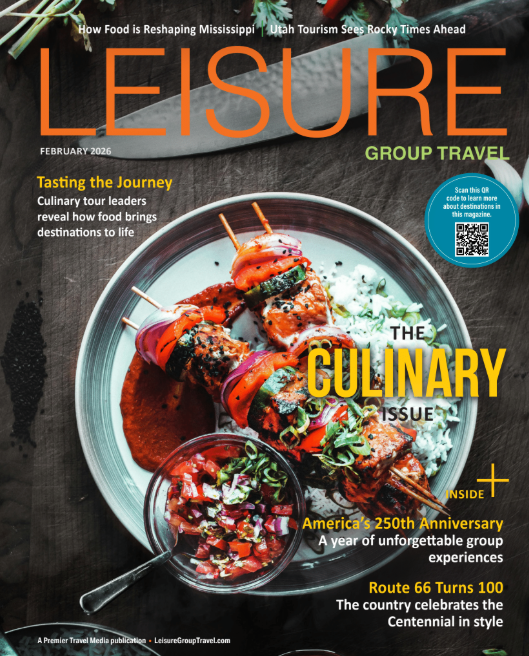
Start planning unforgettable trips, read the February edition, and subscribe for future updates.

Compared to five years ago, how have traveler expectations around food-focused tours changed?
Where travelers used to focus on well-known restaurants or headline attractions, expectations have shifted toward authenticity and storytelling: understanding food heritage, regional traditions, and the people behind the cuisine. Travelers want experiences that connect them deeply with local culture rather than just “touristy” menus.
Are travelers more interested in food as the primary reason for travel, or as an enhancement to a broader itinerary?
A much larger share of travelers treat food as a central dimension of their itinerary, even if it’s not the sole reason for traveling. Around 60–80% consider food and drink key factors in choosing destinations, and many will go out of their way for authentic, local food experiences.
Are you seeing increased interest from first-time group travelers, solo travelers, or younger demographics?
Yes, interest is growing across the board, but especially among younger travelers. Solo travelers and first-time group participants are becoming more engaged with food-focused travel as offerings evolve to be more immersive, social, and experience-driven. Younger generations remain the strongest and most influential demographic shaping how culinarytourism evolves in the U.S. and globally.
 Are regional or hyper-local food experiences outperforming classic destinations like wine country?
Hyper-local and regional experiences are increasingly outperforming classic wine-centric culinary destinations in terms of traveler enthusiasm, cultural interest, and market momentum. Authenticity and local flavor are now core drivers of culinary travel decisions, often outweighing prestige or reputation alone. Classic destinations still matter, but everywhere the trend is toward local nuance rather than tradition for its own sake. In other words, the food tourism trend isn’t abandoning iconic places like wine country, but it is expanding well beyond them, as travelers chase stories, culture, and food that feels distinctively rooted in place.
What are the biggest operational challenges in running food-focused overnight tours today?
Operators often depend on third-party restaurants, producers, and chefs. Last-minute cancellations, quality variability, or unexpected closures can disrupt the itinerary and impact customer satisfaction. Maintaining consistent standards across food partners, especially when scaling or operating in rural/remote regions, is a major operational challenge.
Which U.S. regions or destinations are seeing the strongest growth in culinary? What culinary travel trends do you expect to shape group tours over the next 2–3 years?
Culinary tourism in the U.S. is diversifying geographically and experientially. While classic destinations like New York City remain widely popular, regional food gems and mid-size cities with distinct local flavors are gaining ground. The Eastern Shore will see the biggest growth in the culinary world. The Eastern Shore is a coastal, rural, and culturally rich region east of the Chesapeake Bay, spanning parts of Maryland, Virginia, andDelaware. Its culinary identity is tied to seafood, local farms, and maritime heritage, making it one of the U.S.’s emerging food-focused travel destinations. Over the next few years, group tours will increasingly revolve around immersive, story-rich, and sustainable food experiences thatgo beyond simply dining at well-known restaurants.
Start planning unforgettable trips, read the February edition, and subscribe for future updates.