The most compelling Native American sacred sites open to visitors are not all alike. Some are monumental earthworks, some are ancestral ceremonial landscapes, some are rock art sites, and some are places where Native traditions remain part of the present, not just the past. For travel planners, the most important starting point is respect: these are not simply attractions, but places that continue to carry cultural and spiritual meaning.
If your group wants a strong introductory route, six of the best-known public sites are Serpent Mound in Ohio, Cahokia Mounds in Illinois, Ocmulgee Mounds in Georgia, Medicine Wheel/Medicine Mountain in Wyoming, Crater Lake in Oregon, and Columbia Hills Historical State Park in Washington. Together, they show the range and depth of Indigenous sacred landscapes in the United States.
Serpent Mound
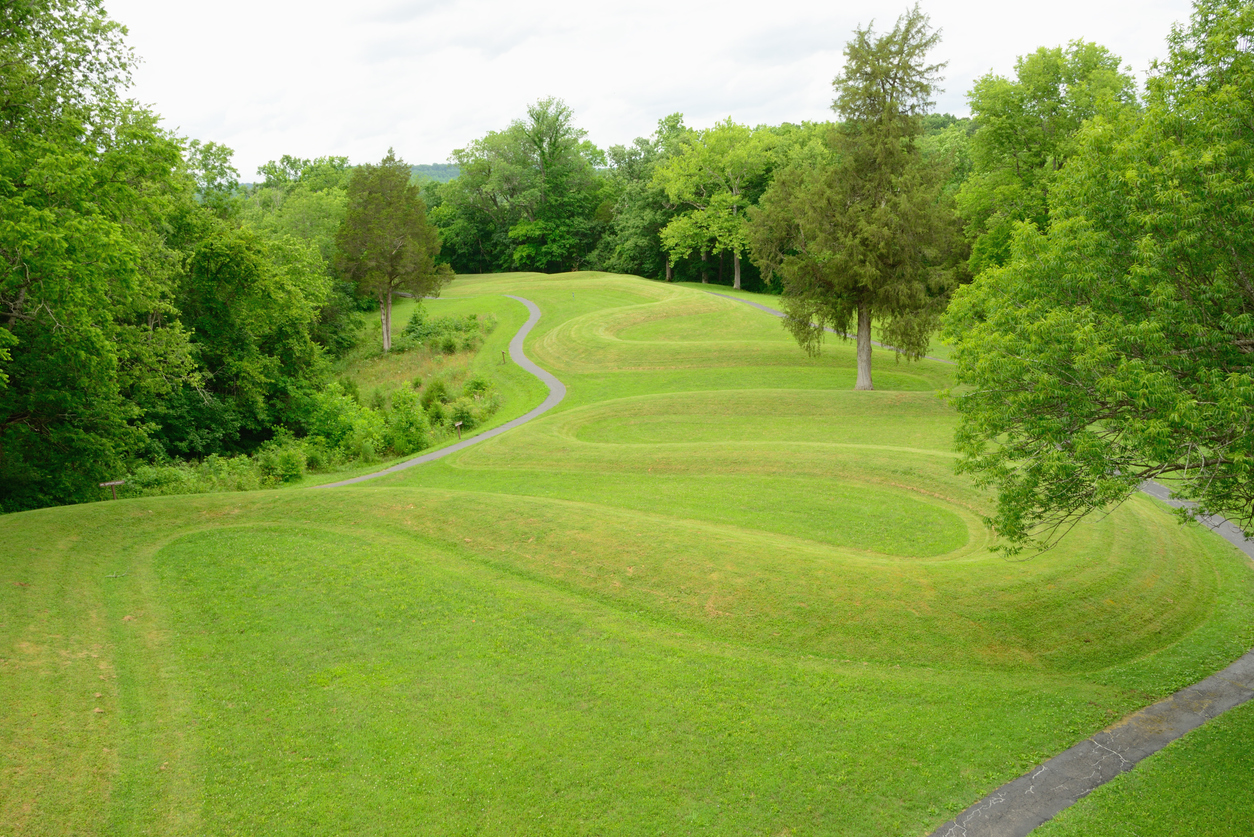
Serpent Mound in southern Ohio is one of the most recognizable Indigenous earthworks in North America. Ohio History Connection describes it as an internationally known National Historic Landmark built by the American Indian cultures of Ohio and identifies it as an effigy mound in the shape of a serpent. Nearby are three burial mounds, including two associated with the Adena culture and one with the Fort Ancient culture.
For group travelers, Serpent Mound works best as a place of observation and reflection rather than over-interpretation. Scholars continue to debate some aspects of its dating and meaning, which makes it wiser to focus on what is clear: its monumental form, its ceremonial significance, and its enduring importance in the story of Indigenous Ohio.
Cahokia Mounds State Historic Site
Cahokia Mounds is the largest pre-Columbian settlement north of Mexico and one of the most important archaeological landscapes in North America. UNESCO notes that it flourished primarily during the Mississippian period, covered nearly 1,600 hectares, and may have had a population of 10,000 to 20,000 at its peak.
Monks Mound is the site’s most visually commanding feature, but it is only one part of a much larger ceremonial and civic landscape. Cahokia’s official site also highlights Woodhenge, a reconstructed timber circle aligned with sunrise observations, which helps visitors understand the sophistication of the city’s planning and ritual life.
Ocmulgee Mounds National Historical Park
Ocmulgee Mounds in Macon is both an archaeological site and an ancestral homeland. The National Park Service describes it as a place with more than 12,000 years of continuous human habitation and identifies it as the ancestral homeland of the Muscogee (Creek) Nation.
One of the clearest highlights for visitors is the Earth Lodge, which the National Park Service describes as a reconstructed Mississippian council chamber. Inside is the original clay floor, dated to about the year 1015, making it one of the most powerful surviving interior spaces associated with Native ceremonial life in the eastern United States.
Medicine Wheel / Medicine Mountain
The Medicine Wheel / Medicine Mountain National Historic Landmark is not just a stone feature on a mountaintop. The U.S. Forest Service describes it as a major Native American sacred complex and archaeological property used by many different tribes from before Euro-American contact to the present day.
That broader framing matters. Rather than treating the wheel as an isolated curiosity, visitors should understand it as part of a larger sacred landscape that includes traditional use areas, associated sites, and ongoing ceremonial meaning. Because of that continuing significance, access and protection measures are part of the experience, not an inconvenience separate from it.
Crater Lake
Crater Lake is often approached as a natural wonder first, but the National Park Service makes clear that Native connections to this landscape go back to before the eruption of Mount Mazama roughly 7,700 years ago. Park materials also note that the lands remain important to affiliated tribes and that the lake and mountain are deeply embedded in Native oral tradition.
For that reason, Crater Lake belongs in a sacred-sites itinerary even though it is not a built religious monument. It is better understood as a spiritually significant landscape, one where geology, memory, and Indigenous tradition remain inseparable.
Columbia Hills Historical State Park
Columbia Hills Historical State Park preserves significant Native American rock art along the Columbia River. Washington State Parks highlights both petroglyphs and pictographs there, including the well-known Tsagaglalal, or “She Who Watches.”
This is also one of the clearest examples of why respectful access matters. Washington State Parks notes that some rock image sites in the park can only be visited through scheduled tours led by park staff in order to protect these fragile and sacred places. For group planners, that means advance coordination is part of responsible visitation.
These sites show that Native American sacred places in the U.S. cannot be reduced to one tradition or one type of destination. Some are ceremonial earthworks, some are ancestral homelands, some are sacred mountains or lakes, and some preserve images and meanings that are still culturally sensitive. The best itinerary is one that combines strong interpretation with humility, careful planning, and respect for the people to whom these places still matter most.
FAQ
What are the best Native American sacred sites to visit in the U.S.?
Some of the strongest public sites include Serpent Mound, Cahokia Mounds, Ocmulgee Mounds, Medicine Wheel/Medicine Mountain, Crater Lake, and Columbia Hills. They represent very different kinds of sacred and ceremonial landscapes.
Are Native American sacred sites the same as archaeological sites?
Not always. Some are archaeological sites, but many are also living cultural landscapes that remain spiritually important to Native communities today.
Can groups visit these sites respectfully?
Yes, but respectful visitation means following site rules, using guided access where required, and avoiding language or behavior that treats sacred places like entertainment venues.
Which site is best for understanding Native mound-building traditions?
Cahokia and Ocmulgee are especially strong for that purpose, while Serpent Mound offers a very different kind of earthwork in effigy form.
Why is Crater Lake included in a sacred-sites roundup?
Because its importance is not only scenic or geological. National Park Service materials make clear that the lake and surrounding lands carry longstanding Native cultural and spiritual significance.