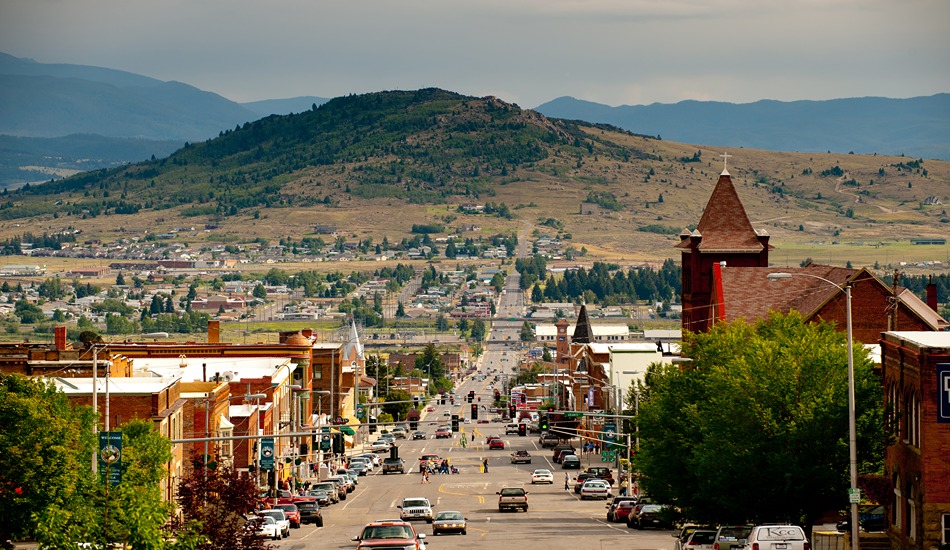
Extraction of copper brought great wealth and prestige to Butte, a mountain town filled with vestiges of the Old West and reminders of its Irish roots
By Randy Mink, Senior Editor
With my interests in history, architecture, antiques and the Gilded Age in particular, I am always ready to tour a grand Victorian home and often fantasize about living a life of wealth and privilege, lounging in the lap of luxury.
On a recent trip to Butte, an old copper mining town in the Rocky Mountains of Southwest Montana, those lofty dreams came true.
At the three-story, red-brick Copper King Mansion, in fact, I slept in the very bedroom of the original owner, one of the world’s wealthiest and most influential men in the late 1800s and early 1900s.
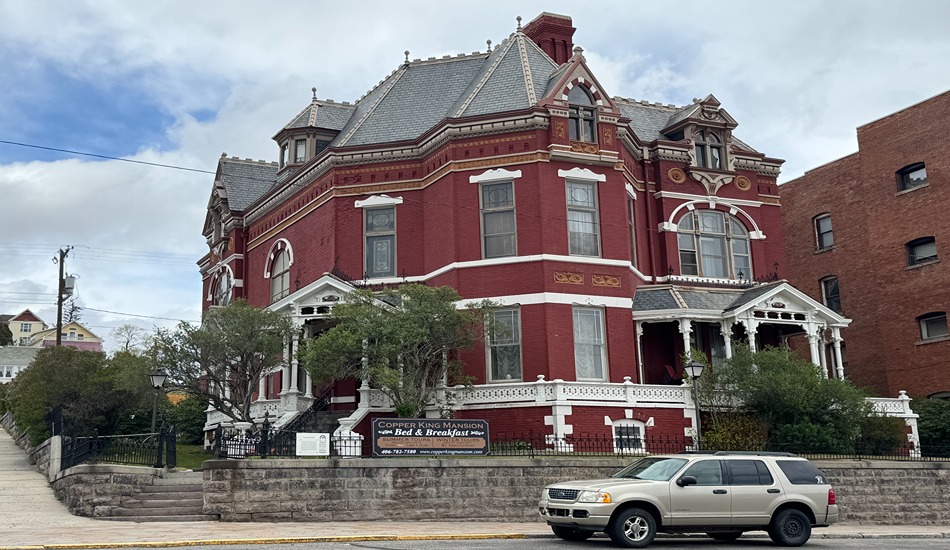
Butte’s Copper King Mansion, with its steeply sloping French mansard roof and dormer windows, is both a historic house museum and bed-and-breakfast inn hosting overnight guests. (Randy Mink Photo)
The mansion, completed in 1888, was the showplace of copper magnate/politician William Andrews Clark (1839-1925) and now operates as a house museum and bed-and-breakfast inn. Besides lucrative mines in Montana, Idaho, Wyoming and Arizona, his business endeavors included railroads, newspapers and electric power companies across the country, even a coffee plantation in Mexico. He represented Montana in the U.S. Senate from 1901-1907, and before statehood was president of Montana’s two constitutional conventions.
Though clearly in a league with super-rich Gilded Age industrialists like Rockefeller, Carnegie, Morgan and the Vanderbilts, W.A. Clark is virtually unknown today.
In Butte, the copper he mined from the “Richest Hill on Earth” was used in the wires being laid across newly electrified America. Butte, which began as a silver and gold mining camp, produced more than 21 billion pounds of copper from 1889 to 1982.
With more than 100,000 residents in its heyday, Butte (rhymes with “cute”) was among the biggest cities in the West, an oasis of culture. Its Broadway Theatre, one of many in town, claimed to be the largest west of Chicago.
Today’s city of 36,000 boasts one of the largest National Historic Landmark Districts and is a popular stop for road-trippers traveling between Yellowstone and Glacier national parks.
Butte Mine Sites Attract Tourists
Butte’s prime attraction is the World Museum of Mining, which offers walking tours through the retired Orphan Girl Mine. Led by a former miner, visitors don headlamp-equipped helmets as they venture 100 feet below ground.
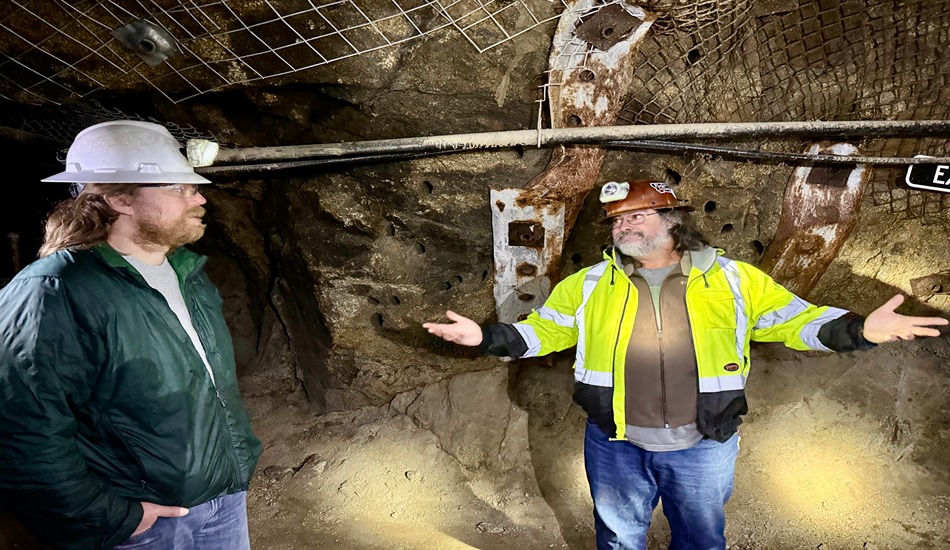
Former miners lead tours of the retired mine at World Museum of Mining in Butte, Montana. (Randy Mink Photo)
The museum complex, situated across from the campus of Montana Tech, features a mine yard filled with heavy equipment, ore carts, smelter cars and a towering headframe, the structure that supported massive pulleys used to hoist miners and machinery into and out of the ground. Historic buildings transplanted from other locations include a church and sauerkraut factory. Replica buildings, such as a dentist office and Chinese laundry, populate the streets of Hell Roarin’ Gulch, the museum’s recreated 1890s mining town.
Curiosity seekers will want to check out the viewing platform at the toxic Berkeley Pit, a massive scar on the landscape. Operated from 1955 until being shut down in 1982 because of falling copper prices, the former open-pit mine has filled with water contaminated with sulfuric acid and dissolved metals that give it a blue-green color. A threat to wildlife, the mile-long lake is a federal Superfund environmental disaster site that’s been undergoing a clean-up for years.
Touches of Ireland in Butte, Montana
Besides mining history, Butte takes pride in its Irish heritage. Nicknamed the Ireland of the Rockies, it puts on one of the West’s most famous St. Patrick’s Day celebrations. An Ri Ra, a Celtic cultural festival, takes place every August. Per capita, the city claims more people of Irish descent than any in America.
Butte’s Irish roots date back to the boom days when men emigrated from Ireland to work in the copper mines. Actually, people from all over Europe flooded into Butte—they came from Italy, Germany, Serbia, Croatia, Montenegro and other lands, establishing distinct ethnic neighborhoods and giving the town a multicultural vibe.
The spirit of Ireland overflows at Shawn O’Donnell’s American Grill & Irish Pub, a relatively new spot on North Main Street in Uptown, the historic downtown core. Its friendly host, a recent transplant from County Armagh, goes by Irish Johnny and quickly has become a fixture in the Butte community.
Pub guests enjoy Irish specialties like corned beef and cabbage, shepherd’s pie, fish & chips, Guinness beef stew, soda bread and colcannon potatoes (buttery garlic mashed potatoes with chopped cabbage.) As an appetizer, our group shared boxty, a traditional Irish potato pancake, and we raved about the Irish Bread Pudding with buttered rum sauce and currants. There’s a good selection of Irish beers and whiskeys. The decor features nods not only to Ireland but to Butte’s history and contributions of its fire and police departments.
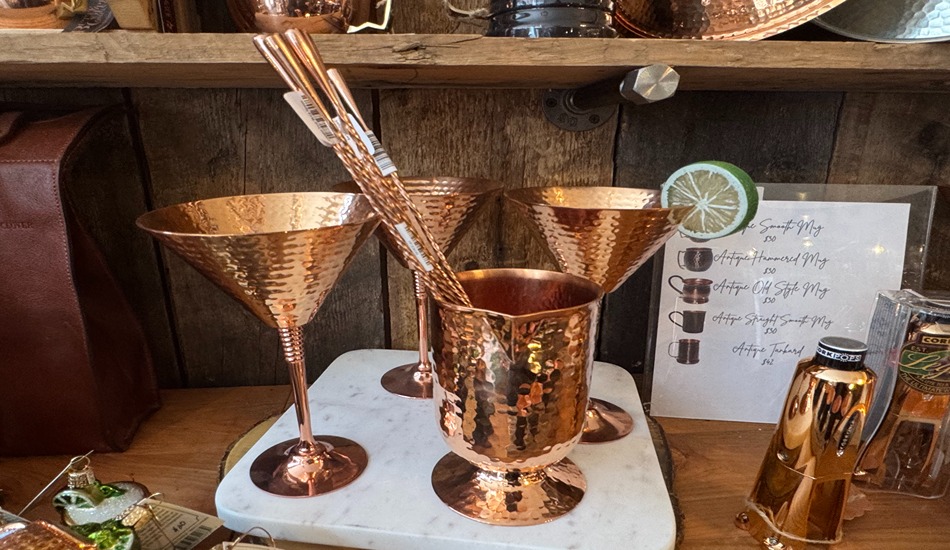
The Butte Copper Company offers a wide choice of merchandise—perfect mementoes of the famous copper mining city. (Randy Mink Photo)
Other Things To See and Do in Butte, Montana
Taking a walk from the Copper King Mansion to Uptown’s shopping district, I came upon Butte Copper Company and its stunning array of copper merchandise, from jewelry to cookware. I especially liked the gleaming copper martini glasses, wine goblets and beer steins.
A few blocks away, I found the Piccadilly Museum of Transportation, a treasure house of antique cars, advertising memorabilia and vintage license plates. As a collector of old metal signs and license plates, this was my kind of place. But it was open in the off-season only by appointment, so I couldn’t go in.
Spooks and Spirits Paranormal Tours offers a look at haunted Butte and its raucous past. Included in the tour is Dumas Brothel. Now a museum, the longest continuously running house of ill repute in U.S. history operated in the red-light district for 91 years before closing in 1982.
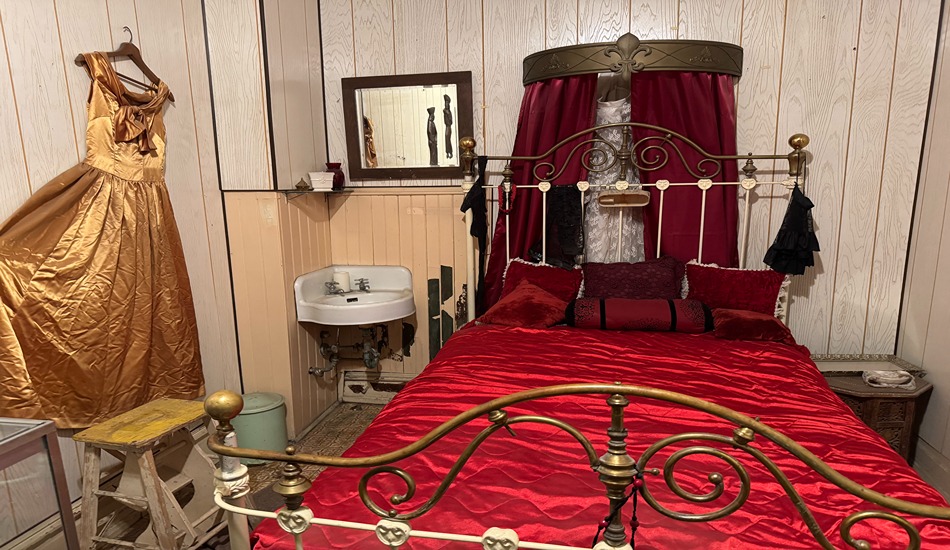
Dumas Brothel, which operated from 1891 to 1982, is a museum featured on haunted walks in Butte. (Randy Mink Photo)
The brothel developed a tiered system for both the girls and the patrons. Miners mostly frequented the basement, while the main floor was utilized by the middle class. The fancier second floor was visited by the wealthiest members of society. At one time more than 1,000 prostitutes worked in the three-block area.
Our Lady of the Rockies, a 90-foot statue of the Virgin Mary, watches over the predominately Catholic city from high atop a crest of the Continental Divide. Built between 1979 and 1985, she is lighted at night. The statue cannot be reached by private car, but bus tours go there in summer.
Copper King Mansion: Bed, Breakfast and Tours
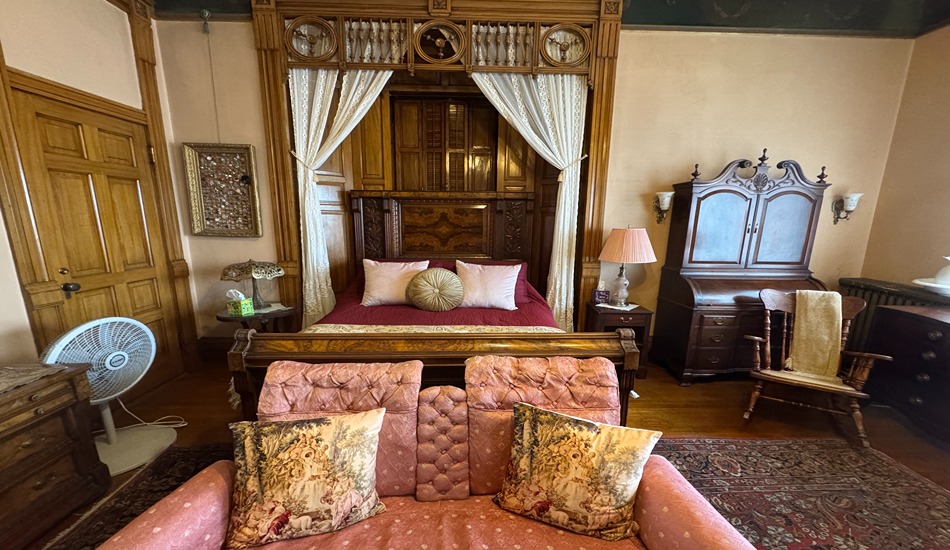
In the Master Suite at Copper King Mansion, guests can sleep in the bedroom of copper magnate W.A. Clark, one of the richest men in the world in his day. (Randy Mink Photo)
At the 34-room Copper King Mansion, a guided tour is included in the rate for overnight guests, who are free to roam the first and second floors on their own. Hand-carved woodwork, parquet floors, oriental rugs, stained-glass windows, chandeliers, ornate plasterwork and soaring frescoed ceilings set the stage. Every nook and cranny is filled with china, glassware, porcelain figurines, photographs and other period treasures. Some items, like the collection of German beer steins in the library, were owned by the Clarks.
Above the bedroom fireplace in the spacious Master Suite, one of four guest rooms on the second floor, a portrait of a fierce-looking W.A. Clark faced my bed, a masterpiece of burled walnut framed by an arch of sycamore woodwork. The spacious suite features an octagonal sitting room with another fireplace. In the mega-bathroom is a framed display of antique hair combs and beaded purses.
Huguette’s Room, with shared bath, is named for W.A. Clark’s youngest child, who died in 2011 at the age of 104 after living in a New York City hospital room for 20 years rather than her posh Upper East Side apartments or lavish California and Connecticut estates. From the mansion’s current owner, I learned about the reclusive, eccentric heiress and the book about her life—Empty Mansions by Bill Dedman and Huguette’s cousin, Paul Clark Newell Jr. (As soon as I got home, I checked out the book from my local library—a fascinating read about a mysterious life.) Huguette, born by a second wife 39 years W.A.’s junior, never lived in Butte.
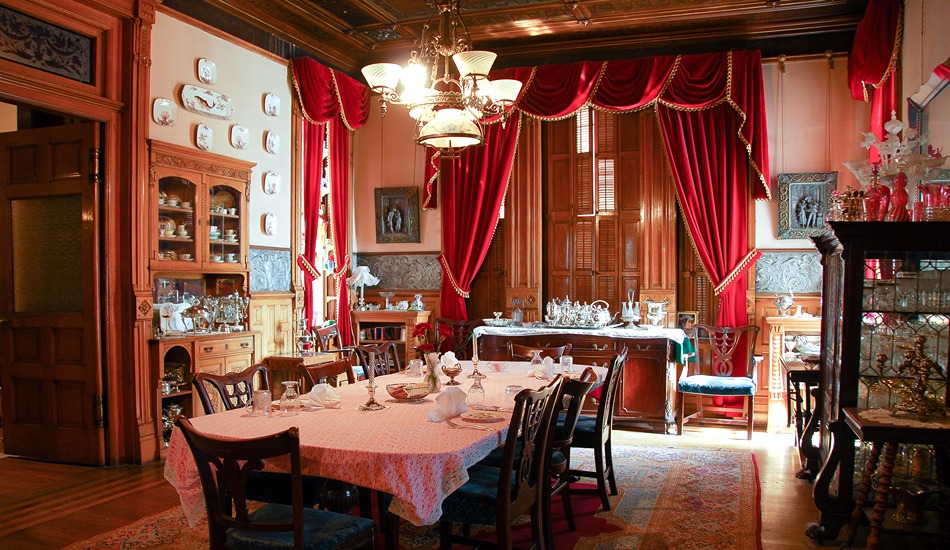
Breakfast is served in the formal dining room of Copper King Mansion.
Copper King Mansion owner Erin Sigl, whose grandmother bought the house from the Catholic Church in 1953, lives on the third floor with her husband Pat. She and her daughter, Maria Gibbs, love to share stories about the home and Clark family during breakfast in the formal dining room.
W.A. Clark, whose wealth was estimated at $50 million, spent $250,000 ($6 million in today’s money) on the house, the finest in town. Civic-minded, the tycoon built Butte’s first water supply system, organized the electric company and street railway, and owned The Butte Miner newspaper. He also gifted to the city Columbia Gardens, a beloved, free-admission amusement park that closed in 1973.
And this ambitious pioneer who helped open up the West to development is credited with establishing what became present-day Las Vegas, where Clark County is named after him.
W.A. Clark – who knew?
Travel smarter, plan better – Get top destinations, itineraries, and industry trends by subscribing to Leisure Group Travel now.
Lead photo – Butte is a town of 36,000 cradled in the Rocky Mountains of Southwest Montana. (Photo credit: Donnie Sexton/Montana Department of Tourism)