Amsterdam religious sites reveal a city where Catholic, Protestant, and Jewish history remain closely layered within the old center. The most unusual stop is Museum Ons’ Lieve Heer op Solder, or Our Lord in the Attic, a 17th-century canal house that conceals a Catholic church beneath its roofline. But it is only one part of a broader religious heritage route that also includes the Oude Kerk and the Jewish Cultural Quarter.
It looks like a typical Amsterdam canal house, but behind the façade of Our Lord in the Attic is a hidden church that helps explain how religion functioned in the Dutch Republic. Official museum materials describe it as a place that shows how different denominations were able to coexist in 17th-century Amsterdam, even when Catholic worship was pushed out of public view.
Today, the museum offers more than the attic sanctuary itself. Visitors move through a well-preserved canal house with furnished living quarters and period interiors before reaching the church above. I amsterdam describes it as one of the city’s oldest and most distinctive museums, with the hidden church dating to 1663.
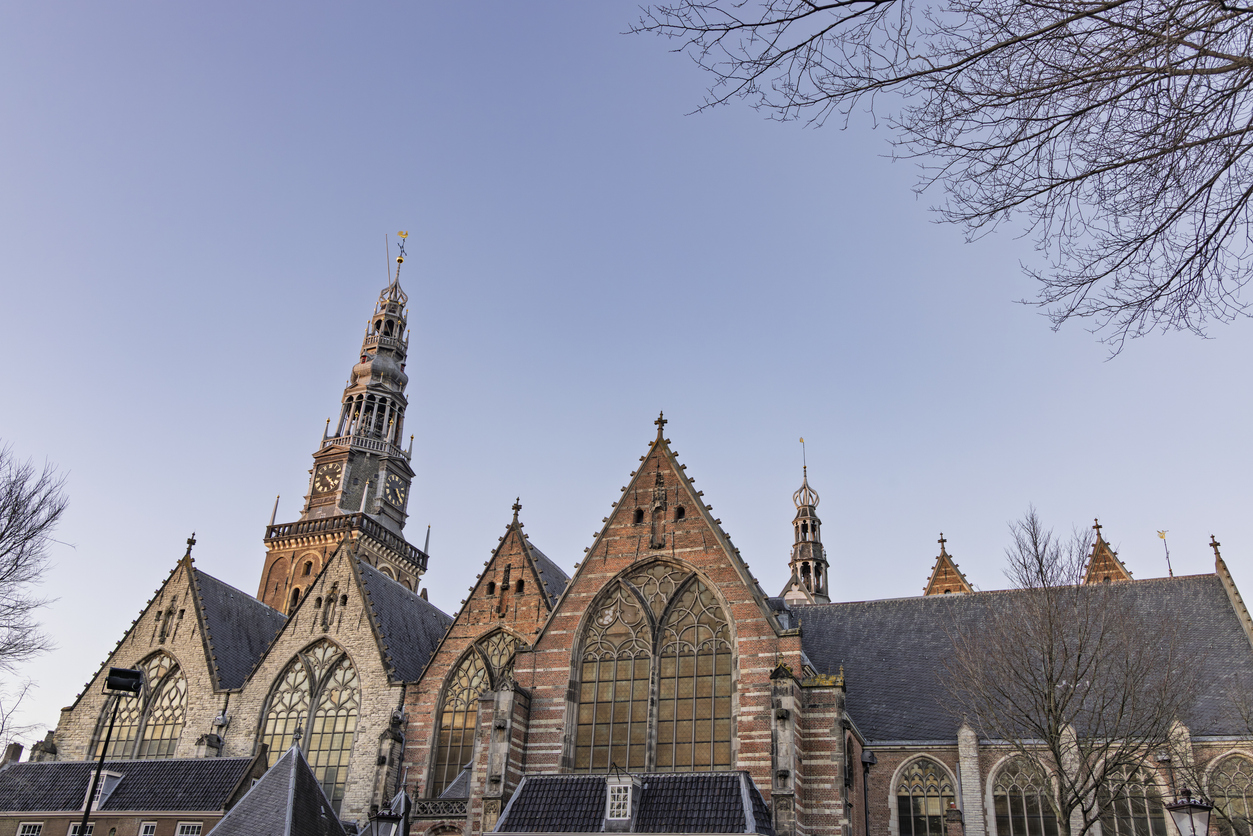
Just minutes away stands the Oude Kerk, Amsterdam’s oldest building. The church’s own history notes that it grew from a small wooden chapel around 1250 into the large hall church that took shape by about 1570. While it began as a Catholic church, it is now as well known for heritage and contemporary art as for worship, which gives the building a different feel from many purely ecclesiastical sites.
The Oude Kerk still rewards visitors who come for architecture alone. Its long development left it with a layered interior, and today the building combines medieval fabric with rotating art installations and music programming. Tower climbs are also available seasonally, giving travelers a way to connect the church to the wider old city around it.
Amsterdam’s Jewish heritage comes into sharper focus in the Jewish Cultural Quarter, which the official site describes as four centuries of Jewish culture spread across four venues within a single square kilometre. This cluster now centers on the Jewish Museum, the Portuguese Synagogue, the National Holocaust Museum, and Hollandsche Schouwburg.
The Jewish Museum, formerly known more widely as the Jewish Historical Museum, remains the natural starting point. It is housed in a group of former synagogues and is designed to introduce visitors to Jewish religion, tradition, and life in Amsterdam. That makes it one of the strongest interpretive stops for groups that want context, not just architecture.
A short walk away, the Portuguese Synagogue is still one of Amsterdam’s great religious interiors. The Jewish Cultural Quarter describes it as the biggest synagogue in the world when it was built in the 17th century, and notes that it remains an active house of worship. One of its most memorable features is that, instead of electric lighting, the space is still illuminated by hundreds of candles.
Hollandsche Schouwburg adds a more solemn dimension to the visit. Today it functions as a memorial site and is open to visitors without a ticket. Nearby, the National Holocaust Museum, which opened to the public in 2024, tells the story of the Nazi persecution and murder of Jews in the Netherlands and is housed in the former teacher training college connected to wartime rescue efforts.
For travelers planning an efficient self-guided route, these sites work especially well together because they are concentrated within Amsterdam’s historic core. The I amsterdam City Card currently includes Museum Ons’ Lieve Heer op Solder and the Oude Kerk, while the Jewish Cultural Quarter uses its own ticketing structure. As always in Amsterdam, it is worth checking current opening hours and reservation requirements before you go.
Amsterdam’s religious heritage is easy to underestimate if you focus only on its canals and famous museums. Yet a hidden Catholic church, the city’s oldest parish church, and one of Europe’s most important Jewish heritage areas together make a compelling case for Amsterdam as a meaningful faith and history destination.
FAQ
What is the hidden church in Amsterdam?
The best-known hidden church in Amsterdam is Museum Ons’ Lieve Heer op Solder, a 17th-century Catholic house church concealed inside a canal house.
What are the top religious sites to visit in Amsterdam?
A strong starting list includes Our Lord in the Attic, the Oude Kerk, the Jewish Museum, the Portuguese Synagogue, Hollandsche Schouwburg, and the National Holocaust Museum.
Is the Portuguese Synagogue still active?
Yes. The Portuguese Synagogue is still used for worship and is open to visitors when services are not taking place.
Can you visit Amsterdam’s religious sites with the City Card?
Some of them, yes. Museum Ons’ Lieve Heer op Solder and the Oude Kerk are included with the I amsterdam City Card, but the Jewish Cultural Quarter uses its own ticketing.
What is the difference between Hollandsche Schouwburg and the National Holocaust Museum?
Hollandsche Schouwburg is a memorial site, while the National Holocaust Museum is the museum that interprets the persecution and murder of Jews in the Netherlands