Europe offers no shortage of churches and cathedrals tied to the Protestant Reformation, but museums can often tell the story with greater focus. For religious travelers, the best Reformation museums in Europe combine original artifacts, historic settings and a strong sense of how figures like Luther, Calvin and Knox shaped both faith and society.
The strongest Reformation museums in Europe for most faith-based itineraries are the International Museum of the Reformation in Geneva, John Knox House in Edinburgh, the Luther House in Wittenberg, Luther’s Birth Place and Death House in Eisleben, and the Jean Calvin Museum in Noyon.
1. International Museum of the Reformation
Geneva, Switzerland
Geneva’s International Museum of the Reformation is one of the best overview museums on this subject because it is not limited to one reformer or one country. The museum describes itself as the only secular museum devoted to the history of both the Reformation and Protestantism, and it presents that story through paintings, books, engravings, letters and audiovisual exhibits. It sits beside St. Peter’s Cathedral in Geneva’s Old Town, which makes it especially easy to pair with a broader Calvin-themed city visit.
It is also one of the most up-to-date sites on this list. The museum reopened in April 2023 after a major renovation and now presents its permanent exhibition in nine spaces, with digital features and temporary exhibitions layered into the experience. That makes it a strong first stop for travelers who want a current, well-interpreted introduction to the Reformation rather than only a preserved historic house. (Musée International de la Réforme)
2. John Knox House
Edinburgh, Scotland
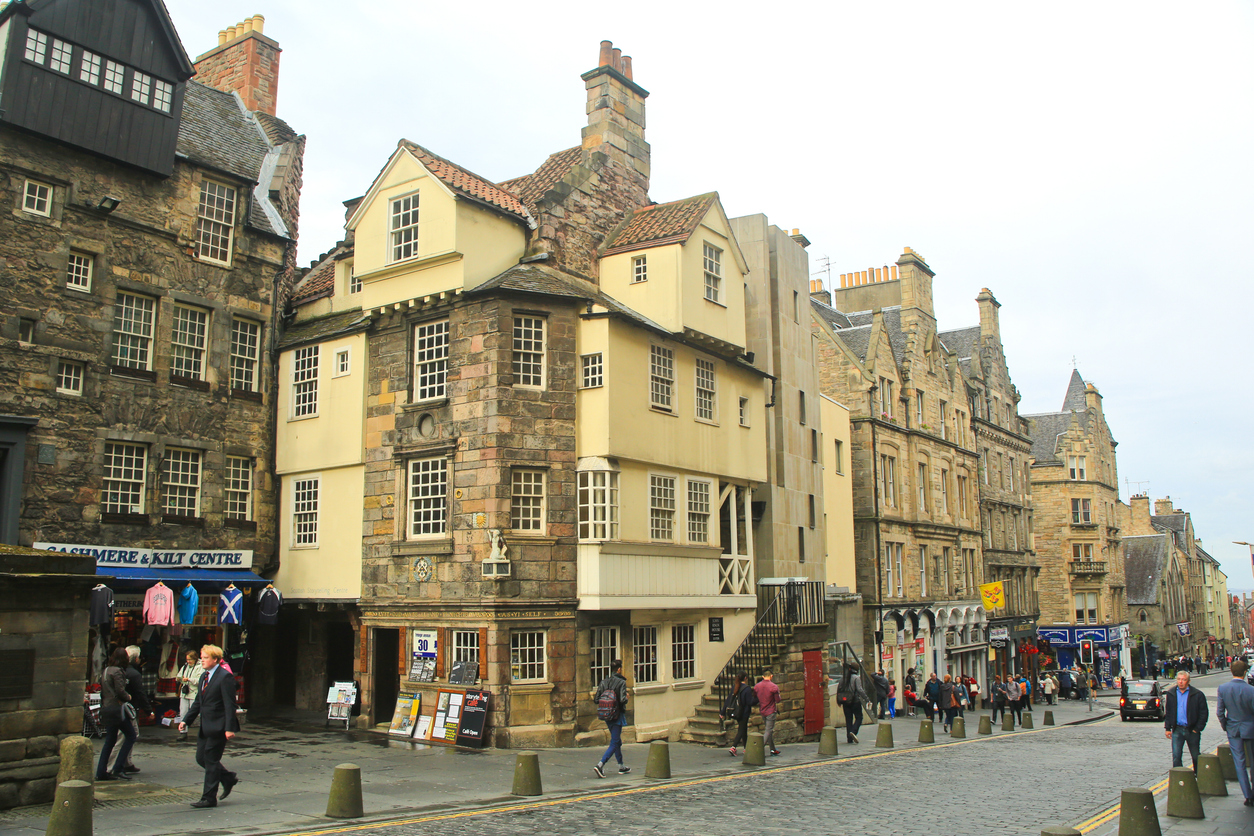
John Knox House remains one of the most compelling Reformation-related stops in Scotland, even if its exact connection to Knox is more interpretive than the old museum label sometimes suggested. The Scottish Storytelling Centre says the building dates to 1470 and, together with adjoining Moubray House, is the oldest original medieval building surviving on Edinburgh’s Royal Mile. Its current exhibition explores John Knox, Mary Queen of Scots and the wider Scottish Reformation.
For religious groups, its value lies in atmosphere as much as objects. Instead of a large institutional museum, this is a close-grained historic house where the Reformation is interpreted in the context of Edinburgh’s streets, power struggles and religious change. Guided tours are currently available, which makes it especially useful for groups that want a more personal, story-led experience. (TRACS)
3. Luther House
Wittenberg, Germany
The Luther House in Wittenberg is one of the essential Reformation museums in Europe. LutherMuseen says it was originally an Augustinian monastery and that Martin Luther lived and worked there for more than 35 years, first as a monk and later with his family. This is where he made his “reformatory discovery,” lectured students and wrote works that changed the course of Christian history.
Because of that, the museum works on two levels at once: it is both a preserved place in Luther’s own life and a large interpretive museum about the Reformation. Wittenberg’s tourism materials also continue to describe it as the world’s largest museum of Reformation history, and the wider Luther Memorials in Wittenberg have UNESCO status.
4. Luther’s Birth Place and Death House
Eisleben, Germany
Eisleben offers a rare pairing for Reformation travelers because it preserves both the beginning and the end of Luther’s story. LutherMuseen says Luther’s Birth Place is the oldest memorial site dedicated to a single person in the German-speaking world, and it has functioned as a public museum since the end of the 17th century.
Luther’s Death House adds a different kind of weight. The museum describes it as a place of remembrance tied to Luther’s final days, and it notes that the historic building was renovated and expanded into a museum quarter in 2013. Together, the two Eisleben museums work especially well for groups that want a more biographical Luther itinerary rather than one focused only on doctrine or documents. (luthermuseen.de)
5. Jean Calvin Museum
Noyon, France
The Jean Calvin Museum in Noyon is the quietest entry on this list, but it is one of the most relevant for travelers interested in Calvin’s early life and French Protestant memory. The Musée Protestant describes it as being on the site of Calvin’s birth house, rebuilt after World War I destruction, and devoted to the great French reformer. Regional tourism listings say the museum is run by the town of Noyon and presents rare prints, engravings and paintings related to Calvin and the Reformation. (Musée protestant)
Noyon itself strengthens the visit because it was an important ecclesiastical center long before Calvin’s birth. Current tourism materials also promote guided visits in Calvin’s footsteps through the city, which makes the museum a better stop when paired with the cathedral and broader urban context rather than treated as a standalone attraction. (Office de tourisme du Pays noyonnais)
These five museums work well together because they do not all tell the same story in the same way. Geneva offers the broad Protestant overview, Edinburgh presents the Scottish Reformation in a historic house, Wittenberg and Eisleben ground the visitor in Luther’s life, and Noyon adds Calvin’s French origins. For a faith-based itinerary, that range is often more useful than trying to repeat the same museum format in every country. (Musée International de la Réforme)
−By Randy Mink
FAQ
Which Reformation museum is best for a broad overview of Protestant history?
The International Museum of the Reformation in Geneva is probably the strongest choice for a broad overview because it covers both the Reformation and Protestantism more generally, rather than focusing on only one person. It also benefits from its location next to St. Peter’s Cathedral.
What is the best Luther museum in Europe?
For most travelers, the Luther House in Wittenberg is the best single Luther museum because it combines Luther’s actual home and workplace with a major interpretive collection on Reformation history. Eisleben is excellent too, especially for travelers who want to understand Luther’s life as a whole.
Is John Knox House mainly a museum about Knox or about the Scottish Reformation more broadly?
It is really both. The current exhibition explores John Knox, Mary Queen of Scots and the larger Scottish Reformation, so it works best for travelers interested in the wider religious and political story of Edinburgh, not just Knox alone.
Why is Noyon worth adding to a Reformation itinerary?
Noyon matters because it roots Calvin in his French setting before Geneva. The Jean Calvin Museum and local guided itineraries help visitors understand the reformer’s early environment rather than only his later influence in Switzerland.
Can these museums work as standalone stops, or should they be paired with nearby churches?
They work best when paired with nearby sacred sites. Geneva’s museum naturally connects with St. Peter’s Cathedral, John Knox House with St. Giles’, Wittenberg with the wider Luther memorials, and Noyon with the cathedral and Calvin-related city walk.