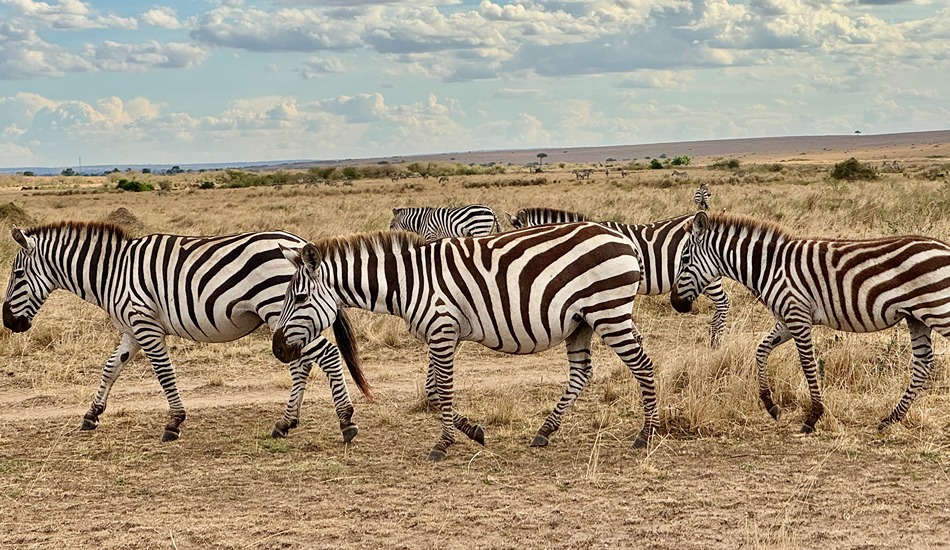
Goway Travel smooths the way in East Africa, customizing trips to the best wildlife sanctuaries. Highlights include game drives in Amboseli and Masai Mara.
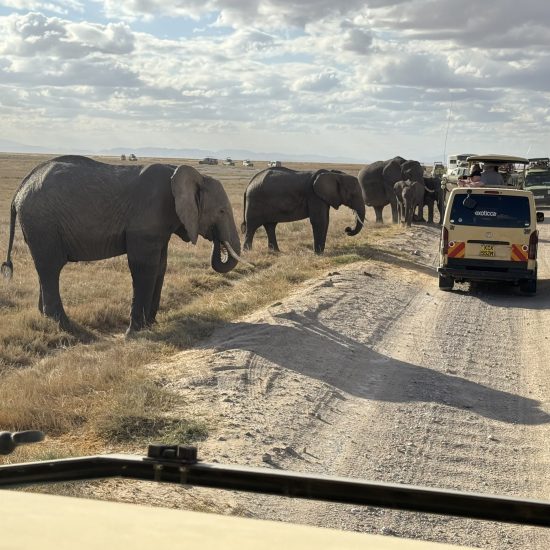
Amboseli National Park’s large elephant population keeps the cameras clicking. (Randy Mink Photo)
By Randy Mink, Senior Editor
When I was awakened around 2:30 a.m. by lumbering footsteps outside my tented cottage, I knew it had to be an elephant roaming the grounds of our safari camp in Kenya’s Masai Mara National Reserve. The presence of the largest land animal made me uneasy and I hoped he wouldn’t burst through the thick fabric walls of my bedroom as I hunkered under the covers. A few hours later, the snort of a wandering hippopotamus—again just feet away—served as my alarm clock. At breakfast, camp staff confirmed that we did indeed have four-footed overnight visitors.
An East African safari is the most exciting kind of tour package imaginable, offering a front-row seat to nature’s most exotic animals in majestic wilderness settings where the skies seem bigger, the horizons endless. On my early October customized adventure with Goway Travel in the world-famous game parks of Kenya and Tanzania, I was joined by my veterinarian daughter, her husband and five of her veterinarian friends as we traveled rutted roads in two 4X4 vehicles driven by guides employed by Sense of Africa, Goway’s Nairobi-based ground operator.
Every day was filled with scenes straight out of a wildlife documentary—herds of wildebeests and zebras grazing on the savannah, hippos wallowing in the river, lions and cheetahs lounging in the grass. We recorded giraffes striding regally across the plains and elephants crossing the road in front of us. A favorite video of mine: a hungry vulture ripping flesh off the carcass of a poor gazelle.
Out in the bush, you never know what you’re going to see. It’s all unscripted. This is no zoo or fenced-in safari park, just a menagerie of wild animals nonchalantly going about their day-to-day business, unfazed by human onlookers peering out their vehicle’s pop-up roof.
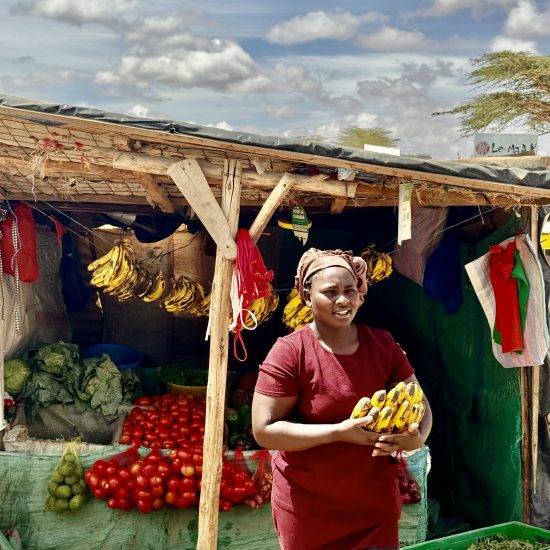
Our guide stopped to buy a bunch of bananas for the group. (Randy Mink Photo)
Our Goway trip began in Nairobi, where we met our guides before taking off for Praro Amboseli, a luxury tented camp outside of Amboseli National Park. The five-hour trip provided eye-opening looks at local life—boys with sticks herding cattle and goats, cute kids in school uniforms, women balancing baskets on their heads, and “strip malls” packed with hole-in the-wall stores clad in heavy plastic or rusted, corrugated metal. Roadside vendors hawked onions, tomatoes, oranges, bananas, papayas and melons, even sling shots and bags of toilet paper. There were donkey carts, three-wheeled tuk-tuks and lots of motorcycles, but few cars.
Amboseli National Park
After lunch and time to relax at camp, we drove a half hour to the entrance of Amboseli. Of all the parks on our 10-day itinerary, it was the one I was most anticipating—for two reasons. First, Amboseli is famed for its large population of elephants, my favorite African animal. And sentimentally, I longed to once again see the stunning backdrop provided by snow-capped Mount Kilimanjaro. I had climbed Africa’s highest mountain (19,340 feet) as a group leader for American high school students in 1974.
On the first of three Amboseli game drives, we were not disappointed. There were zebras, wildebeests, lions, elephants, Cape buffalos, gazelles, impalas, flamingoes, baboons, hyenas, jackals, warthogs—the very creatures we had come halfway around the world to see. We got great pictures of giraffes chewing on the flat-topped acacia trees and zebras grazing with Kilimanjaro looming in the distance. A male ostrich strutted right past our windshield. At one point, some 30 safari vehicles stopped to let giddy passengers witness a procession of more than 100 elephants.
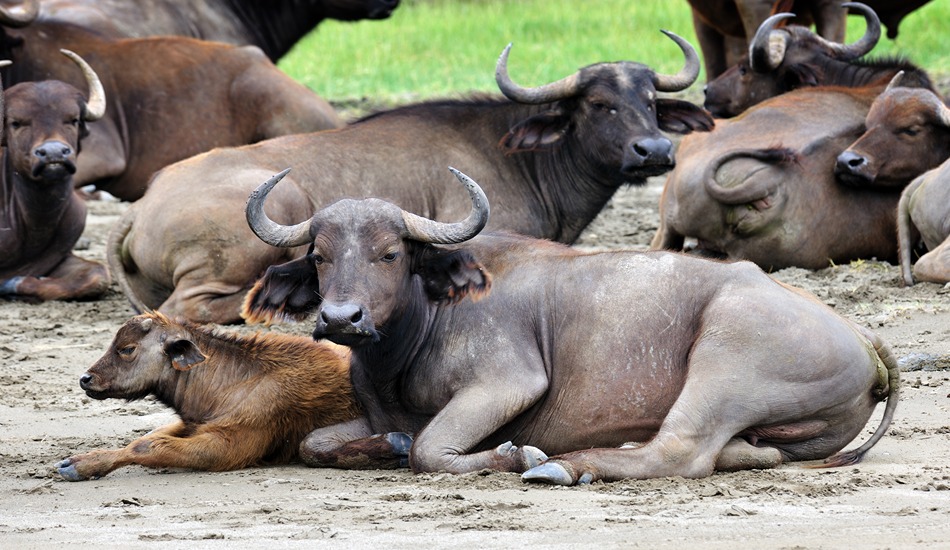
The Cape buffalo is one of the largest and most dangerous animals seen on the safari circuit in Kenya. (Photo credit: Kenya Tourism Board)
My vehicle’s driver/guide, Christopher Musyoka, shared all kinds of wildlife facts. He and our group’s other driver were in constant contact as they searched for animals to show us. (Our friends in the other 4X4 were into birds, so sometimes we didn’t stop when they did. I only cared about the largest and tallest bird, the ostrich.)
Jostling along the bumpy, gravelly roads is not for the faint of heart or anyone with a bad back. It was sometimes bone-rattling, with rocks flying and clouds of dust swirling about. Miraculously, we got only one flat tire.
Safari vehicles have seatbelts, but since we were always hopping up to gape at animals, it didn’t make sense to keep strapped in for any length of time. On some short stretches, we swayed back and forth as the vehicle slowly negotiated its way through sand, prompting our driver to declare, “You’re getting a free African massage.”
Lake Naivasha
After Amboseli, we traveled seven hours as our vehicles continually wove through a sea of trucks on the way to our next overnight destination, Lake Naivasha. A curio shop rest stop provided our first glimpse at the kind of souvenirs available—artwork, bags of coffee, beaded belts and jewelry. The place was festooned with colorful blankets, clothing and wall hangings. Carved wooden bowls, masks and figurines filled shelf after shelf.
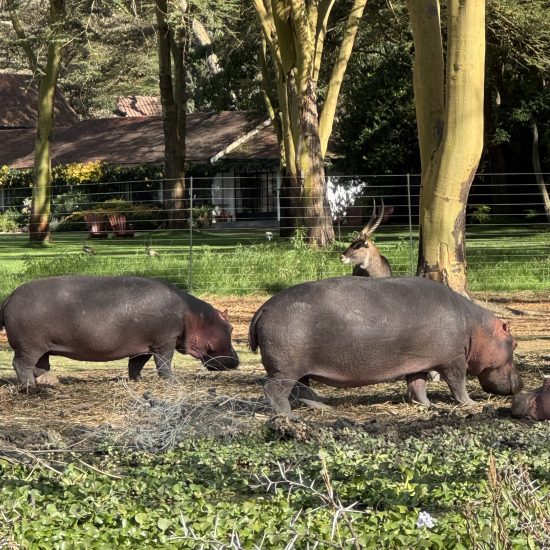
Our best chance to see hippos up-close was during a boat trip from Lake Naivasha Sopa Lodge. (Randy Mink Photo)
At Lake Naivasha a small-boat cruise took us within yards of hippos, waterbucks and waterfowl. Lake Naivasha Sopa Resort, our beautifully landscaped lakefront lodging, teemed with resident zebras, giraffes and other roving animals seemingly oblivious to us humans. To prevent monkeys from entering our rooms, we had to keep the patio door closed. At the after-dark Hippo Walk, our guide talked about hippo habits as she shone a flashlight on the beasts eating grass not far from the cottages.
Masai Mara National Reserve
On three game drives in Masai Mara, we got our fill of animals inhabiting the vast golden grasslands—largely treeless landscapes that turn green during the rainy season. One afternoon we scored big, finding spotted cat species that often elude safari-goers—leopard and cheetah. Holed up in a tree, the leopard was partially obscured by branches but visible through binoculars as we shared the sighting with two dozen other vehicles that jockeyed for position. So, we were able to check leopard off our list of Africa’s Big Five, others being the elephant, lion, Cape buffalo and rhinoceros. (Our rhino spotting would come at Ngorongoro Crater in Tanzania.)
We got really close to a cheetah, observing the world’s fastest animal sprawled out in the grass. He rolled over a few times during our 15-minute look-see. Another day, we patiently spent a half hour watching a male and female lion eye each other from 20 feet apart, hoping for some action that never came. (Masai Mara boasts the world’s highest density of lions.) Scavenging hyenas intrigued us—we saw one munching on a dead wildebeest.
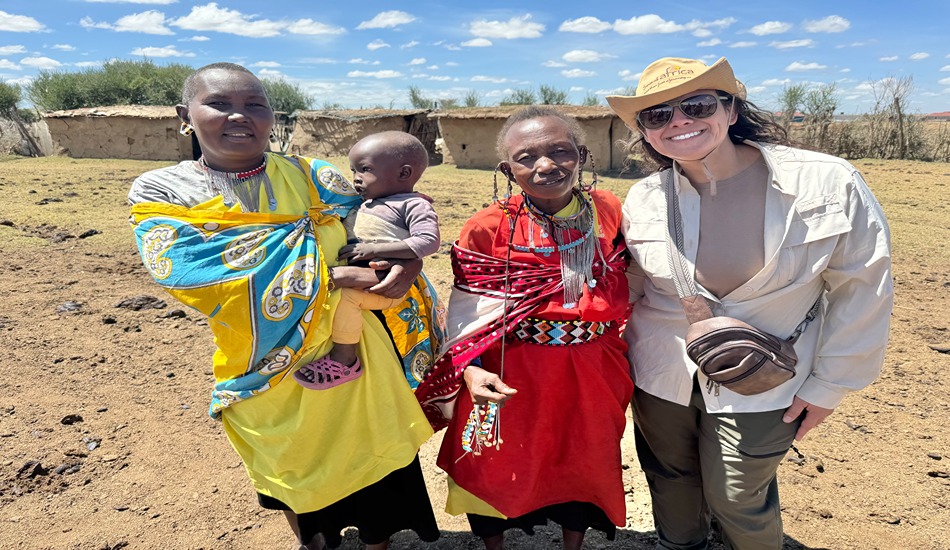
Village visits give Goway travelers revealing insights into Maasai culture. (Randy Mink Photo)
After our second morning game drive, we headed to a village to meet the Maasai, a nomadic people whose livelihood for centuries has revolved around cattle ownership. We often saw Maasai on the roadsides, both in Kenya and bordering Tanzania, recognizing the men by their cloaks (shukas) of plain red or red plaid cloth. During our guided visit to their circle of living quarters, we ducked inside one of the cow dung-clad huts. A group of men sang and danced, inviting some of us to join in. They also showed how to start a fire using a piece of hard olive wood, a soft acacia stick and dried elephant dung. Afterwards, we were led to tables manned by women selling beadwork and other handmade souvenirs.
From Masai Mara, our Goway game-watching extravaganza continued across the Mara River in Tanzania’s Serengeti National Park, a complicated transit that involved three short flights and a bus trip. My report on Tanzania will come later.
This was a dream trip. I want to do it all over again.
Travel smarter, plan better – Get top destinations, itineraries, and industry trends by subscribing to Leisure Group Travel now.
Lead photo – Zebras are one of the most commonly seen animals in Kenya’s Amboseli National Park. (Photo credit: Amanda Mink)