
By Jeff Gayduk
Hotel room block attrition has been the bane of the travel industry for three decades. A block doesn’t pick up, the planner eats a penalty. The relationship with the property cools, and profit suffers. Hotels have used it since the 1990s because it protects them and it costs nothing to collect.
Orlando-based RoomRite was built on the premise that this is a bad trade for everyone involved. The company was conceived in 2023 and operates a private, vetted B2B marketplace where unsold group inventory, meaning rooms freed up by attrition and cancellations plus hotel need dates and seasonal lulls, is resold to group buyers at pre-negotiated rates without an RFP cycle. RoomRite has more than 13,000 vetted buyers registered (with an estimated 17,000 in the pipeline for 2026 onboarding), and several hundred hotels committed to participating in the marketplace. It estimates the value of unused contracted group rooms industrywide at north of $20 billion annually.
RoomRite is designed to unlock this otherwise lost revenue by connecting qualified B2B buyers with available group inventory through a faster, more efficient, private marketplace.
Founder and CEO Teresa “Tee” Guastella, who spent two decades on both the hotel and buyer sides before RoomRite, spoke with Leisure Group Travel’s publisher Jeff Gayduk about how the platform works, what changed, and where the group buyer fits.
Leisure Group Travel: Let’s start with how you got here. You didn’t come out of technology, correct?
Teresa Guastella: I came out of hospitality. I started with Sysco Foods as their non-food specialist. Non-food items carried high margin, so my job was to get in the car with 30-plus salespeople who were focused on food and help them sell into hotels and restaurants. One of our clients was a hotel, and we went to their grand opening. I got talking with the general manager, and he asked whether I’d ever been interested in getting into hotels.
LGT: Sounds like he was recruiting you on the spot.
TG: Recruiting me on the spot (smiles). Since then, I’ve been on both sides of the industry. I was with Marriott, Kimpton, and Hilton, then I left and started my own on-site logistics company and went to work for Multi-Image Group, a live events corporation. That let me see pain points on both sides. What usually happens is we zone in on our own losses and don’t put ourselves in the shoes of the other party.
LGT: And attrition is where that shows up most clearly?
TG: During COVID, everyone in groups took a hit, and we started doing research on attrition, zeroing in on the losses that happen when a group doesn’t pick up and how that impacts the entire industry. The hotel is entitled to charge attrition, and they should. But we’re missing something. We’re hindering relationships. There becomes this love-hate relationship between the hotel and the buyer.
Stay ahead of group travel trends — subscribe to InSite from Leisure Group Travel (it’s free!).

LGT: Walk me through the first transaction that proved the concept.
TG: We had a client that ran into an attrition situation. We contacted the resort and said, if we could fill that space, that $30,000 loss, with another similar group, you’d be getting a new lead, you’d be getting your ancillary, all of the things, instead of sending out an attrition invoice. Would you be interested? We had one group that got a premium rate already negotiated, another group that didn’t have to pay attrition, and a resort that picked up a new lead and new ancillary. Everybody won.
LGT: Let’s be precise about that: if I list rooms on RoomRite, am I released from my attrition clause?
TG: The key distinction is that RoomRite is not transferring the original hotel contract or its attrition liability. The original contracting party remains responsible for its agreement with the hotel. Our role is to help monetize those otherwise unused rooms by connecting that inventory with a new qualified B2B buyer.
LGT: And on the buy side, if I book a block through you and don’t fill it, am I inheriting someone else’s exposure?
TE: No. The buyer receives access to the rooms and the negotiated rate through RoomRite but does not inherit the original group’s hotel contract or its attrition obligation. That’s an important part of the value proposition. We’re creating a secondary B2B distribution channel for inventory that already exists rather than asking a new buyer to assume someone else’s contractual risk.
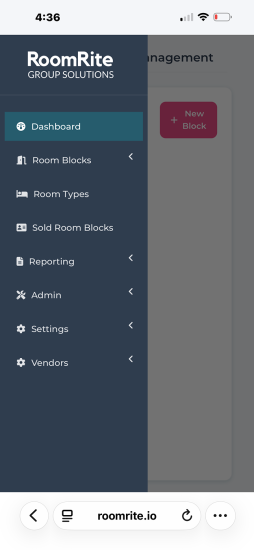
We’re creating a secondary B2B distribution channel for inventory that already exists
LGT: Attrition penalties hit at 60 or 90 days. Preformed tour groups book years out. How do you match a hole that opens in 90 days with buyers operating on a 2028 window?
TE: Most of the time these groups know right around 120 or 90 days out whether they’re going to fall into attrition, so they’re still within that window. That’s what we have our patent pending on, being able to resell a pre-negotiated rate on a digital platform, privately. That will always be the higher-margin opportunity for everybody involved.
But we needed to fill that gap, and the hotels came to us and said, if you’re willing to follow the parity rules, would you help us with other need dates, not just attrition, seasonal lulls and things like that. The result is that we’re able to put inventory into the platform for the next two years.
LGT: That’s a meaningful change in the business.
TE: It is, and it gave us real-time inventory, which is one of our moats. Our buyers don’t have to wait for a proposal or an RFP. The hotels love that too, because hotels are understaffed right now and response time is not as optimal as we would all agree we’d like it to be. Our niche is small to mid-sized groups.
LGT: Are you taking commission off the hotel rates?
TE: We don’t charge the hotels commission. We mark up our rates, and we run back- end AI that price-checks our rates against what the OTAs are offering, because the rate has to be low enough for our buyers to work with. That’s part of our commitment. We’re also following all the parity rules, so we’re not competing with the OTAs.
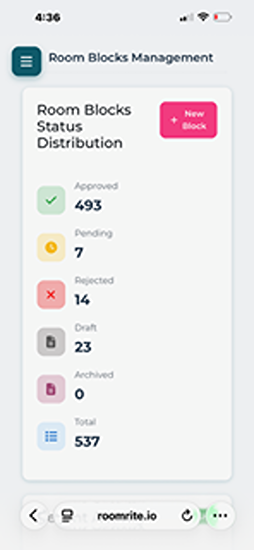
The planners that use our service still have plenty of room for their concessions along with saving time so they can focus on relationships and the bigger picture.
LGT: Walk me through your tech stack. Is a property is putting sellable inventory on your platform?
TE: It’s a partial integration. A fulfillment center is closer to the right term. When a group buyer comes in and makes a purchase, they fill out all the information, and an email goes to whoever the hotel has designated. They receive an email asking whether they accept the block, they put in their PMS code, and at that point it goes live. Response time is written into our terms and conditions with hotel partners, and we hold three direct contacts at each property rather than one. We’re also developing an API, and full integration is in the works.
LGT: On the hotel side, how have you been able to penetrate a crowded marketplace?
TE: We don’t have any problem getting hotels into the platform at all. Some of that is our sales approach and the relationships our team has built over the years, but mostly it’s that hotels see we’re here for them too. If you think about marketplaces, usually they’re pretty one-sided. What we’ve built is a three-sided marketplace. One party that might be losing, another that’s looking, and a hotel. Bring those together, and everybody wins.
LGT: How do you get past the obvious hotel objection? Why would I use you when I can simply bill the attrition and keep the money?
TE: I knew that question was coming before we built the company, because I’ve been in their shoes. Just because we’ve been doing it since the 1990s does not mean we should continue to do it. We’re in a new era, and we should look at this through the lens of how everybody can win. When we start to have that conversation, a light bulb goes off with the hotelier.
LGT: Is most of your action at the individual property level, or corporate negotiation?
TE: It’s more on the portfolio side and independents right now. We’re getting close to where we’ll be reaching out on a corporate basis; it’s part of our strategy.
LGT: How does a buyer get involved?
TE: It’s a B2B marketplace, so you have to register. We have AI on the back end that verifies domains, so if you tried to register as a consumer with a Gmail address, it would not accept you. We also have a human check from an administrative side.
LGT: Where’s the demand shifting right now?
TE: We started strong in limited service, concentrating on the SMERF market, and that will always be a strong niche for us because of the block sizes we do. But we’re seeing a big trend in incentive right now. People are feeling more comfortable traveling, and we’re moving into more high-end with it.
LGT: And what’s coming?
TE: We’re building the product roadmap off the asks on both sides of the market. Next year we’ll roll out a SaaS model, which we’ve already tested this year, that offers value to both the buyer and the seller.
RoomRite is headquartered in Orlando, with team members in Utah, San Diego, and North Carolina.