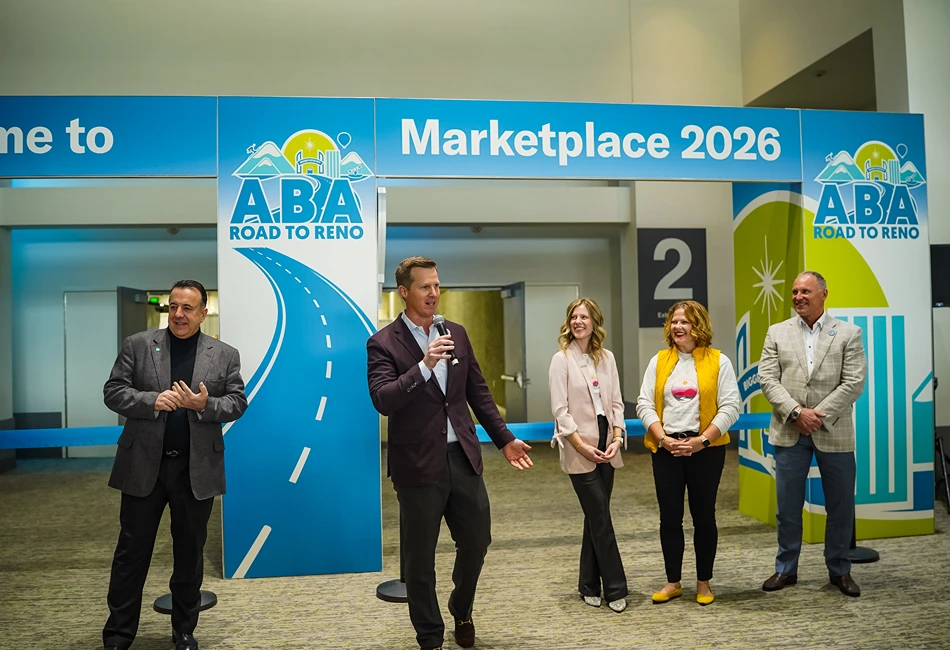
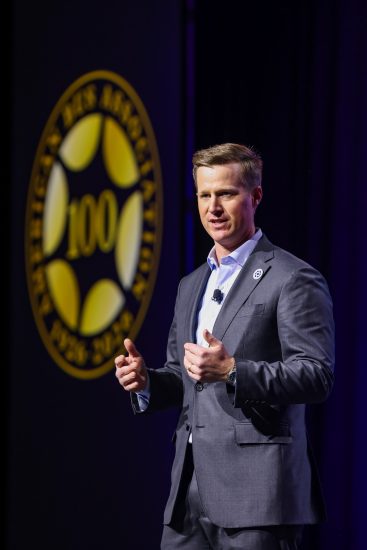
At the American Bus Association’s 2026 Marketplace in Reno, President and CEO Fred Ferguson reflected on how the association and it’s marquee event are evolving, having just celebrate their centennial.
In a wide-ranging conversation with Leisure Group Travel’s publisher, Jeff Gayduk, Ferguson discussed the importance of community, ABA’s digital and educational transformation, recent advocacy wins on tariffs and why cross-border cooperation with Canada will be central to the association’s future.
Subscribe to Leisure Group Travel for more in-depth interview and group travel insight.
Marketplace as a Community Connector
Jeff Gayduk: This was your second ABA Marketplace, but with a full year under your belt. How did this one feel different?
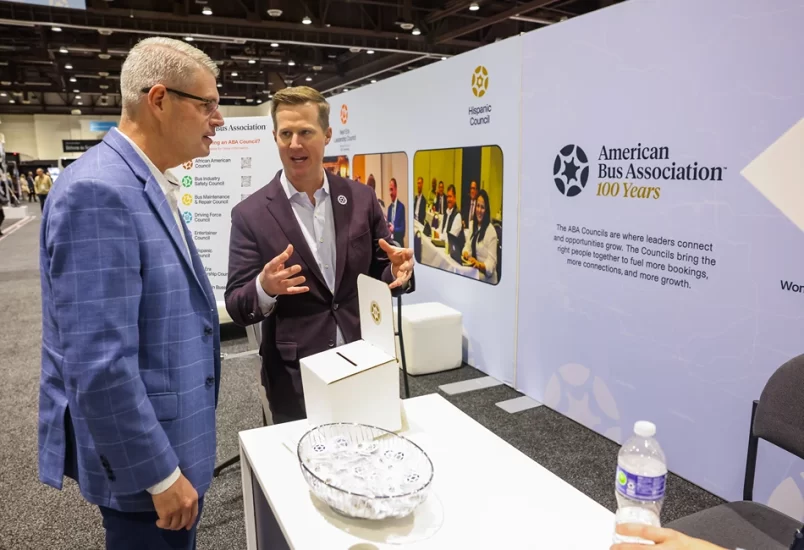
Fred Ferguson: My first Marketplace was a deer-in-the-headlights experience. I thought I knew what I was walking into, but I quickly realized how unique this industry is. What stood out wasn’t just the business being done, it was the sense of community. This is a relationship-driven industry where people genuinely know each other’s families.
Understanding that this year shaped our approach. ABA Avenue on the marketplace show floor is really the physical expression of that learning. We wanted an open, welcoming space where members could gather, relax, connect and transact business. When members walk into the ABA space, we want them to feel like they’re home. That sense of belonging is a big part of what makes Marketplace special.
Modernizing ABA’s Identity
Gayduk: One challenge in the group travel sector is convincing destinations and suppliers that this market deserves sustained investment. How is ABA addressing that?
Ferguson: A big part of it starts online. The next generation of industry leaders will research you digitally and kick the tires before they ever show up in person. For too long, ABA’s digital presence didn’t reflect who we really are.
We’re changing that. Our new branding and identity are designed to be more inclusive and more accurate. The old ABA identity was very motorcoach-forward, which unintentionally created the perception that we were only for bus operators. In reality, we represent the entire group travel ecosystem—transportation, lodging, attractions and destinations. It’s a flywheel and you need all of it working together.
Our new website is launching shortly and is a major step forward. It gives us a modern platform to communicate our value clearly and meet people where they are. The same goes for our social and digital channels. We have to show up consistently and professionally, because that’s where purchasing and participation decisions start.
Subscribe to Leisure Group Travel for more in-depth interview and group travel insight.
Education and Year-Round Member Value
Gayduk: Marketplace has always been ABA’s anchor event. How do you build value beyond the show floor?
Ferguson: Marketplace will always be central, but it can’t be the only reason someone joins ABA. We’re focused on creating year-round value, particularly through education.
There’s a real opportunity to expand professional development and certification programs, things like reviving and modernizing CTIS and other educational offerings. The content exists, what we need is the right technology platform to deliver it in a way that’s easy, accessible and frictionless.
Our goal is to build a 365-day engagement model. That means in-person events, virtual training and clear pathways for professional certification. Education shouldn’t just happen once a year—it should be ongoing, practical, and directly tied to the realities of group travel operations.
Related: ABA celebrates its 100th anniversary
Advocacy Wins and the Importance of Showing Up
Gayduk: Advocacy has been a major focus across travel associations over the past year. What does that look like for ABA right now?
Ferguson: Advocacy is where preparation really matters. When tariff discussions involving Canada began to surface, we anticipated the impact early and invested in research through our foundation to understand the economic consequences.
As a result, when tariffs were implemented, buses were treated differently than other large commercial vehicles. While trucks were hit with a 25% tariff, motorcoaches faced a 10% tariff. That 15-point difference represents roughly $150 million in avoided costs for the industry. These costs would have ultimately been passed on or absorbed by operators.
Just as important was the language included in the federal proclamation recognizing buses as a critical part of the transportation infrastructure. Buses are involved from disaster response to moving large groups efficiently. That recognition didn’t exist during COVID, and it makes a meaningful difference going forward.
Taking the Industry’s Voice to Capitol Hill
Gayduk: You’ve also expanded ABA’s fly-ins to Washington, D.C. Why are those important?
Ferguson: The fly-ins are about changing perceptions and building relationships. We recently hosted an African American operators fly-in, and our next one will be led by the Next Generation Leaders Council. These groups bring fresh perspectives and new faces to Capitol Hill.
When members of Congress meet operators and leaders who represent the diversity and innovation within our industry, it changes the conversation. We’re not trying to be a political organization—that’s not our role—but we do bring real operational expertise to discussions around transportation, infrastructure, and cross-border movement. That credibility opens doors.
Canada, Cross-Border Cooperation, and What’s Ahead
Gayduk: Looking ahead, the 2027 ABA Marketplace will be in Calgary. What does that represent?
Ferguson: It’s a significant opportunity. If the industry values the U.S.–Canada travel relationship, this is the moment to show it. Over the next year, we’ll be focused on Canada-specific research, messaging and collaboration.
We’re funding a Canadian economic impact study, engaging with Motorcoach Canada, participating in Rendez-vous Canada, and hosting a U.S.–Canada policy summit in Quebec City. These efforts are about understanding how each system works and how we can partner more effectively.
Marketplace in Calgary isn’t just another host city, it’s a statement for our industry. If we can strengthen cross-border cooperation and demonstrate its value to the broader group travel industry, that’s a meaningful success.
At the end of the day, our goal is relevance. ABA needs to be modern, inclusive, and visible. We need to deliver value through advocacy, education and connection. Marketplace brings that together, but the work continues long after the show floor closes.
Subscribe to Leisure Group Travel for more in-depth interview and group travel insight.