The Benelux region is not always the first place travelers think of for faith-based touring, yet it offers an unusually rich mix of abbeys, Marian shrines, hidden churches, cathedrals and pilgrimage traditions. For religious groups, that makes Belgium, the Netherlands and Luxembourg a rewarding part of Europe to explore beyond the standard headline destinations.
The most intriguing religious sites in the Benelux countries combine living worship, strong pilgrimage traditions and distinctive architecture. In this region, that means places like Orval Abbey, Bruges’ Basilica of the Holy Blood, Luxembourg’s Octave, Amsterdam’s hidden Catholic sites and Maastricht’s Basilica of Saint Servatius. (Orval)
Belgium
1. Orval Abbey, Villers-devant-Orval
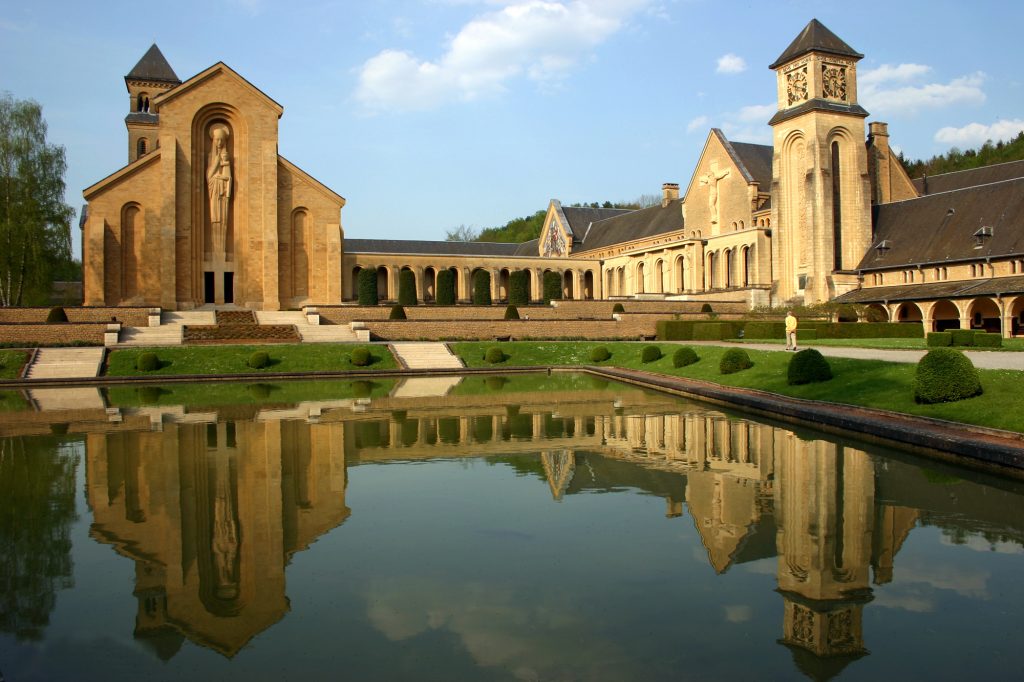
Orval Abbey remains one of Belgium’s most compelling monastic sites. The Trappist Cistercian community traces the abbey’s foundation to 1132, and today the destination combines an active monastery with historic ruins, a museum and the wider landscape of the Gaume region. It works especially well for religious groups because the visit can be both spiritual and cultural, with the abbey’s religious life, architectural remains and quiet setting all contributing to the experience. (Orval)
2. Basilica of the Holy Blood, Bruges
Bruges’ Basilica of the Holy Blood is one of the clearest pilgrimage sites in Belgium’s historic city circuit. Visit Bruges notes that it consists of a Romanesque lower chapel dedicated to Saint Basil and an upper chapel tied to the special veneration of the Holy Blood relic. For groups interested in relic traditions, medieval devotion and liturgical heritage, it remains one of the region’s most distinctive stops. (Visit Bruges)
3. Cathedral of Our Lady, Antwerp
Antwerp’s Cathedral of Our Lady is both a working cathedral and one of the great Gothic landmarks of the Low Countries. The cathedral’s official site emphasizes its art treasures, especially the Rubens masterpieces inside, while Visit Antwerp highlights it as one of the city’s defining monuments. For faith-based travelers, it offers more than architectural scale: it presents sacred art in an active ecclesial setting. (De Kathedraal)
4. Shrine of Our Lady of Banneux, Banneux
Banneux remains one of Belgium’s major Marian destinations. The official sanctuary site presents it as the place where the Virgin Mary appeared eight times to Mariette Beco in 1933 under the title “Virgin of the Poor.” For pilgrims, the shrine’s appeal lies in its prayerful atmosphere, spring, chapels and outdoor devotional spaces rather than monumental architecture alone. (Banneux Notre-Dame)
Luxembourg
5. St. Michael’s Church, Luxembourg City
St. Michael’s Church is widely presented as the oldest surviving religious site in Luxembourg City. Visit Luxembourg City notes its origins in 987 and its location in the old Ville Haute quarter. For visitors, it is a compact but important stop because it reflects the long continuity of Christian worship in the city and blends several architectural layers into one church. (Luxembourg City)
6. The Octave, Luxembourg City
The Octave is not a building but one of the most important religious events in Luxembourg. Official Luxembourg sources describe it as the country’s main religious ceremony, centered on the veneration of the Virgin Mary at Notre-Dame Cathedral and lasting for two weeks from the third to the fifth Sunday after Easter. The associated Mäertchen market at Place Guillaume II adds a public, communal dimension that makes the pilgrimage especially appealing for group travel. (luxembourg.public.lu)
The Netherlands
7. Begijnhof, Amsterdam
Amsterdam’s Begijnhof is one of the city’s quietest and most meaningful religious enclaves. The site’s official information says it remains inhabited by women and contains both the Roman Catholic Begijnhof Chapel and the English Reformed Church, along with one of Amsterdam’s oldest wooden houses. That mix of devotional history, living community and physical survival gives it much more depth than a simple courtyard visit. (Het Begijnhof)
8. Our Lord in the Attic, Amsterdam
Our Lord in the Attic is one of the Netherlands’ most memorable religious-history sites. The museum’s official page describes it as a historical house with a hidden church in the attic, preserving the story of how Catholics worshipped discreetly in 17th-century Amsterdam. The European Commission’s heritage page frames it more broadly as a site that testifies to freedom of conscience and religion in Europe. For religious groups, it is one of the strongest ways to understand how worship adapted under restriction. (Museum Ons’ Lieve Heer op Solder)
9. Basilica of Saint Servatius, Maastricht
The Basilica of Saint Servatius gives the Netherlands a major pilgrimage destination beyond Amsterdam. The basilica’s official site describes it as a pilgrim church in the heart of Maastricht, while Visit Maastricht calls it the oldest surviving church in the Netherlands and highlights its treasury. Because it is built around the grave of Saint Servatius and remains tied to pilgrimage traditions and relic processions, it is one of the strongest religious stops anywhere in the Benelux region. (Concrete)
The strength of the Benelux region is its variety. One itinerary can move from Trappist monastic life in Orval to Marian devotion in Banneux, from Luxembourg’s Octave to Amsterdam’s hidden church history, and from Bruges’ relic tradition to Maastricht’s pilgrimage basilica. For faith-based travelers, that range is what makes these countries more than a convenient cluster on a map. They form a genuinely rich religious journey. (Orval)
–By Susan DiLillo
FAQ
What are the best pilgrimage sites in the Benelux countries?
Some of the strongest pilgrimage-oriented stops are the Basilica of the Holy Blood in Bruges, the Shrine of Our Lady of Banneux, Luxembourg’s Octave and the Basilica of Saint Servatius in Maastricht. Each has an active devotional tradition rather than only historical value.
Is Amsterdam a good city for religious sightseeing?
Yes, especially for travelers interested in hidden or less obvious religious history. The Begijnhof and Our Lord in the Attic together show how religious life in Amsterdam continued through changing social and political conditions.
What is the Octave in Luxembourg?
The Octave is Luxembourg’s main religious ceremony in honor of the Virgin Mary. It centers on Notre-Dame Cathedral, lasts for two weeks after the third Sunday of Easter, and includes both liturgical events and the Mäertchen market.
Which Benelux site is best for monastic history?
Orval Abbey is one of the best choices because it combines an active Trappist community with historic ruins, museum spaces and a strong monastic identity. It gives visitors both heritage and living religious context.
Are there important Catholic sites in the Netherlands beyond Amsterdam?
Yes. Maastricht’s Basilica of Saint Servatius is one of the most important examples. It is a pilgrim church, built around the grave of Saint Servatius, and its treasury and relic traditions make it one of the country’s most significant Catholic destinations.