Eastern Bavaria offers one of the clearest place-based ways to understand the life and legacy of Pope Benedict XVI. Joseph Ratzinger was born in Marktl am Inn, spent important years in Bavaria, taught at the University of Regensburg, and remained closely tied to places such as Regensburg and Altötting throughout his life. For Catholic travelers, this part of Germany combines pilgrimage, church history, Marian devotion and the personal geography of Benedict XVI in a way few destinations can. (papsthaus.eu)
The best Benedict XVI itinerary in Bavaria usually centers on three places: Regensburg for the cathedral and university connection, Altötting for pilgrimage and the Benedict Route, and Marktl am Inn for the pope’s birthplace museum.
Regensburg: Cathedral City and Intellectual Center
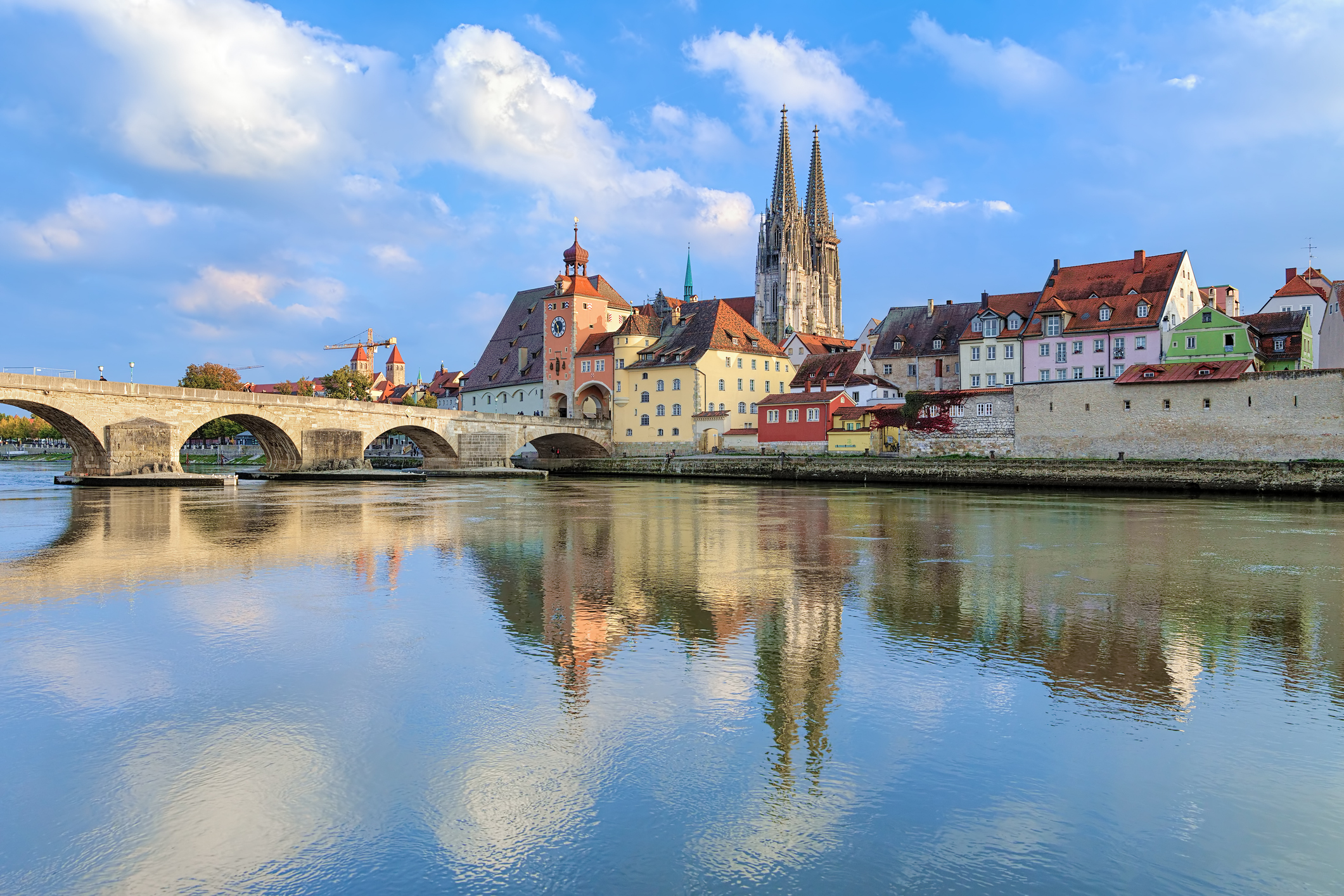
Regensburg is the strongest base for travelers following Pope Benedict XVI in Bavaria. The city’s UNESCO-listed old town is one of Germany’s best-preserved medieval urban centers, and St. Peter’s Cathedral remains its defining religious landmark. Regensburg Tourism describes the cathedral as one of the most significant achievements of Gothic architecture in Bavaria and notes that it is the only Gothic cathedral in Bavaria.
The cathedral is especially relevant to Benedict XVI because of the Regensburger Domspatzen, the famous choir so closely associated with the city. Regensburg Tourism says the Domspatzen usually sing in the cathedral on Sundays, and the choir’s official history notes that Georg Ratzinger, the pope’s brother, led the ensemble from 1964 to 1994. That makes a cathedral visit meaningful not only architecturally, but also personally within the Ratzinger family story.
Another worthwhile stop in Regensburg is the Alte Kapelle, or Old Chapel. It is easy to miss from the outside, but the interior is one of the city’s richest Rococo spaces. It also has a direct Benedict XVI connection: during his 2006 apostolic journey to Bavaria, he blessed the new organ there, calling the church a venerable house of God and linking sacred music with the strengthening of faith.
For many travelers, the University of Regensburg is another essential Benedict site. The Vatican’s official archive records that Benedict XVI returned there in September 2006 and delivered his well-known lecture “Faith, Reason and the University” in the Aula Magna. Even for visitors who do not treat the university itself as a sightseeing stop, the city’s identity as both a cathedral town and a place of theological scholarship is central to understanding his legacy.
Altötting: Bavaria’s Great Marian Shrine
Altötting is the devotional heart of a Benedict XVI-themed itinerary. The town’s official tourism site describes it as the spiritual center of Bavaria for more than 1,250 years, the most important Marian pilgrimage site in Germany for well over 500 years, and a member of the Shrines of Europe network. For Catholic groups, it offers a different experience from Regensburg: less academic and urban, more explicitly pilgrim-oriented.
The focal point is the Chapel of Grace and the Black Madonna of Altötting. Altötting tourism says about one million pilgrims come each year to pray before the image, and it notes that Benedict XVI gave his bishop’s ring to the Madonna during his 2006 pastoral visit. That single gesture captures why Altötting belongs in any Benedict-focused journey: it was not simply a stop on his itinerary, but a shrine tied to his personal devotion.
Altötting also works well for group travel because it is compact and walkable. The pilgrimage core around Kapellplatz includes the chapel, St. Anna’s Basilica and museum spaces, all close together. That makes it practical for faith-based groups that want a destination where prayer, history and guided visits can all happen within one concentrated area.
The Benedict Route Through the Pope’s Early Bavaria
For travelers who want to expand beyond a few city stops, Altötting’s Benedict Route provides the clearest thematic framework. The official tourism page describes it as a 245-kilometer circular cycle path that begins and ends in Altötting and follows the childhood and youth of Benedict XVI. The route links places such as Marktl, Burghausen, Tittmoning, Traunstein, Wasserburg and Aschau am Inn. (altoetting.de)
This route is especially useful because it turns the pope’s early biography into a physical landscape. Instead of treating Benedict XVI only as a Vatican figure, it shows him in relation to Bavarian towns, monasteries, churches and rural settings. Even travelers who do not plan to cycle the full route can use it as an itinerary map for a multi-stop faith journey.
Marktl am Inn: The Birthplace
Marktl am Inn is the most intimate stop on the route. The Birthplace Pope Benedikt XVI Trust identifies the house at Marktplatz 11 as the pope’s birthplace and presents it today as a museum and reflection space. Museen in Bayern notes that Joseph Ratzinger was born there on April 16, 1927, in what had been a former electoral office and toll house, and that visitors can still see the birth room. (papsthaus.eu)
For groups, Marktl is more than a plaque stop. The birthplace museum offers guided tours, and its official site says these tours include the permanent exhibition, the papal room, the birth room and a concluding walk to the baptismal font. That gives church groups, First Communion groups and Catholic cultural travelers a fuller interpretive experience than a simple photo stop would provide.
Why This Journey Works
What makes this eastern Bavaria itinerary so strong is that it brings together several dimensions of Catholic travel at once. Regensburg offers cathedral, sacred music and theology. Altötting offers Marian pilgrimage and devotional depth. Marktl adds biography and personal history. The Benedict Route then ties those places together into a coherent regional journey rather than a loose collection of sights. (Regensburg Tourism)
For travelers interested in Pope Benedict XVI, this region does more than preserve memory. It shows how his Bavarian roots remained visible in his spirituality, theology and public life. That is what makes following his footsteps here feel less like celebrity tourism and more like a meaningful Catholic itinerary. (Vatican)
-Randy Mink
FAQ
What are the main Pope Benedict XVI sites to visit in Bavaria?
The strongest three are Regensburg, Altötting and Marktl am Inn. Regensburg connects to Benedict through the cathedral, choir tradition and university; Altötting through Marian devotion; and Marktl through his birthplace museum.
Is Altötting mainly a Benedict XVI destination or a broader pilgrimage site?
It is both, but first and foremost it is a major Marian pilgrimage site. Altötting tourism describes it as the most important Marian pilgrimage destination in Germany, while Benedict XVI’s own devotion helps deepen its relevance for travelers following his story.
Can visitors tour Pope Benedict XVI’s birthplace in Marktl am Inn?
Yes. The museum is open to visitors, and the official site says guided tours include the permanent exhibition, the papal room, the birth room and a walk to the baptismal font.
What is the Benedict Route in Bavaria?
It is a 245-kilometer circular cycling route that begins and ends in Altötting and follows places associated with Benedict XVI’s childhood and youth. Even travelers who do not cycle it can use it as a framework for a regional itinerary.
Why is Regensburg so important in a Benedict XVI itinerary?
Regensburg combines several of the most important elements of his legacy: the cathedral, the Domspatzen connection through his brother Georg, and the University of Regensburg, where Benedict delivered his famous 2006 lecture.