This island city on Texas’ sun-kissed Gulf Coast enchants nostalgia fans with its Victorian-era Strand District, a great place to commune with the past
Story & Photos by Randy Mink, Senior Editor
There’s nothing I like better than a town with a walkable historic district bursting with fun shops, architectural flourishes, heady whiffs of nostalgia and a personality all its own. If it’s a seaport—boats coming and going, seagulls hovering above—all the better. I’m in heaven.
Galveston, Texas checks all the boxes. Occupying a 32-mile-long barrier island between Galveston Bay and the Gulf of Mexico, the city of 54,000 resides less than an hour from Houston. Many travelers know it as the jumping-off point for Caribbean cruise vacations. In fact, Galveston is the largest U.S. cruise homeport outside of Florida, welcoming ships from Royal Caribbean, Carnival, Norwegian, MSC and other lines. In cruise ship activity, it’s ranked eighth globally.
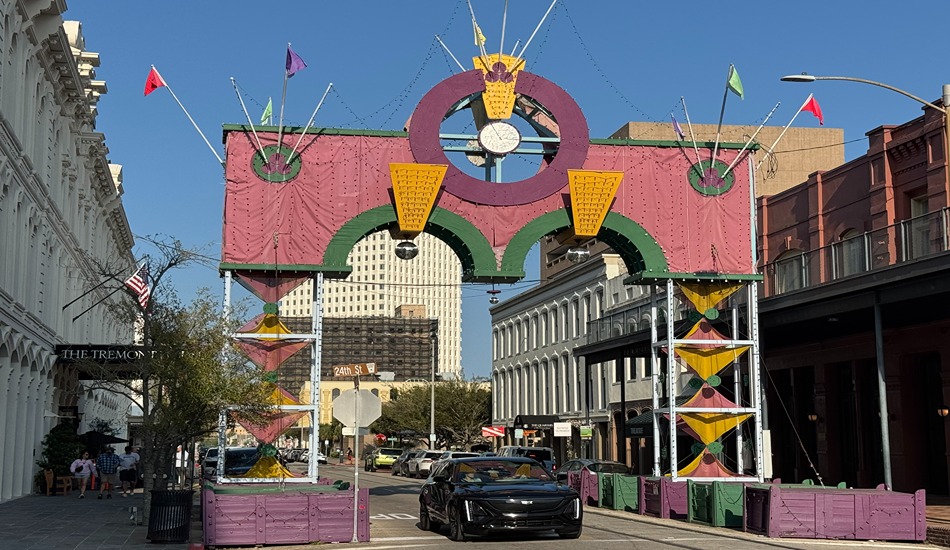
The Mardi Gras Arch adds a festive touch to Mechanic Street in Galveston’s Strand Historic District.
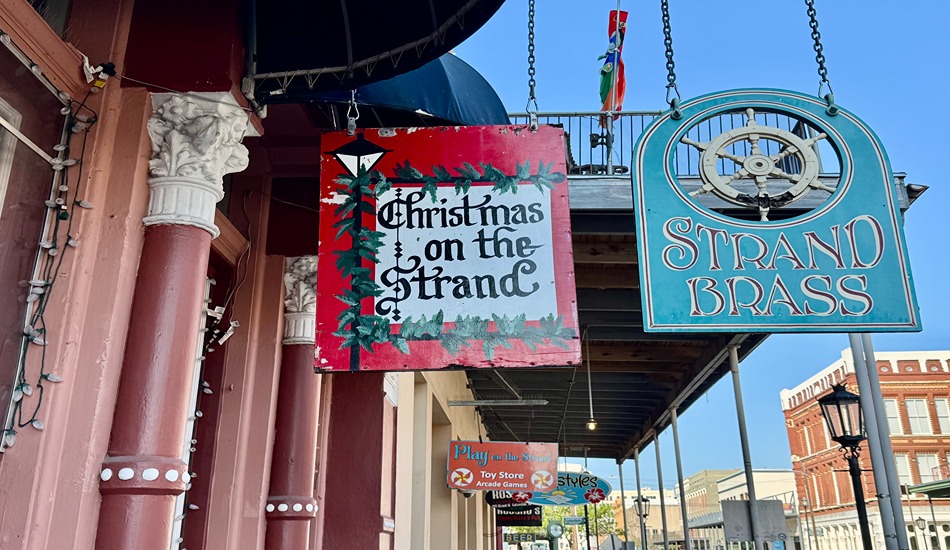
Conveniently, the cruise terminals and various harborside offerings lie just a block from Strand Street, the main street in the Historic Downtown Strand Seaport District, a chunk of real estate recognized as a National Historic Landmark for its collection of carefully preserved 19th century buildings. Many former warehouses, with their cast-iron pilasters, terra cotta ornamentation, tall doors and windows, and pressed-tin ceilings, today house restaurants, bars, shops and museums. Gaslight-style streetlamps enhance the yesteryear feel.
The Strand was known as the “Wall Street of the South” in the late 1800s, when Galveston was a Victorian-era boomtown that claimed more millionaires per capita than any other U.S. city. Banks, wholesale houses, cotton factors, shipping agencies, newspaper offices and dry goods companies, along with liquor and cigar dealers, saloons and sailor boarding houses, contributed to the commercial bustle.
Markers on some buildings show the high-water line from The Great Storm of 1900 and other major hurricanes since. Claiming the lives of more than 10,000, the 1900 event remains the deadliest natural disaster in U.S. history. You’ll also see plaques that say “1900 Storm Survivor.”
Exploring The Strand in Galveston, Texas
The Strand District abounds with points of interest, including:
- Mardi Gras Arch. Standing outside the Tremont House hotel on Mechanic Street, this festive portal pays homage to Galveston’s annual Mardi Gras celebration, which purports to be the nation’s third-largest. A great photo op, the arch bears the Mardi Gras colors of purple, green and yellow, and glows at night with colored light bulbs. (Other visions of New Orleans’ French Quarter are evident in the Strand District’s balconies and covered arcades.)
Tourists’ cameras also come out for Turtles About Town, a public art project featuring painted sea turtle sculptures.
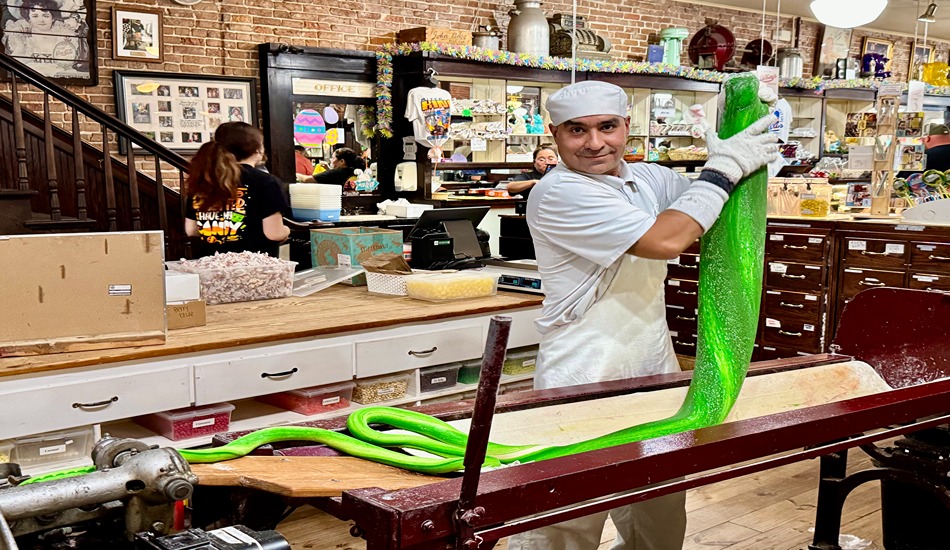
Taffy-making demonstration at La King’s Confectionery
- La King’s Confectionery, an old-fashioned ice cream and candy shop inside a former hardware store with pine floors and exposed brick walls. Choose from truffles and other fine chocolates, fudge, pecan pralines, jelly fruit slices, gum balls and glazed nuts, plus more than 20 flavors of saltwater taffy, from pineapple, orange cream and peppermint to cotton candy, banana split and birthday cake. If you’re there at the right time, join onlookers at the wooden railing as Ernest Torres demonstrates the art of taffy making. He uses a 114-year-old machine that forms, cuts and wraps the taffy in wax paper, then tosses out fresh pieces—it was lime the day I visited.
La King’s house-made ice cream is served from a white marble soda fountain that runs the length of the store. I got a generous portion of banana-walnut for $5.
- Star Drug Store, the oldest drug store in Texas. Dating from 1886, this breakfast-lunch spot is a step back in time. Take a stool at the horseshoe-shaped tile soda fountain (added in 1917) and watch kitchen workers make omelets, fry hamburgers and whip up milkshakes. Besides stools and tables inside, there is sidewalk seating under the awning.
A porcelain Coca-Cola sign from the 1920s, one of the oldest in existence, adorns the front of Star Drug. More Coke and other metal advertising signs fill the mezzanine’s display cases. Nostalgia fans also like the Coke memorabilia and antique apothecary items in the front window. Cabinets on the main floor that once contained bottles of pills, tonics and elixirs now have hats, toys, jewelry, Coke collectibles and all kinds of other merchandise for sale.
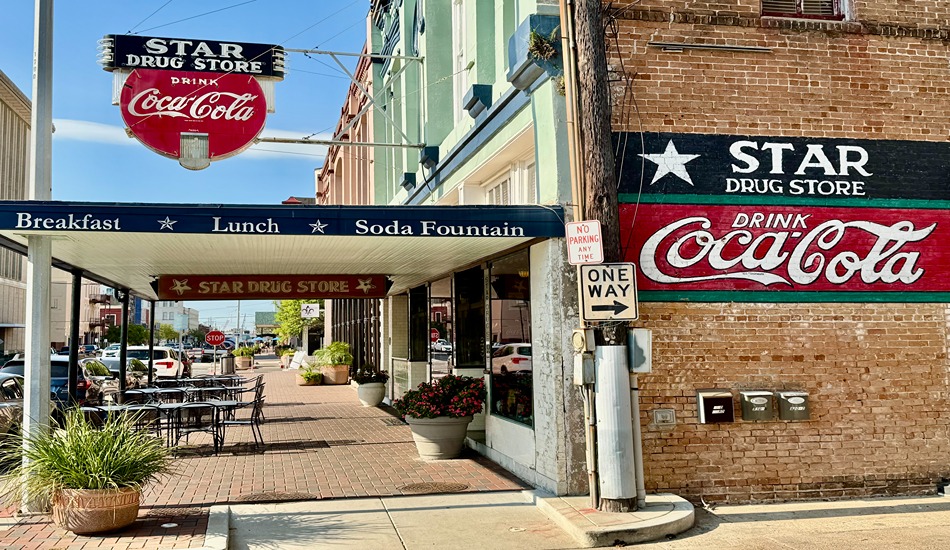
Star Drug Store
I had some scrumptious pancakes for breakfast and next time would go at lunch time and try the Star’s special-recipe pimento cheese sandwich. Also tempting: a brothy version of tomato basil soup with diced tomatoes, bacon and rye bread.
The Star’s owner desegregated the lunch counter in the 1950s, a move that led other Galveston businesses to do the same.
- Nia Cultural Center. This history museum/art gallery on Strand Street celebrates Black heritage in Galveston, a city with a large footprint on the national scene when it comes to civil rights.
Galveston is the birthplace of Juneteenth, the federal holiday that commemorates the ending of slavery in America. It was on June 19, 1865, when Texas became the last state to recognize freedom for enslaved African Americans. The announcement that day—two years after President Lincoln signed the Emancipation Proclamation—was made in Galveston by General Gordon Granger.
Texas was the first state to designate Juneteenth as a paid state holiday. In Galveston, Juneteenth is a month-long celebration.
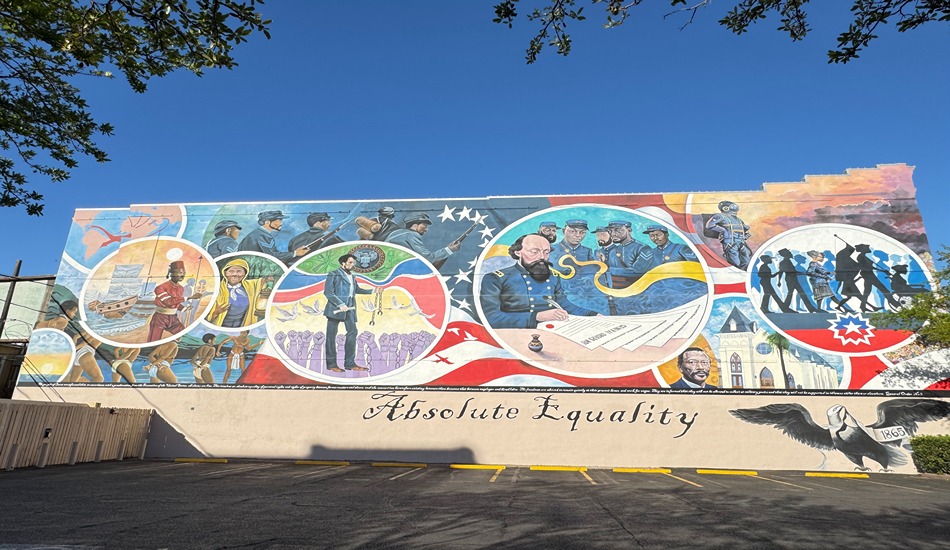
Absolute Equality
Emblazoned on the side of the Nia Cultural Center, the magnificent, 5,000-square-foot mural “Absolute Equality” depicts the journey from slavery to freedom.
In the carriage house of the 1859 Ashton Villa mansion on Broadway Avenue, a 10-minute walk south of The Strand, a Juneteenth monument and the exhibit “And Still We Rise…Galveston’s Juneteenth Story” provides more insight into the struggle for equality. Ashton Villa, built by a wealthy Confederate supporter and used as Confederate Army headquarters during the Civil War, is the central gathering point for Galveston’s Juneteenth celebrations.
Juneteenth and Beyond, a Black-owned tourism business, offers guided 90-minute van tours that spotlight African American history. The company also provides step-on guides for motorcoach tours.
More Strand District Highlights
- Grand 1894 Opera House. This impressive Romanesque Revival building was converted into a movie theater in the 1920s and today hosts concerts, Broadway musicals, stand-up comedians, and dance and opera performances. Our group saw the Duke Ellington Orchestra in concert.
The theater can arrange group tours that include a meal or reception on the stage.
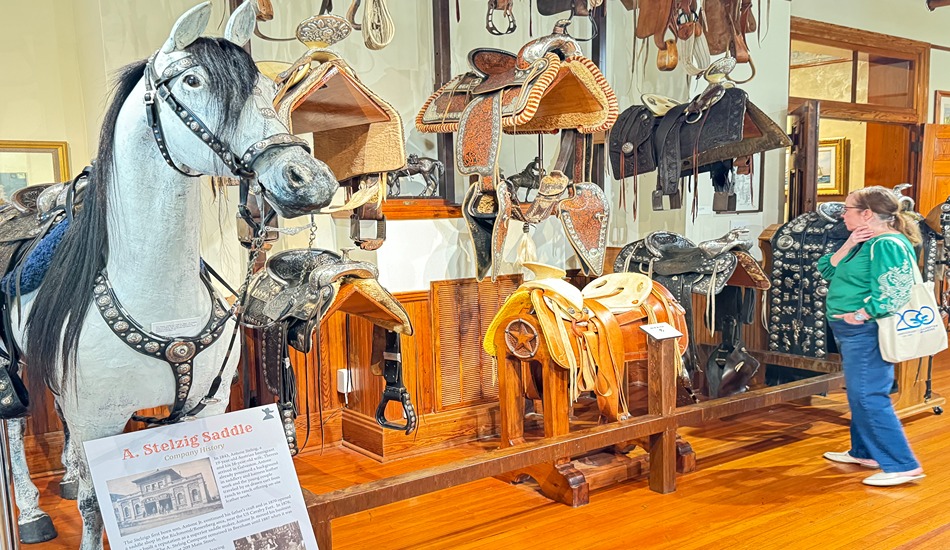
The Bryan Museum spotlights the lore of Texas and the American West.
- The Bryan Museum. Housed in a former orphanage, this museum boasts one of the world’s largest collections of historical artifacts and artwork relating to Texas and the American West. Assembled by J.P. and Mary Jon Bryan, items range from saddles and spurs to antique firearms, Native American arrowheads and a Spanish mission bell. There is a special emphasis on Spanish influence in the region.
An exhibition on the orphanage features video interviews with adults who lived in home as children. Save time for “The Great Storm of 1900” film.
- Galveston Railroad Museum. Spread across a five-acre railyard in the heart of the Strand Historic District, the fifth-largest railroad museum in the nation takes visitors back to the golden age of train travel. They can see more than 40 locomotives and passenger cars and on weekends take a 15-minute caboose ride.
Rare Santa Fe Railway calendar art, model railroad layouts, a tribute to Pullman porters, and fancy table service from various railroads are among the exhibits in the 1932 Art Deco depot. Scattered about are 23 white alabaster sculptures of train travelers in period attire. In old-time phone booths, visitors can eavesdrop on the conversations of these “Ghosts of Travelers Past.”
A lounge car can accommodate group functions for up to 30 people, or a group can book a meal in a private dining car (for up to 64). Two luxury railcars—one of them used by TV’s “The Jackie Gleason Show” cast for travel between New York and Miami—operate as bed and breakfasts, each offering a hospitality lounge and sleeping rooms with full bath.
- Texas Surf Museum. Wave riders will appreciate the vintage boards, classic photos and other memorabilia relating to the Gulf Coast surf scene.
Moody Gardens: A Galveston Must-See
Many would agree that Galveston’s star attraction is Moody Gardens, a multi-faceted, family-friendly complex identified by three glass pyramids that pierce the sky. It deserves at least three or four hours, but many make it a day.
The 10-story Rainforest Pyramid shelters more than 1,000 species of exotic plants and animals, from free-roaming monkeys and birds to Komodo dragons, two-toed sloths and Amazon River otters. Seven species of penguins, along with seals, sea lions, stingrays, sharks and other marine creatures, inhabit the blue Aquarium Pyramid.
The giant-screen MG 3D Theater shows films that highlight the wonders of nature, while the 4D Special FX Theater adds a whole new dimension to animal encounters with wind, water and sensory effects.
Other diversions at Moody Gardens include an 18-hole golf course, a brand-new pickleball court, ropes course, zip line, waterpark with white-sand beach and paddlewheel boat that offers hour-long cruises around Offatts Bayou. Lush indoor and outdoor gardens feature thousands of plants and trees. The 433-room Moody Gardens Hotel just underwent a $6 million, property-wide refresh.
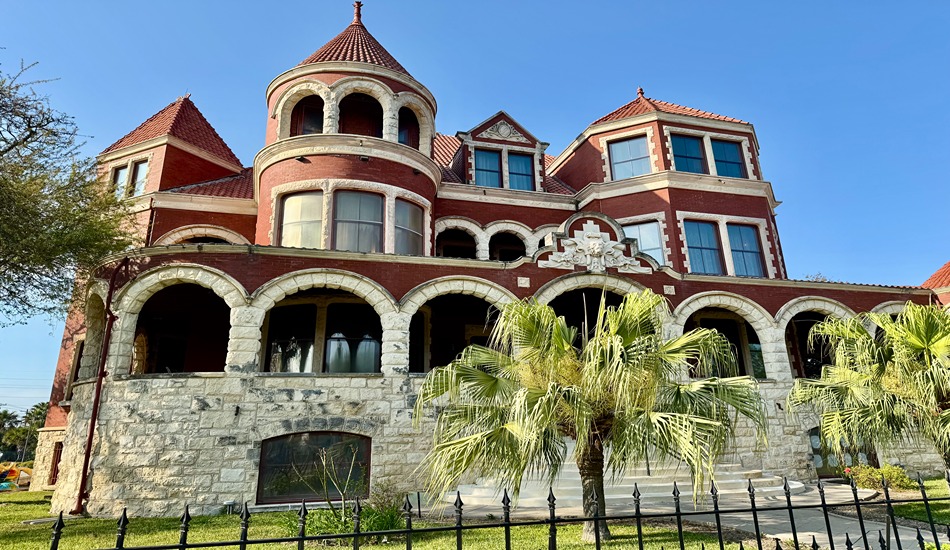
Moody Mansion
Historic Home Tours in Galveston
Those captivated by the excesses of the Gilded Age will want to tour two Broadway Avenue showplaces.
One of many fine homes in the East End Historic District, the castle-like Bishop’s Palace, built in 1892 for a railroad magnate, is a fanciful confection of Texas limestone decorated with bands of red sandstone and gray and pink granites. A crown jewel of Galveston architecture, it served for many years as the residence of the bishop of the Galveston-Houston Archdiocese. Intricately carved woodwork, stained-glass windows and marble fireplaces beautify this National Historic Landmark.
Equally impressive is the opulently furnished 1895 Moody Mansion, once home to the powerful and philanthropic Moody family, which established a financial empire based on cotton, banking, ranching and other industries.
Waterfront Sights, Fresh Seafood and Beach Blanket Bliss
Galveston Historic Seaport, a tourist magnet at Pier 21, is a short walk from Strand Street and the departure point for one-hour Galveston Harbor cruises that go out into the bay. We were hoping to see lots of bottlenose dolphins from aboard the Seagull II and were not disappointed.
The Historic Seaport also is home to Ship to Shore, an interactive museum that chronicles Galveston’s immigration history, and 1877 Tall Ship ELISSA, one of the oldest sailing ships still in operation. The latter will be available for tours once she returns from participating in America250 celebrations in other port cities.
Two piers away, Katie’s Seafood House serves up seafood fresh from its own fleet of fishing boats, offering channel views from every seat. One of many Gulf-to-table restaurants in town, it has an extensive menu listing everything from oysters, jumbo shrimp and blue crab to popular fish like American Red Snapper and Yellow Edge Grouper. Guests ordering fish can choose from seven cooking styles, including Creole, Italian and Caribbean.
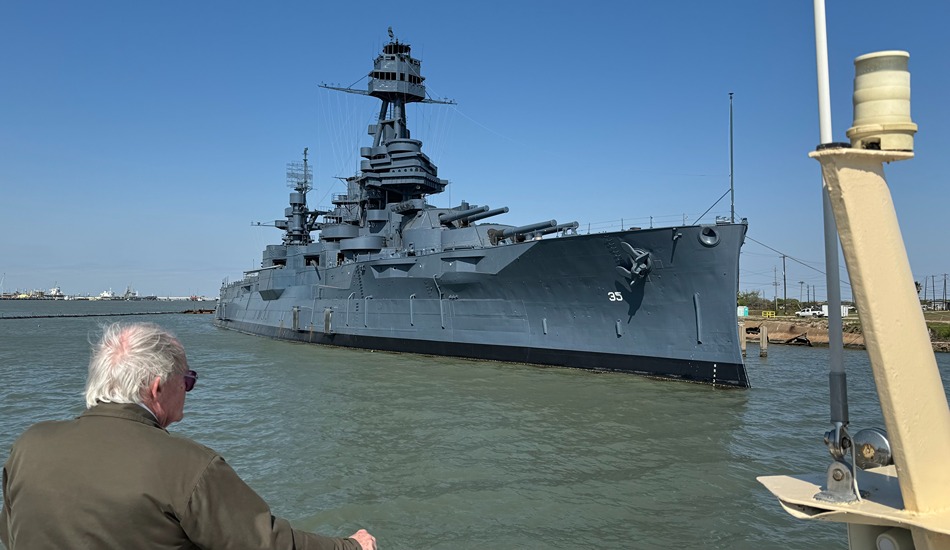
Battleship Texas is being restored as a tourist attraction on Galveston’s waterfront.
When Battleship Texas moves to Pier 15 in late 2026, she will be the newest attraction on the Galveston waterfront. Soon to complete a four-year, $75 million restoration, the last remaining battleship to serve in both World War I and World War II shelled the Normandy coast on D-Day and supported Iwo Jima landings in the Pacific. The museum ship previously was anchored at San Jacinto Battleground State Historic Site, located off the Houston Ship Channel in La Porte, Texas. We got a good glimpse of the mighty vessel right after our harbor cruise began.
More military history is on display at the Galveston Naval Museum on Pelican Island. Guests can delve into WWII history while touring a U.S. Navy destroyer escort and attack submarine.
Another harborfront option: touring a retired oil rig at the Ocean Star Offshore Drilling Rig & Museum.
The Gulf side of the island is lined with 32 miles of soft, sandy beaches. An amusement park jutting out into the sea, Galveston Island Historic Pleasure Pier features a roller coaster, Ferris wheel and other rides, plus carnival games and food outlets like Carousel Court Sweets and Bubba Gump Shrimp Co.
Travel smarter, plan better – Get top destinations, itineraries, and industry trends by subscribing to Leisure Group Travel now.
Lead Photo – Specialty shops occupy many of the historic buildings on Strand Street.