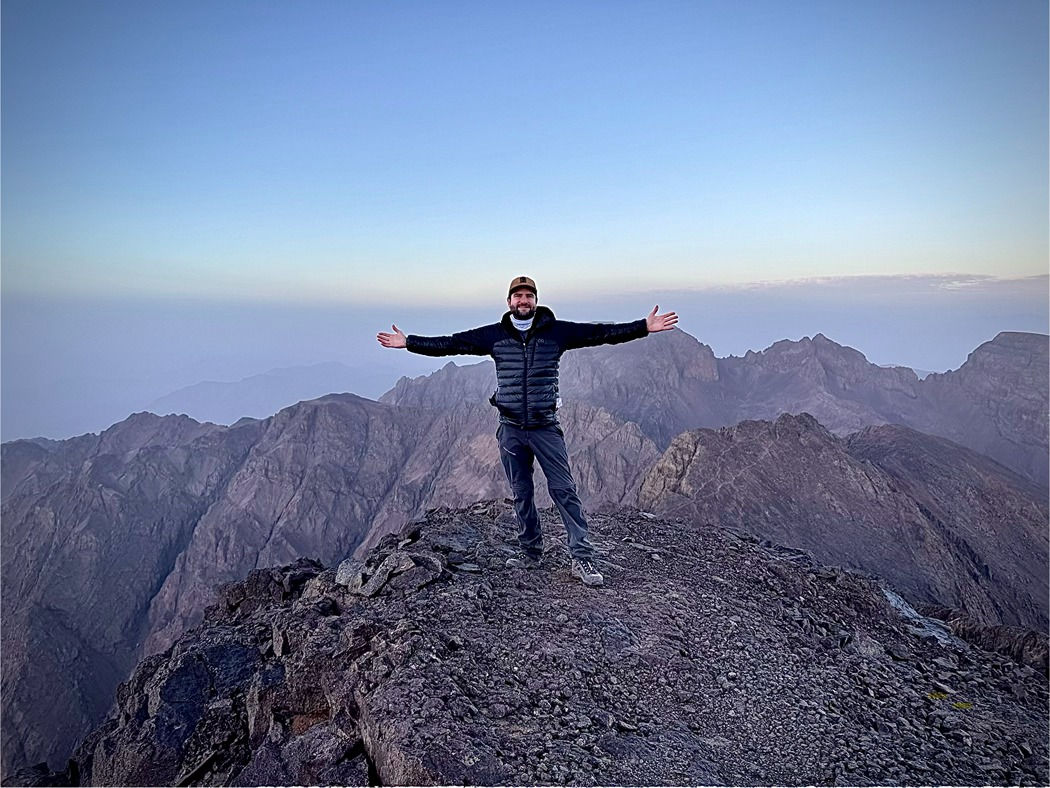
Fernando Diez, Marketing Director for Quasar Expeditions
How can tour operators better communicate sustainability without sounding performative?
Too many travel brands today use sustainability as a marketing layer, and travelers are increasingly skeptical of that. In the Galapagos, for example, there are cruise companies that claim to be sustainable because they donate one cabin on a cruise per year to a non-profit organization. That may support a good cause, but on its own, it does not make a company sustainable. If your internal processes are wasteful, if you are careless with resources, or if you are not taking proper care of your people and your community, then the larger claim begins to ring hollow. One of the simplest ways to do that is to ask direct questions. Ideally, ask them in conversation, not just by email, where it is easier to polish a response. Ask what projects the company supports in each destination.
For more travel tips and ideas for groups, be sure to Download the June edition of Leisure Group Travel and Subscribe for FREE

Are today’s high-end travelers looking for comfort, exclusivity, or deeper meaning, and how do you balance all three?
I would say they are looking for all three, but the deeper meaning is increasingly what justifies the other two. Comfort still matters, and exclusivity certainly still matters. A few years ago, for many high-end travelers, that may have been enough. But for the kind of guests Quasar attracts, those qualities are no longer enough on their own. Our travelers want a journey to feel worthy not only of the financial investment, but also of their time, anticipation, and emotional investment. That is especially true because many high-end travelers lead full, demanding lives. Their most valuable non-renewable asset is not money, but time. What they are really seeking is a meaningful use of that time, and for a trip to feel truly meaningful, it has to leave a lasting mark. At Quasar, we describe it as adventure with ease, quiet luxury with heart, and comfort rooted not in hardware alone, but in connection.
How has demand for small-ship and intimate experiences evolved in recent years?
I know everyone in travel is tired of talking about COVID, but I do think it was the biggest catalyst for change here. It shifted small-ship and intimate experiences from being a niche preference to becoming a much more widely understood value proposition. For years, small-ship travel mostly appealed to travelers who already knew exactly what they wanted. Now, more people understand the difference almost immediately. They have experienced overcrowding, rigid schedules, long lines, and the impersonality that often comes with larger travel formats. COVID also caused many people to reevaluate their lives and place a higher value on their leisure time, especially when spent with loved ones. As a result, when travelers hear “smallship” or “intimate expedition,” they increasingly associate it with access, flexibility, depth, and peace of mind. The overall cruise market remains strong, but at the same time, luxury and experiential travel trends continue pointing toward more personalized, less crowded, and more meaningful experiences. We have seen this firsthand in the Galapagos, where even larger cruise brands that historically had no presence in the region have begun pursuing the kind of intimate, destination-led experiences that have always defined it.
Where do you see the biggest gaps between intention and action in sustainable travel?
The biggest gap is convenience. I choose to believe that most travelers want to make better choices, but cost, clarity, and ease still drive behavior. People may care deeply about sustainability, but when the better option feels harder, more expensive, or less clear, many fall back on habit. Sustainable travel often asks people to accept trade-offs: stricter rules, fewer departures, longer, more immersive itineraries, or less of the excess that has traditionally defined luxury travel. Quasar often asks this of its Guests, and in a place like the Galapagos, those trade-offs are not a flaw. They are part of protecting what makes the destination worth visiting in the first place. The future of sustainable travel depends on reducing this friction.
For more travel tips and ideas for groups, be sure to Download the June edition of Leisure Group Travel and Subscribe for FREE