The iconic Salt Lake Temple opens its doors to the public
By Dave Bodle
Every so often, a destination offers travelers something that cannot be replicated, extended, or rescheduled. Miss it, and it becomes history. Catch it, and it becomes a story you tell for the rest of your life.
Your next group adventure starts here! Get your free copy of Leisure GroupTravel magazine and explore the best destinations, itineraries, and travel ideas.
From April through October 2027, Salt Lake City will host one of those rare moments when timing matters as much as place: the Salt Lake Temple Open House, a seven-month window during which one of the most recognizable religious and architectural landmarks in the American West opens its interior to the public.
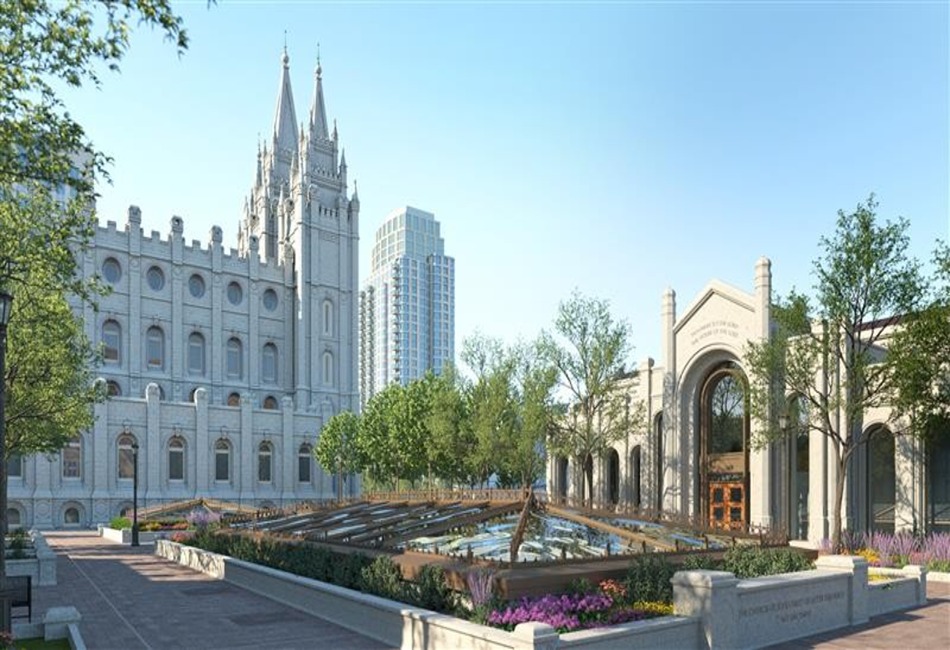
Forgroups, this is not a routine sightseeing opportunity. It is a once-in-a-lifetime cultural event, one that blends architecture, history, craftsmanship, faith, and curiosity into a single, carefully curated experience. The Salt Lake Temple, normally accessible only to members of The Church of Jesus Christ of Latter-day Saints, will welcome visitors of all backgrounds inside before the building is rededicated and once again closed for regular religious use.
The appeal is broad. Cultural travelers will come for the craftsmanship and restoration work. Architecture enthusiasts will want to see how a 19th-century granite structure has been reinforced to meet modern seismic standards without compromising its historic integrity. Faith travelers will arrive with reverence. Others will come simply because they have walked Temple Square for years and wondered what lies beyond the walls.
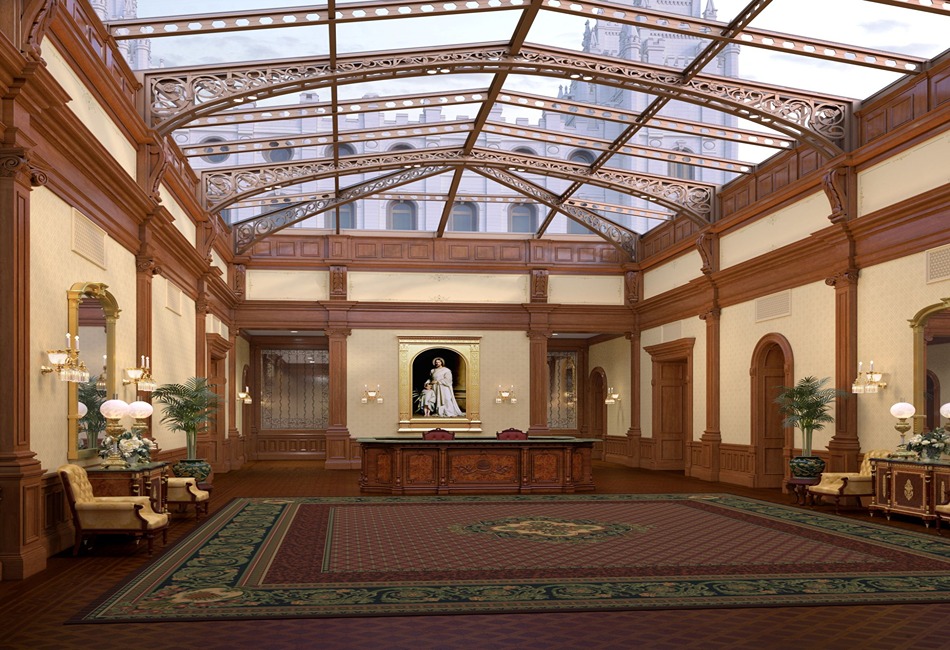
Crossing the threshold, visitors immediately notice the interplay of natural light and historic stone. The interior feels quieter than expected, insulated not just from sound but from time. Granite walls that once bore the marks of 19th-century tools now appear restored, their surfaces cleaned and preserved rather than replaced. The effect is subtle but powerful, history made legible.
A massive upgrade
As the tour progresses, visitors begin to understand the scale of the renovation that made this open house possible. The Salt Lake Temple has undergone a massive seismic upgrade, strengthening the structure from within while preserving its outward appearance. What’s striking is how invisible that work feels. Steel reinforcements and modern engineering solutions have been carefully integrated, allowing the historic character of the building to remain front and center.
“Ninety-eight, 1,000-pound base isolators were placed underneath the temple, and rebars were placed inside each original stone block, said Elder Brent Nielson, coordinator, Salt Lake Temple Open House. “The entire process will be condensed into a 25-minute video that shows in the Conference Center Theater, a three-minute walk across Temple Square.”
Along the North Wall, visitors learn about new structural elements that quietly support the temple’s longevity. This is preservation at its most thoughtful, not flashy, not obvious, but essential. For architecture and heritage travelers, these moments are often among the most compelling: evidence of how a landmark evolves without losing itself.
Historic documents available to the public
For many visitors, the emotional high point of the tour comes with access to the Sealing Rooms that, for the first time, are being shared openly with both members and nonmembers. These 22 rooms are set aside for married couples and families to spiritually assure they will be joined in heaven. There are also two Baptismal Rooms and five Instructional Rooms. On the fourth floor, the final Instructional Room is a quiet place for prayer, pause, or meditation. These rooms are not presented as curiosities, but as integral parts of the building’s story.
Here, the tone shifts again. The rooms feel more intimate, more reflective. Furnishings, finishes, and spatial proportions invite visitors to slow down. Even those with no religious background might describe a sense of calm.
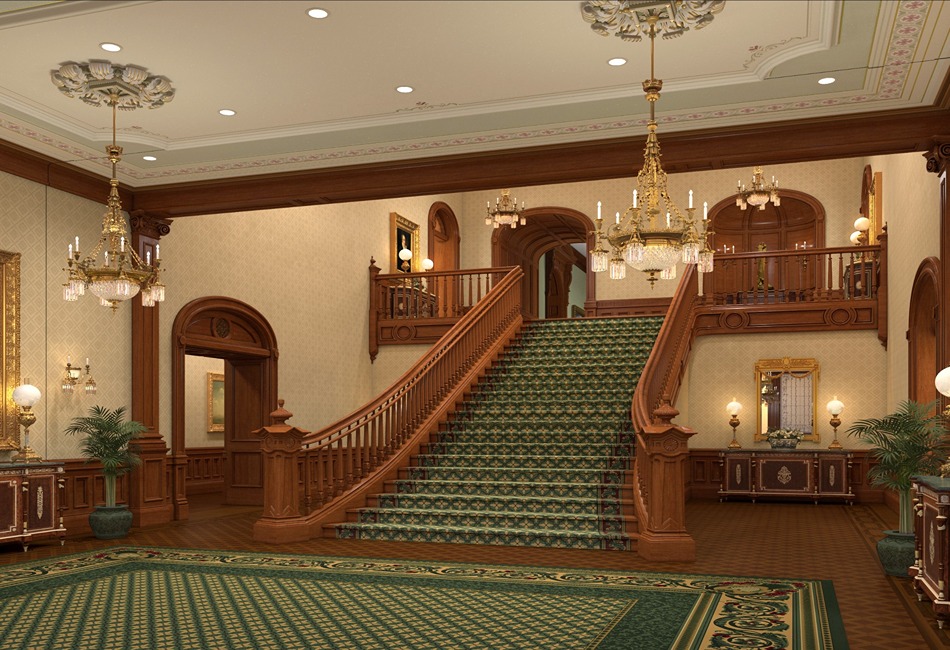
Opportunities to engage with historic documents, carefully preserved and interpreted for public viewing, are available at both the Church History Museum and FamilySearch on Temple Square. These are not presented as relics behind glass alone, but as a narrative connecting the building to the people who planned it, built it, and maintained it across generations.
What makes the 2027 open house especially compelling for travelers is how intentionally the experience has been designed. This is not a rushed walkthrough or a narrow interpretive lens. The tour, approximately 75 minutes, covering about 200 steps, is ADA-compliant, supported by audio guides in multiple languages, and staffed by knowledgeable representatives stationed throughout the route. Visitors are encouraged to move at a pace that suits them, ask questions, or simply observe.
The route is designed to flow naturally, with no sense of backtracking or congestion. Even during peak visitation, the experience feels personal, as if the building itself is guiding the movement forward.
As one organizer described the guiding philosophy behind the experience: “We want our visitors to have the experience they want to have.”
That statement may sound simple, but for travelers, especially those unfamiliar with Latter-Day Saint temples, it is significant. There is no expectation placed on belief, participation, or interpretation. The open house is about access, understanding, and encounter.
“We would love for the whole world to come visit the Salt Lake Temple opening and Temple Square,” said Richard Sutton, senior director, Salt Lake Temple Open House. Sutton added, “Whether you are coming for a half-day or part of a longer itinerary to Utah and Salt Lake City, you are welcome. Whatever your interests, they will certainly be satisfied.”
For Salt Lake City, the timing could not be more important. Temple Square has long been a cornerstone of the city’s tourism identity, but the temple itself has been wrapped in scaffolding for years during an extensive renovation and seismic upgrade. By 2027, visitors won’t just see the finished building; they will step inside a structure that has quietly shaped the city since its earliest days.
What makes this access especially meaningful for groups is the understanding that it may not happen again in their lifetime. History offers a reminder: when the St. George Temple was remodeled in the 1970s, an open house allowed public access. It would take more than 40 years before another renovation created a similar opportunity. The Salt Lake Temple’s open house sits in that same category, a narrow window in a long architectural lifespan.
And when the doors close again after October 2027, they may not reopen to the general public for generations.
Jason Murray of Southwest Adventure Tours shared these thoughts: “Our travel agent, group leader, and operators that we serve as receptive operators are beginning to plan a series of tours and group blocks. Already, more than a dozen of our planned groups are adjusting their itineraries during the visitation open house. Simply put, the tour industry should get ahead of the crowd. They need to get their packages put together now and provide more time to gain customers.”
Your next group adventure starts here! Get your free copy of Leisure Group Travel magazine and explore the best destinations, itineraries, and travel ideas.
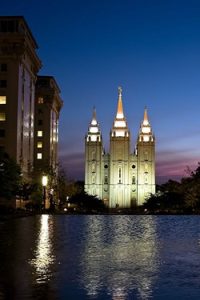
The legacy is visible
To understand why the Salt Lake Temple Open House matters to group travelers, it helps to understand the building’s relationship to the city around it.
Unlike many historic landmarks that were added after a city took shape, the Salt Lake Temple was part of the original vision. When early settlers arrived in the Salt Lake Valley in 1847, they did not choose a site for convenience or scenery alone. The temple location anchored the city’s grid system, influencing how streets, neighborhoods, and civic spaces developed outward from Temple Square.
For modern visitors, that legacy is immediately visible. Standing on Temple Square today, it becomes clear that the temple is not simply in Salt Lake City. It is central to how the city understands itself. Hotels, museums, restaurants, and transit routes radiate from this historic core, making the open house an easy addition to a broader travel itinerary.
Architecturally, the temple is both imposing and restrained. Constructed primarily of granite quarried from Little Cottonwood Canyon, the building took 40 years to complete from 1853 to 1893. That long construction period meant generations of craftsmen contributed to its design, leaving behind a layered story of techniques, styles, and symbolism.
For travelers accustomed to European cathedrals or East Coast religious landmarks, the Salt Lake Temple offers something distinctly Western: a structure born of perseverance, isolation, and long-term vision. Its six spires rise not as ornament, but as intention meant to be seen from miles away, guiding both the faithful and the curious toward the city’s heart.
The temple’s role as a travel anchor will be amplified during the open house months. Visitors can expect Temple Square to feel more international than ever, with language access, interpretive materials, and staff prepared to welcome guests from around the world. For many, the temple will serve as the emotional centerpiece of a broader Utah itinerary paired with nearby cultural institutions, outdoor recreation, and the region’s growing culinary scene.
Yet the open house remains the singular draw. You can return to Utah’s national parks. You can revisit Salt Lake City’s museums. But the opportunity to walk inside the Salt Lake Temple, including spaces never before shared so openly, exists only in this narrow window.
For travelers who value experiences over checklists, that distinction matters. Your next group adventure starts here! Get your free copy of Leisure Group Travel magazine and explore the best destinations, itineraries, and travel ideas.