Scenic splendor and insights into American Indian life captivate adventure-minded travelers. Monument Valley, Canyon de Chelly and other wonders await.
Visions of classic John Wayne Westerns flooded my mind as our Navajo driver/guide negotiated the bumpy road in Monument Valley, a spellbinding landscape that Hollywood for generations has used to symbolize the wide-open American West.
I’d seen the red-rock monoliths and spires hundreds of times in movies, TV shows and commercials. And now, seated with nine other tourists in the back of a flatbed truck, I was thrilled to be checking off my bucket list this sagebrush-dotted kingdom straddling the Arizona-Utah border, a place where tribal members have lived for centuries.
Monument Valley Navajo Tribal Park was one of many eye-openers on a recent trip that took me to Navajo and Hopi reservations in Northern Arizona. I also got a taste of Indigenous cultures at two Native American-owned resorts in greater Phoenix.

Talking Stick Golf Club. (Photo credit: Discover Salt River)
Talking Stick Resort
Soon after arriving at Phoenix Sky Harbor International Airport, I was relaxing at Talking Stick Resort, an upscale oasis on the Salt River Pima-Maricopa Indian Community. Tribal art, artifacts and design elements are woven throughout the 15-story hotel tower and the golf clubhouse that serves two championship courses offering panoramic views of the mountains and Sonoran Desert. A museum room, called The Cultural Center, showcases handcrafted pottery, baskets and other treasures, including a traditional talking stick carved with symbols representing events in the calendar for the O’odham (Pima) and Piipaash (Maricopa) tribes. One night I caught an Indian dance performance by the pool, down a level from the Las Vegas-style casino, a sprawling space with 1,400+ shimmering slot machines and more than 50 table games.
The 496-room hotel is part of the Talking Stick Entertainment District, which encompasses Arizona Boardwalk, a complex with family-friendly attractions like OdySea Aquarium, Museum of Illusions and Butterfly Wonderland. The Pavilions at Talking Stick is a vast outdoor shopping center, and Salt River Fields at Talking Stick serves as the Cactus League spring training home of baseball’s Arizona Diamondbacks and Colorado Rockies. Near the ballpark, USS Arizona Memorial Gardens honors sailors who lost their lives in the 1941 attack on Pearl Harbor. For good photo ops in the district, follow the Salt River Art Trail, a collection of sculptures and murals by local artists.
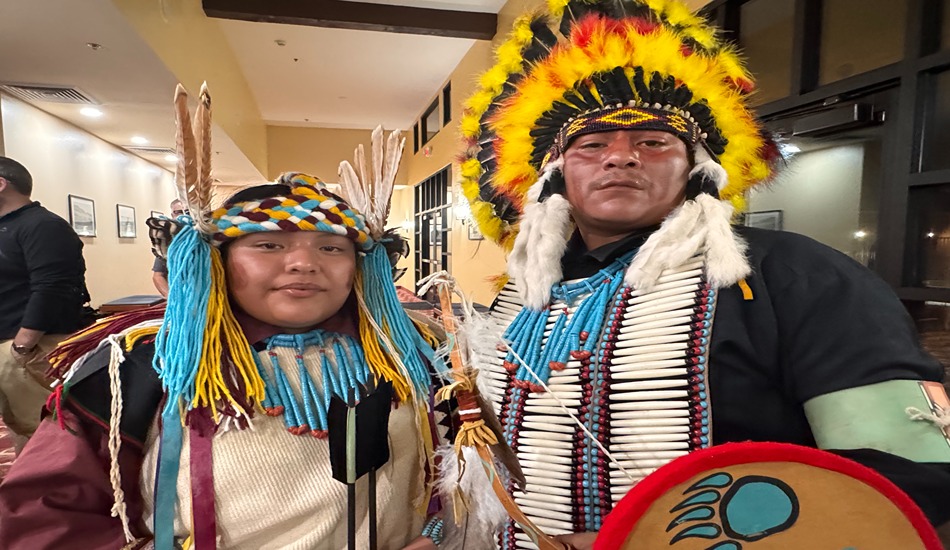
Hopi dancers. (Randy Mink Photo)
In neighboring Scottsdale, the two-day Arizona Indian Festival, part of late January’s Scottsdale Western Week, took place during my stay. Spotlighting the state’s 22 Indigenous communities, it featured dancing, food vendors and crafts for sale. (Look at a map of Arizona and you’ll see that tribal lands account for a quarter of the state’s territory.)
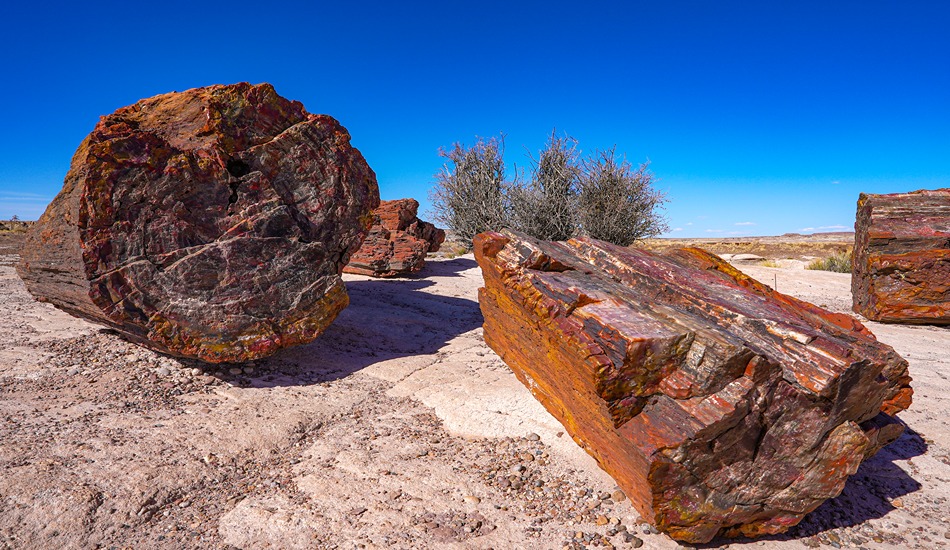
Petrified Forest National Park, a land of geological curiosities. (NPS Photo)
Petrified Forest National Park
On my way to Navajo lands in northeastern Arizona, I stopped at Petrified Forest National Park, another place I had always wanted to see. When dinosaurs ruled the earth, these strangely eroded badlands were a rainforest. The logs scattered across the hills today had become buried beneath layers of silt and over eons turned into solid crystalline quartz. Hiking along the Crystal Forest Trail, you’ll see remnants of the prehistoric forest in various colors; the red comes from iron oxide. The logs look cut or sawed, but they just broke that way. You’re free to pick up chunks of petrified wood, but it’s illegal to remove even a small sliver.
Visible from Newspaper Rock overlook are sandstone bluffs bearing petroglyphs created by Ancestral Puebloan people more than 500 years ago. Eight viewpoints provide panoramas of the Painted Desert, a geological phenomenon named for the vivid colors of the soil and stone.
Hubbell Trading Post
My first stop in the Navajo Nation was Hubbell Trading Post National Historic Site, a farmstead that preserves the best remaining example of a typical Southwestern trading post. Established in the 1870s by John Lorenzo Hubbell, it continues to operate as a store that sells household goods and American Indian arts and crafts, including the famous wool rugs and silver/turquoise jewelry made by Navajo artisans. Hubbell was known for his honest dealings with the Navajo and for bridging the gap between Anglo and Indian cultures.
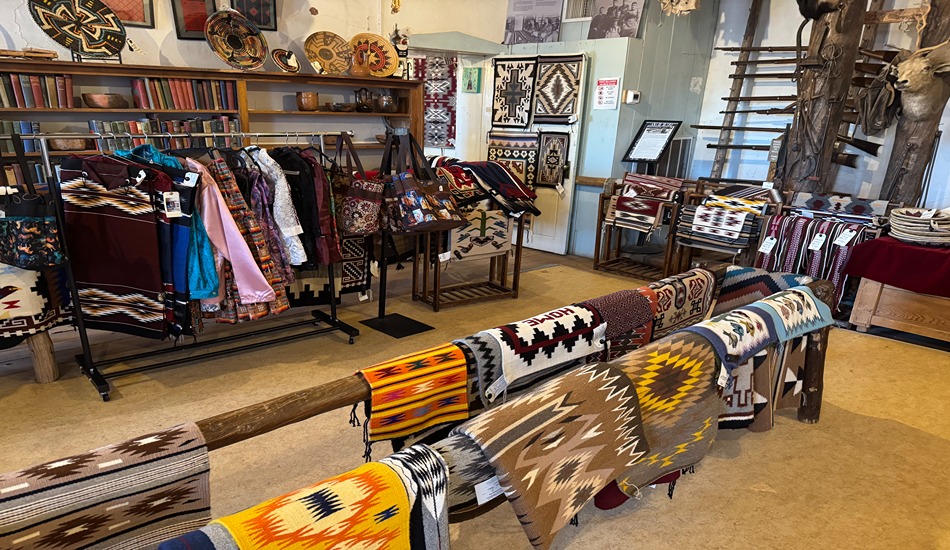
The Navajo Nation’s historic Hubbell Trading Post. (Randy Mink Photo)
The Hubbell home, lived in by family members until 1967, is filled with original furniture, mounted animal heads and portraits of Indian leaders.
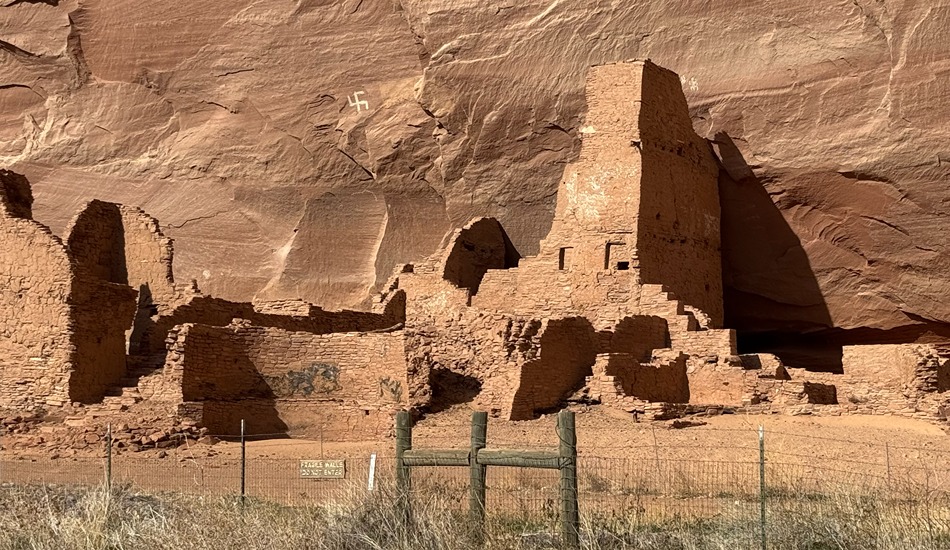
Ancient cliff dwellings at Canyon de Chelly National Monument. (Randy Mink Photo)
Canyon de Chelly National Monument
An archaeological site sacred to the Navajo, Canyon de Chelly (pronounced “de shay”) comprises two long canyons with magnificent walls of red sandstone. Roads snaking along the rim afford stunning views, but the canyon floor can be visited only with an authorized Navajo guide.
On my tour along a rutted road in a military-type troop carrier, we stopped to view ancient petroglyphs and ruins of cliff dwellings. Horses on the roadside belong to some of the 70 families with ancestral claims to the land, where they live in summer tending livestock and cultivating corn and alfalfa fields.
I stayed at the only accommodation inside park boundaries—adobe-style Thunderbird Lodge, a Navajo-owned and -operated motel with 69 rooms. At its restaurant, located in a former trading post built in 1902, I had the Navajo Burger, served not on a bun but inside Navajo fry bread. Soft and pillowy, fry bread is crispy on the outside, tender inside. As a sweet treat, it’s great with honey. Navajo burgers and tacos are commonly found on menus—and at food stands—in the region.
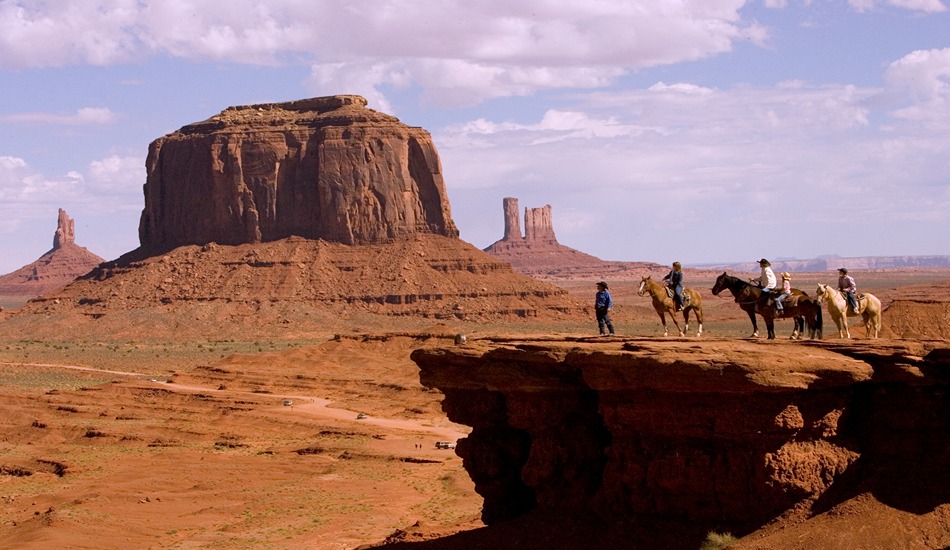
Monument Valley Navajo Tribal Park can be explored by jeep, foot or horseback. (Photo credit: Arizona Office of Tourism)
The Sovereign Navajo Nation
The Navajo Nation, which spills into Utah and New Mexico, is the largest Native American reservation in the United States, both in population (175,000) and geographical area (about the size of West Virginia).
The Navajo have lived in this high desert region for more than 400 years. Much of the territory is open range where they maintain small herds of cattle, horses, sheep and goats. People tend to live in family groups in the countryside rather than cities and towns in the familiar sense.
Most Navajo speak English besides their own complex language, a tongue that gained notoriety during World War II when U.S. Marines who became known as the Navajo Code Talkers developed a code to securely transmit battlefield messages in the Pacific Theater.
Monument Valley
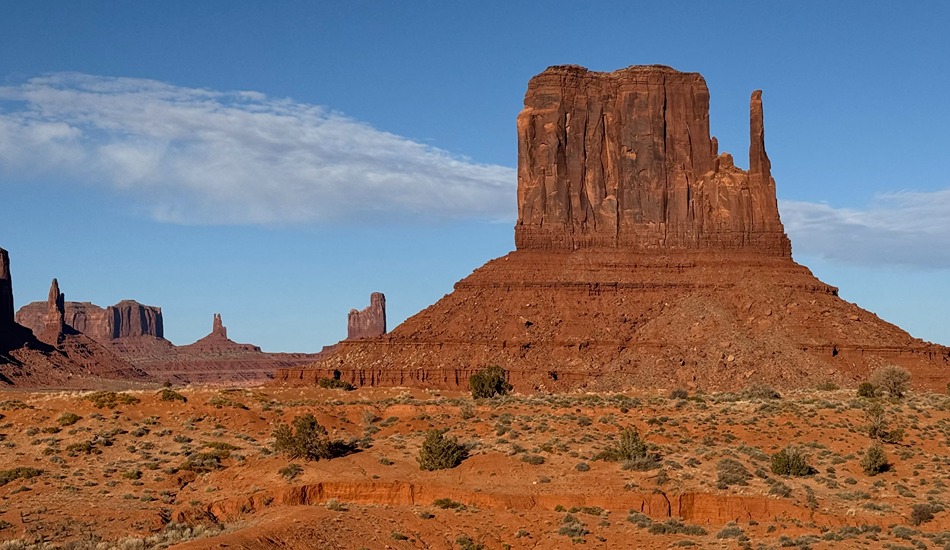
Few places can equal the sheer majesty of Monument Valley, an expanse of red-hued boulders, pinnacles, buttes and mesas rising dramatically from the sandy desert floor. One of the most photographed places on earth, it’s appeared not only in John Wayne films like The Searchers (1956) and Stagecoach (1939) but in such movies as Easy Rider, Thelma & Louise, Forrest Gump and Transformers 3, to name just a few. It was a setting for Marlboro Man cigarette commercials in the 1960s and ’70s.
The best way to experience Monument Valley is a 2½-hour Goulding’s Sunset Jeep Tour that makes several photo stops on a 17-mile loop through the otherworldly terrain. As your guide explains, the towering “monuments” have names like West Mitten, East Mitten, Elephant Butte, Camel Butte and The Thumb. While these rock castles merit photo after photo, it’s wise to set the camera aside at some point and pause to let the grandeur sink in. Besides jeep tours, guided hikes and horseback rides are available.
Each guest room at The View Hotel, where I spent the night, has a balcony overlooking Monument Valley. A lot of us got up early to watch the sunrise. Public areas and guest rooms are tastefully adorned with Navajo art and design touches. The Trading Post gift shop abounds with souvenirs, from John Wayne magnets to high-quality Navajo jewelry and artwork.
At The View Restaurant, I savored a large bowl of green chili stew with shredded pork and potatoes, a Southwestern favorite. Or you can order the John Wayne cheeseburger, Johnny Depp club sandwich or the grilled chicken salad named after movie director John Ford, who is credited with putting Monument Valley in the national spotlight.
More Navajo Nation Adventures
From Monument Valley I traveled 60 miles west to Navajo National Monument, where a paved trail through a juniper-pinyon pine forest took me to a promontory high above a 13th century cliff dwelling tucked into a canyon alcove below. Signs along the trail identify native plants and how the Navajo and Hopi people have traditionally used them. Leaves of the broadleaf yucca, for example, were shredded and twisted into rope, while the brew from juniper leaves was a laxative.
On Navajo land just outside of Page, an ethereal experience awaits hikers who squeeze through the tight passageways of Antelope Canyon, one of the Southwest’s most pictured natural wonders. Its smooth, curvy walls of pinkish-orange sandstone glow with sunlight streaming through small gashes in the rock above. Led by a Navajo guide from Dixie’s Lower Antelope Canyon Tours, our crawl through the caverns involved some ladders and stairways.
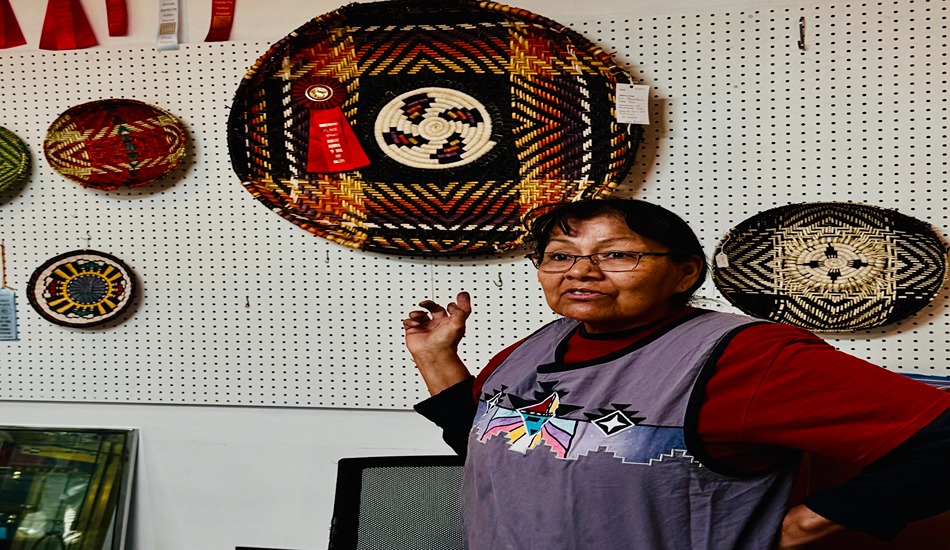
Hopi basket maker Ivy Honyestewa at Iskasokpu Gallery. (Randy Mink Photo)
Hopi Homeland
The Hopi Reservation, curiously, is completely encircled by the Navajo Nation. One of the oldest known tribes in North America, the Hopi live in 12 villages in regions referred to as First Mesa, Second Mesa and Third Mesa. They are known for their pottery, basketwork, silver jewelry and carved wooden kachina dolls.
I had a chance to delve into the tribe’s rich culture with guide Randy Lomayaktewa Sr. of Experience Hopi Tours. Highlighted by visits to the galleries and workshops of Hopi artisans, the tours depart daily from Moenkopi Legacy Inn & Suites. In the mobile home of Duane Tawahongra, our group watched as the master silversmith crafted pieces of jewelry with painstaking precision. At her Iskasokpu Gallery, Ivy Honyestewa demonstrated how she weaves dyed yucca fibers into beautiful baskets.
The Hopi hop also made a brief stop at Oraibi, said to be the oldest continuously inhabited village in North America (founded around AD 1150). The 20-some families living in the humble stone-and-adobe and cement-block houses get along without electricity or running water. Our half-day excursion ended with lunch at the Hopi Cultural Center’s restaurant, where I feasted on the Hopi Hot Beef, a mound of thinly sliced roast beef, mashed potatoes and gravy crowning a bed of fry bread. The center has a gift shop, museum and modest motel.
The Moenkopi Legacy Inn, adjacent to Tuba City on Navajo land, serves as the tribe’s de facto tourist information office. Its facade resembles a Hopi village, and the lobby features a soaring ceiling, peeled-log columns, a stone fireplace and handicraft displays. Tribal symbols are woven into the upholstery and carpeting. Lining the meeting rooms corridor are framed, black-and-white photos of Hopi village life in the early 1900s. Amenities include a swimming pool, whirlpool and complimentary hot breakfast.
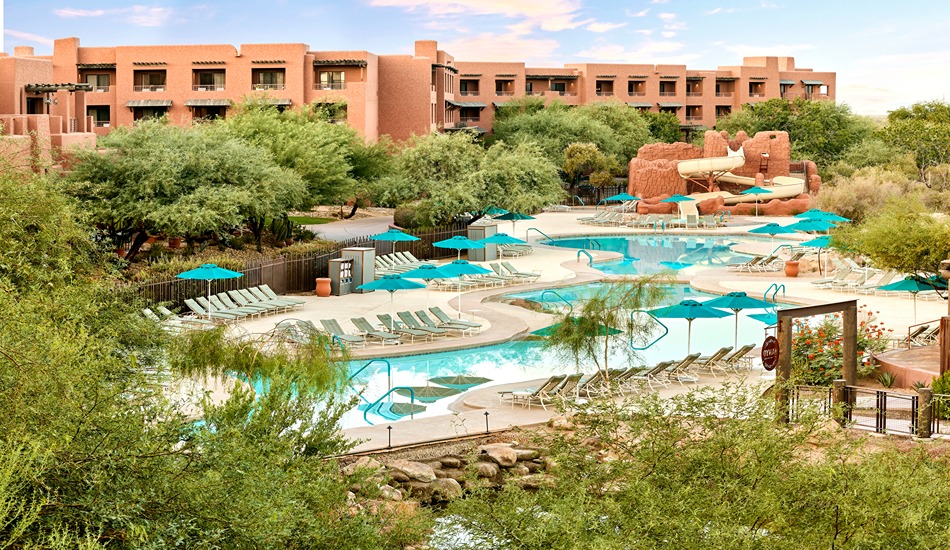
Sheraton Grand at Wild Horse Pass. (Photo credit: Sheraton Grand)
Back in Metro Phoenix
My week-long swing through Arizona tribal lands wrapped up with a day at Sheraton Grand at Wild Horse Pass, a luxury golf resort on the Gila River Indian Community. The oldest reservation in Arizona (established in 1859) contains miles of undeveloped land. On a trail ride from Koli Equestrian Center, you might spot some of the 1,500+ horses that run wild on ground settled long ago by the Pima and Maricopa tribes.
Like the Talking Stick Resort, the Sheraton Grand pays homage to tribal heritage with artifact displays and vintage photographs in public areas. The soothing sounds of flute background music enhance the peaceful ambience.
Starting at the Aji Spa, there’s a 2.5-mile interpretive trail follows a replica of the mighty river that once coursed through this land. Signboards along the dirt path skirting the stream and golf course identify trees and plants and shed light on Native culture.
Besides being rewarded with awesome scenery and historical insights, I came away from the trip with warm memories of friendly, enthusiastic people who obviously enjoyed sharing their heritage and deep respect for the land, the sacred land of their ancestors.
Travel smarter, plan better – Get top destinations, itineraries, and industry trends by subscribing to Leisure Group Travel now.
By Randy Mink, Senior Editor
Lead Photo – Monument Valley. (Randy Mink Photo)