
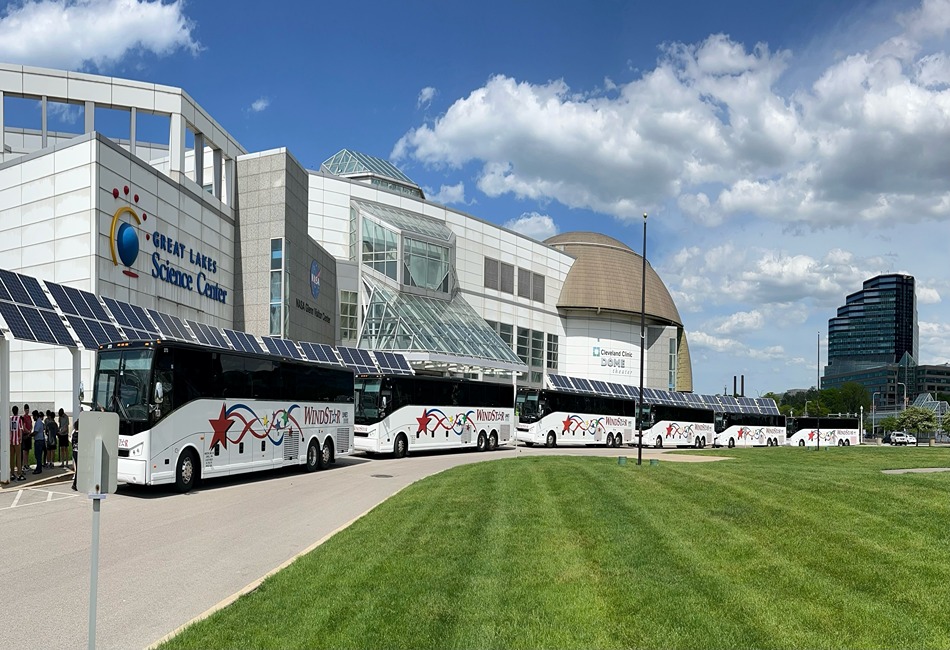
Generating billions in economic impact and keeping millions of cars off the road, the motorcoach industry is a quiet powerhouse of connection and sustainability.
By Jason Paha
“I commend ABA members for your commitment to public safety and for the positive difference you make in our local communities. Whether visiting family, touring national historic sites, or heading off to work each day, millions of Americans rely on dependable bus service. Motorcoaches now serve six times more U.S. destinations than airlines and more than seven times more destinations than passenger rail.”
President George W. Bush in a letter to ABA members 8/21/01
Motorcoach group travel is a powerful economic engine. Beyond simply getting travelers from one place to another, motorcoach group travel connects communities, supports local economies and makes travel accessible for millions of Americans each year.
From student trips and senior excursions to sports teams, tour groups and family reunions, motorcoaches move people efficiently and sustainably while channeling vital spending into hotels, restaurants, attractions and shops in every corner of the country. This form of travel strengthens regional tourism networks, creates jobs and generates tax revenue that benefits communities large and small, all while delivering one of the most energy-efficient modes of group transportation available.
Plan your next adventure with the December Leisure Group Travel edition. Subscribe now to stay inspired!
According to a 2025 detailed economic impact analysis by Tourism Economics and sponsored by the ABA Foundation, motorcoach travel in the United States recorded an estimated 37.6 billion passenger miles in the country in 2024, supporting significant economic impacts nationally.
Direct spending by motorcoach travelers amounted to $69.8 billion in 2024, including spending on motorcoach transportation as well as a range of goods and services, such as accommodations and food and beverages.
Of that $69.8 billion, $54.6 billion stemmed from day traveler spending while $15.2 billion came from overnight traveler spending. That spending didn’t stop there as it rippled through local communities, creating a total
economic impact of $158 billion, supporting more than 890,000 full-time and part-time jobs and generating $27.7 billion in tax revenue nationwide.
Serving the Public
The motorcoach industry has a long history of serving the diverse needs of the traveling public.
Motorcoaches serve nearly 5,000 communities nationwide, quietly providing for the mobility needs of millions of consumers. Motorcoaches carry a far higher percentage of passengers from low-income families than any other mode. Nearly 40 percent of intercity bus passengers are from families with incomes that are less than $20,000 per year. In contrast, fewer than 10 percent of Amtrak and commercial aviation passengers are from low-income families. Providing these services while, at the same time, strengthening the economy of a state, province, county or city’s economy is a goal shared by many communities.
The nearly 48,000 motorcoaches on roads across North America account for more than 774 million passengers each year, more than the airlines and Amtrak combined, and intercity buses serve nearly 5,000 communities nationwide. Those 35,000 coaches provide charter, tour, sightseeing, airport shuttle, commuter, and scheduled services.
One motorcoach group visiting one destination for one day leaves behind between $2,500 and $5,000 in direct tourist spending in that local economy. An overnight visit by a motorcoach group leaves behind $5,000 and $11,000 in direct tourist spending in a local economy.
According to the National Safety Council, in an average year, more than 360 million passenger trips in the United States are taken by intercity bus, totaling 28 billion passenger miles. Actual motorcoach mileage is estimated at about 945 million.
A Green Way to Travel
Motorcoaches are the most fuel-efficient way to travel, averaging 5.5 miles per gallon of fuel while carrying between 30-50 passengers, yielding a performance record of 206.6 passengers per mile per gallon. Compared with motorcoaches, trains consume three times more energy, cars consume four times more energy, and airplanes consume more than five times more energy per passenger mile.
One motorcoach can displace as many as 57 passenger cars from crowded highways. Intercity buses help to relieve congestion and pollution by keeping up to 425 million cars off the roads annually. Motorcoaches emit the least carbon dioxide per passenger mile when compared to other forms of transportation.
Safety
The motorcoach industry is the safest form of commercial passenger transportation. Data from the National Safety Council and the U.S. Federal Highway Administration Office of Motor Carriers and Highway Safety show that the intercity motorcoach industry is one of the safest modes of transportation and has been consistently for decades.
Automobile fatalities per year in the United States tend to hover between 30,000 and 40,000. Fatalities on motorcoach accidents typically average around 44, which makes motorcoaches responsible for between only 0.11 percent and 0.14 percent of all motor vehicle fatalities.
Motorcoach passenger safety is ABA’s top priority, and the government’s own data show that bus travel is the safest form of surface transportation. ABA supports science-driven safety research to improve occupant protection. Enforcement of existing laws and regulations by federal and state agencies must be a priority to ensure that illegal operators do not endanger public safety.
Rural Connections
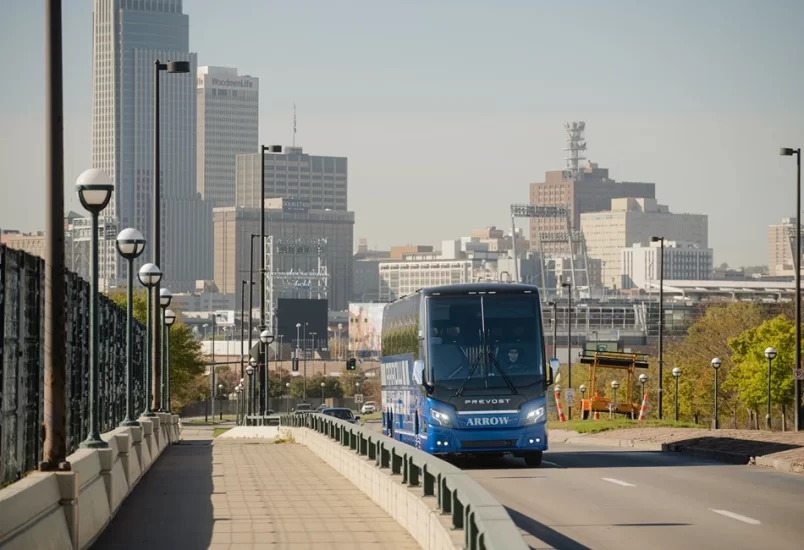
Rural America is underserved by public transportation. According to the U.S. Department of Transportation, nearly 40 percent of rural residents have no public transportation in their communities.
For many rural citizens, intercity bus service is the only form of public transportation available to connect them to other communities and basic human services. This service not only provides essential passenger services, but its incidental package express service is the only form of daily, scheduled freight service for many of these small towns.
Motorcoach transportation is becoming even more important, as a decreasing handful receives service from the federal Essential Air Service program intended to connect rural U.S. communities to major hub airports, and as airlines cut service to rural communities in cost-saving measures.
States were provided an important resource in TEA-21 under Section 5311 F, the rural intercity bus program, to carry out a program to develop and support intercity bus transportation in their rural communities. However, a number of states have chosen to divert those funds to other areas. Motorcoaches can only fill that gap with this necessary assistance.
Public Service Assistance
The motorcoach industry also plays a vital role in supporting national emergency response and public service needs.
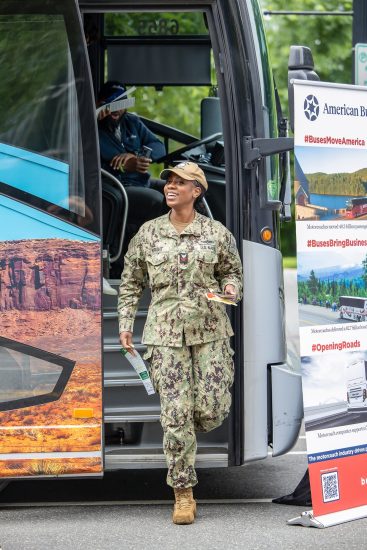
Its vehicles and operators are regularly mobilized for natural disaster evacuations, the movement of emergency aid and personnel, and the transportation of U.S. military service members. These missions demonstrate the sector’s logistical capacity, reliability, and readiness in times of crisis.
With nearly 400 million passenger trips taken annually, the motorcoach industry is a critical pillar of America’s transportation system—providing safe, affordable, and environmentally efficient mobility options. From small family-owned operators to national carriers, motorcoaches serve communities in every state, connecting people to work, school, healthcare, tourism, and more. Whether moving students, commuters, military personnel, or travelers, our industry ensures access where other modes often do not reach. Motorcoaches also complement the broader transportation network, linking seamlessly with airports, rail stations, transit hubs, and roadways, helping bind the nation together.
Plan your next adventure with the December Leisure Group Travel edition. Subscribe now to stay inspired!