Religious tour groups find meaningful sites along the Way of St. James.
There is a quiet, peaceful journey playing out every day across Spain. It has been going on for centuries.
The Camino de Santiago—also known as the Way of St. James—is still one of Europe’s great pilgrimage routes, leading travelers toward Santiago de Compostela and the cathedral traditionally associated with the tomb of St. James. The route can be approached in many ways and on many timelines, but for faith-based groups, even a partial experience can be deeply meaningful.
Pamplona works well for religious tour groups because it combines a living Camino de Santiago tradition with major sacred sites, walkable historic streets, and easy access to other parts of Navarre.
For some groups, the Camino itself is the main event. For others, it becomes a powerful theme within a broader itinerary focused on Pamplona and the surrounding Navarre region in northern Spain. Either way, Pamplona is more than a stopover. It is a place where the pilgrimage is still visible in the streets, churches and daily rhythm of the city. Pamplona’s official tourism resources even include the Ultreia interpretation center, dedicated to the city’s relationship with the Camino.
Powerful Encounters Await
A couple of pilgrim stories set the tone for what visitors may encounter on the Camino:
The determined young man had been walking for more than a year, starting in Norway, headed for Santiago de Compostela on Spain’s west coast. He was only 25 years old and was undertaking a religious pilgrimage along the ancient route, with his sights set on the Cathedral of St. James. An ankle injury forced him to stop before reaching his goal, and he was devastated because completion of the journey meant so much to him.
Then there were the two Canadian health-care sisters in their 30s, their 63-year-old mother and 57-year-old aunt, plus a 21-year-old friend from Colorado. They had been walking for five days when they reached Pamplona and checked into a pilgrim hostel. “We’re on the journey because our mother has told us about it for a long time,” the sisters said. They hoped the experience would help simplify their lives, deepen their empathy for patients and bring them closer to a spiritual meaning.
Those stories remain part of the appeal. The Camino is not simply a route on a map; it is a lived experience that travelers still undertake on foot, by bicycle or on horseback. Along the way, yellow arrows and the scallop shell continue to mark the path toward Santiago.
Pilgrimages: A Way of Life in Pamplona
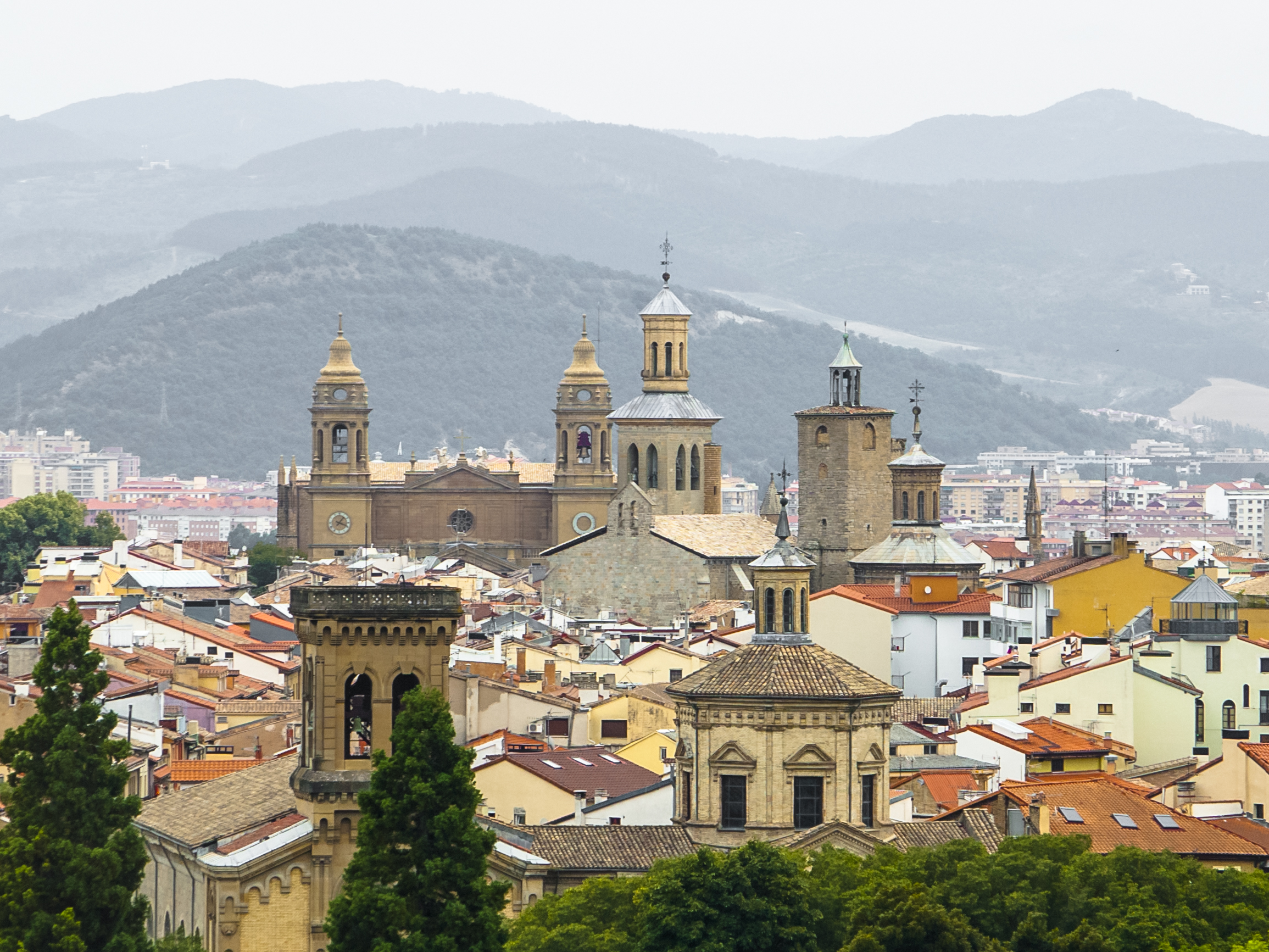
Pamplona is one of the Camino’s most resonant urban stops. Pilgrims still pass through the heart of the city, and the route remains woven into Pamplona’s identity. The old town reflects the city’s medieval past, formed from the boroughs of Navarrería, San Cernin and San Nicolás, with City Hall at the center of that historic union.
For religious groups, one of the key visits is the Cathedral of Santa María la Real. The current Gothic cathedral rose after the collapse of the earlier Romanesque structure, and its cloister is widely regarded as one of the great Gothic spaces in Europe. It is one of the city’s defining religious landmarks and a natural anchor for faith-based touring in Pamplona.
Also on many group itineraries is the Church of San Lorenzo and the Chapel of San Fermín, where an effigy of the city’s patron saint is kept. The church remains central to the religious side of the San Fermín tradition and gives groups a more devotional counterpoint to the festival imagery most outsiders already know.
Another strength of Pamplona is that the pilgrimage experience is not confined to one monument. It is part of the wider urban landscape. Groups can move through the old streets, city walls and gateways with a strong sense that the Camino is not just remembered here, but still actively lived. Official tourism materials also highlight the city’s preserved Renaissance walls, now among Pamplona’s defining historic features.
Pamplona has long served pilgrims, and that hospitality still shapes the city. While individual hostel counts and capacities change over time, groups will still find plenty of opportunities to encounter pilgrims, hear their stories and experience the social side of the route.
Pamplona’s San Fermín Festival
Pamplona is known worldwide for the San Fermín Festival and the Running of the Bulls, but for group planners it is worth understanding that San Fermín is both a civic spectacle and a religious tradition tied to the city’s devotion to its patron saint. Spain’s official tourism site notes that the festival runs from July 6 to July 14 and fills the city with processions, music and public celebration in addition to the famous bull runs.
Groups interested in that part of Pamplona’s identity can visit Estafeta Street, one of the best-known stretches of the bull-run route and also a popular street for pintxos and local shops. City and regional tourism materials also point travelers toward Plaza del Castillo, a central square long associated with local life, terraces and historic cafés, including Café Iruña, a well-known Hemingway haunt.
Pamplona’s food culture adds another easy point of connection for groups. In Navarre, tapas are better known as pintxos, and official tourism guidance highlights Calle Estafeta, Calle San Nicolás, Plaza del Castillo and the surrounding streets as classic places to sample them. For itineraries that mix pilgrimage, history and fellowship, that kind of informal evening gathering can be part of the destination’s appeal.
More Than a Stop on the Way
Pamplona also works well as a base for broader touring in Navarre. The regional tourism board promotes the surrounding area for Camino-linked landscapes, viewpoints, villages and countryside experiences, giving group leaders options beyond the city itself.
Friendly people, uplifting pilgrim encounters, historic churches, old streets, good food and one of Europe’s great pilgrimage traditions all await visitors in Pamplona. Sometimes a trip is more than a physical journey. It can also become a journey of personal and spiritual growth. A visit to Pamplona, especially in the context of the Camino de Santiago, can be both.
—By Don Heimburger
Travel writer Don Heimburger frequently travels to Europe on behalf of companies, organizations and his own travel publications to write about, research and photograph destinations. He earned a degree in journalism from the University of Illinois and has written 12 books.
FAQ
Why is Pamplona important on the Camino de Santiago?
Pamplona is one of the major urban stops on the Camino Francés and still presents the pilgrimage as a living part of the city’s identity. Its old town, cathedral and Camino interpretation center make it especially useful for religious tour groups.
What religious sites should groups prioritize in Pamplona?
The Cathedral of Santa María la Real and the Church of San Lorenzo with the Chapel of San Fermín are two of the most important stops. Together, they give groups a strong sense of Pamplona’s devotional life and religious heritage.
Is Pamplona only worth visiting during San Fermín?
No. San Fermín is the city’s most famous event, but Pamplona is a meaningful destination throughout the year because of its Camino history, sacred sites, city walls and walkable old town.
Can groups experience the Camino without walking the full route?
Yes. Many groups build a shorter itinerary around selected Camino stops rather than attempting the entire route. Pamplona works well for that kind of experience because the pilgrimage is visible in the city itself.
What else can groups do in Pamplona besides visit churches?
Groups can explore the old town, city walls, Plaza del Castillo, Estafeta Street and the local pintxos scene. Those elements help round out a faith-based itinerary with history, culture and fellowship.