As the famous highway turns 100 this year, road-trippers will find a rich tapestry of Americana, including captivating landmarks, tasty eats and neon-lit motels
By Randy Mink, Senior Editor
For scores of communities and the thousands of businesses it once served, Route 66 became the Main Street of America during the halcyon days of automobile travel in the 1930s, ’40s and ’50s. To celebrate the storied highway’s centennial in 2026, motorists yearning for yesteryear will be buckling up for trips that explore remaining segments of the affectionately named Mother Road, which spanned more than 2,400 miles between Chicago and Santa Monica, California.
In New Mexico, travelers eyed high-desert mesas, mountain peaks and earth-toned adobe homes in wide-open, rust-colored landscapes right out of Hollywood Westerns. They stopped at trading posts and curio shops selling pottery, jewelry, and intricately woven rugs and blankets made by Indian artisans. Flickering neon signs, like beacons in the night, directed wayfarers to gas stations, quirky motels, and mom-and-pop diners dishing up burgers and milkshakes…in an age before everything became generic.
New Mexico claimed 500+ miles of Route 66, and today six original stretches are easily accessible from Interstates 40 and 25. My recent trip on the western side of the state started in Albuquerque and took me up to Gallup, a town near the Arizona border.
Albuquerque boasts the nation’s longest continuous urban stretch of Route 66. Known as Central Avenue as it passes through New Mexico’s largest city, the 18-mile commercial corridor is sprinkled with vintage neon motel signs. Some of them sparkle next to thriving businesses, while others stand by vacant lots, looking forlorn and at risk of fading into history.
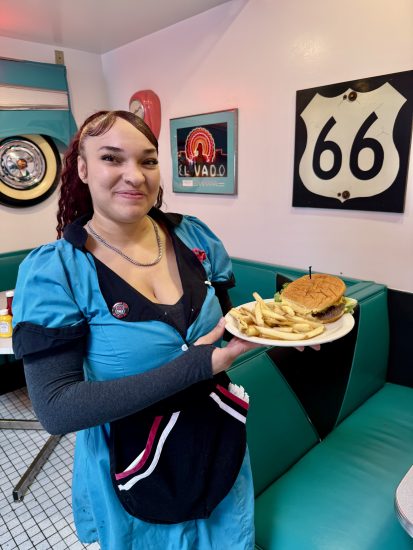
Lunch at 66 Diner, a 1950s-themed spot on Central, was the perfect way to start my retro-style Albuquerque visit. Route 66 shields, Coca-Cola signs, automotive-themed decor, a collection of Pez dispensers, and images of Elvis Presley and Marilyn Monroe set the tone. If you like the color turquoise, the turquoise-upholstered booths and counter stools, serviced by turquoise-clad waitresses, will be a welcome sight. I ordered a green chile cheeseburger, a must-try in New Mexico, and saved room for coconut cream pie.
Necklace of Neon Bling
In a project to revitalize the streetscapes and honors its roots, the City of Albuquerque is providing grants to support the restoration and construction of 14 neon signs along the Route 66 corridor. Organizations such as Friends of the Orphan Signs, working with independent artists and sign makers, have stepped in as well.
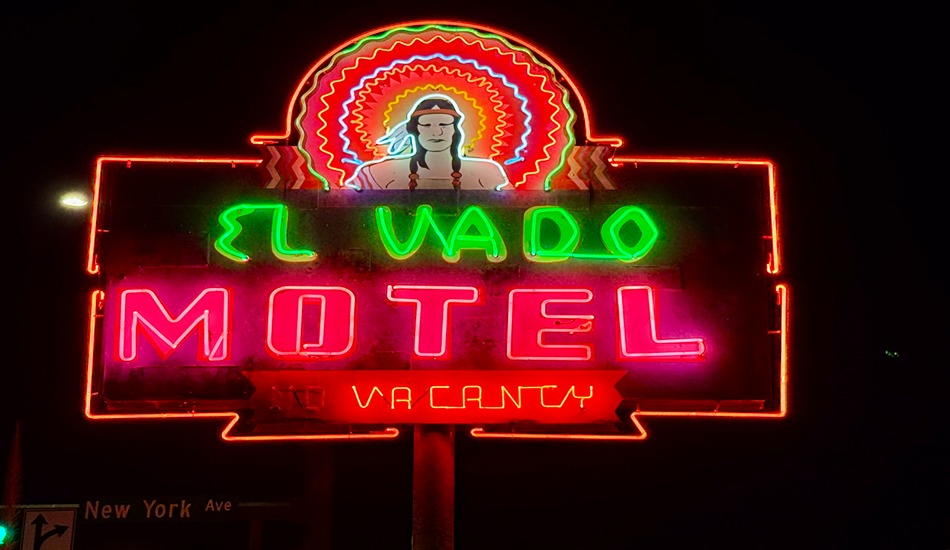
At one point I got out of the car to take pictures of three motel signs within easy walking distance of each other, starting at the El Vado Motel, which reopened in 2018 after serving motorists from 1937 until 2005. The impressive neon display shows an American Indian surrounded by a multicolored sunburst. Today’s 22-room boutique motel, a vision in white adobe, includes retail spaces, a food court and a cozy taproom with a blazing fireplace. Outside, folks crowd around tables in the motor court’s former parking lot turned shaded patio. Guest rooms feature mid-century furniture, vigas (log rafters typical of Southwestern architecture) and framed black-and-white photographs from Albuquerque’s Route 66 glory days.
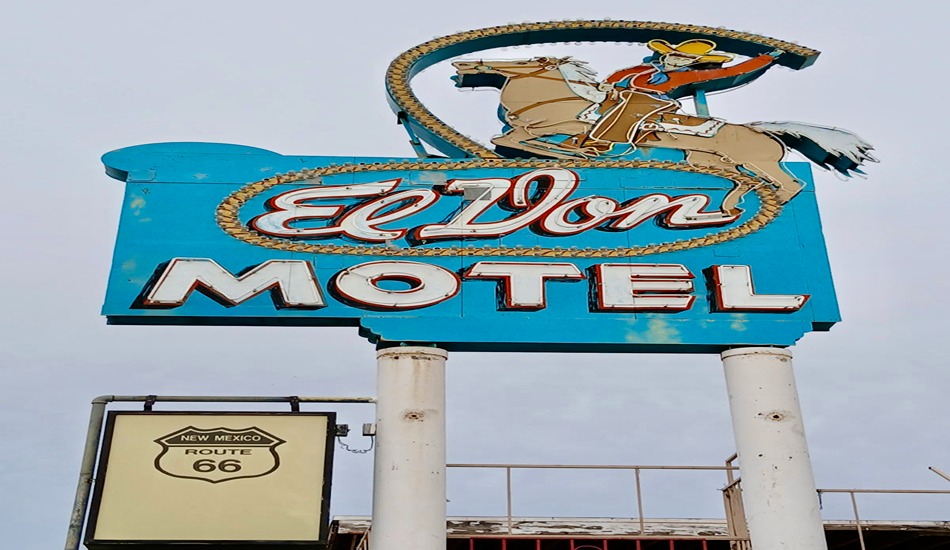
Just down the sidewalk from the El Vado, a great sign with sharp geometric lines and skewed shapes, looms over the Monterey Motel, dating from 1946. I particularly like the neon sign at the nearby El Don Motel, which opened its doors in 1950 and is now closed for redevelopment. It depicts a horseback-riding, lariat-twirling cowboy hovering over a turquoise backdrop.
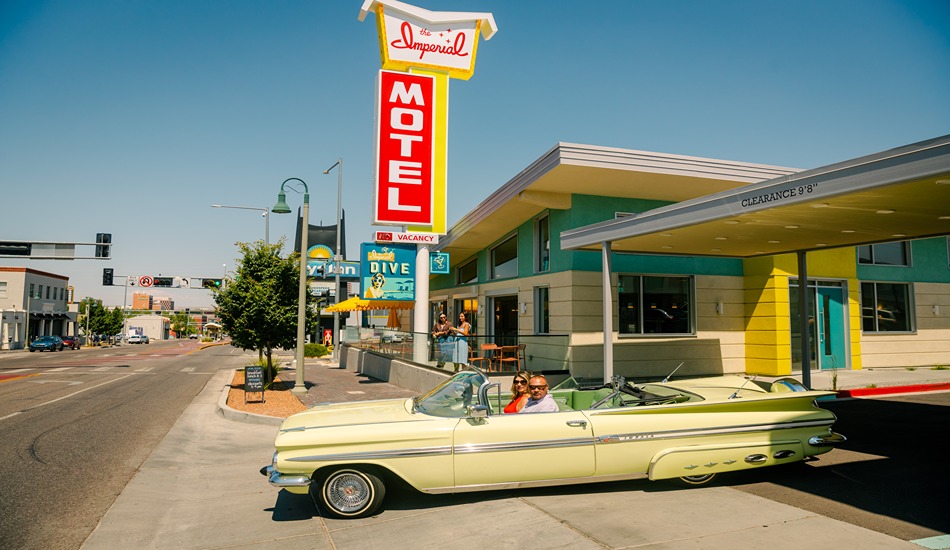
Closer to downtown, the Imperial Inn also sports an original neon attention-grabber. The newly renovated 1960s motel has a cocktail lounge and a food hall with eateries featuring Southwest and Latin flavors.
In the heart of downtown, a dazzling neon sign graces the KiMo Theatre, the most iconic sight on Route 66 in Albuquerque. Built as a grand picture palace in 1927 and now a performing arts center, the KiMo blends Southwest Native American motifs with Art Deco elements in a unique architectural style called Pueblo Deco. Across the street is Lindy’s Diner, one of the longest continually operating restaurants on the Mother Road.
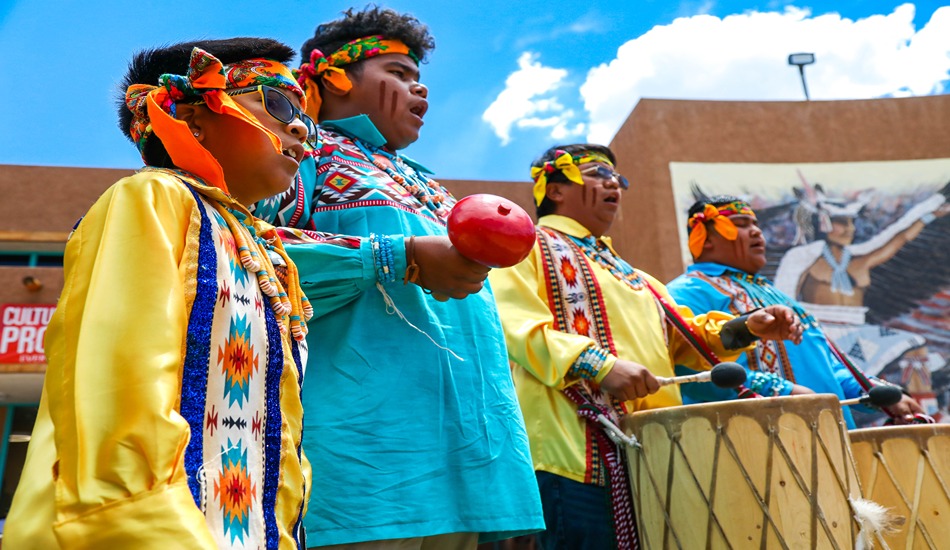
Indian Pueblo Cultural Center, Albuquerque. (Photo credit: Jeremy Felipe/Indian Pueblo Cultural Center)
Albuquerque Sightseeing Highlights
Albuquerque abounds with first-rate museums. High on the must-do list is the Indian Pueblo Cultural Center, which showcases the history and artistry of New Mexico’s 19 pueblos (tribal communities). See live dance performances in the courtyard, shop for handicrafts in the store and savor Indigenous-inspired cuisine at the on-site restaurant. For lunch I had blue corn enchiladas with red chile and ground beef. My companions opted for the green chile pork stew and free-range elk chili.
In Old Town Albuquerque, my favorite neighborhood, we spent an afternoon drifting among the shops and galleries in adobe buildings clustered around a plaza dominated by San Felipe de Neri Church, which dates back to 1793. Besides colorful crafts from Mexico and Indian pueblos, you’ll find ristras (hanging strands of dried red chile peppers), bleached cow skulls and other merchandise that suggests the Southwest. For a sweet treat, try the toffee or brittle flavored with pinon pine nuts. One store boasts the largest selection of hot air balloon-related items in the world, a nod to October’s Albuquerque International Balloon Fiesta and the city’s reputation as a ballooning center.
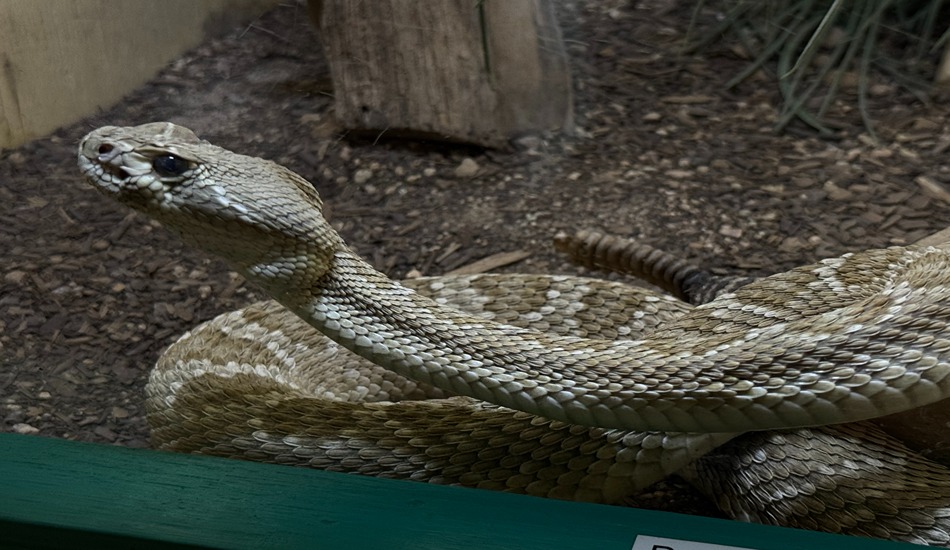
American International Rattlesnake Museum. (Randy Mink Photo)
The American International Rattlesnake Museum, an Old Town treasure within a few hundred yards of Central Avenue, typifies the kind of quirky roadside attractions that enthralled Route 66 travelers. Opened in 1995, it claims the largest collection of rattlesnake species in the world. Behind glass are about 45 live snakes representing 31 species, most of them gathered by owner Bob Myers. But the museum is more than rattlers and other reptiles behind glass—it’s crammed with exhibits and videos on everything related to snake culture. For example, you’ll see displays of vanity license plates and beer bottles emblazoned with snake names, a loose-leaf notebook with cartoons featuring snakes and a state-by-state list of towns named after snakes or reptiles. Posters portray movies involving slithering serpents of all kinds. And there’s the 24-question Rattlesnake Trivia Quiz. This place is so fun and so educational.
Also in Old Town is the excellent Albuquerque Museum, which tells the city’s story from Spanish colonial times onward and has a top collection of Southwestern art. At the Route 66 exhibit you can send an electronic Mother Road postcard.
On the far west side of Albuquerque, the new West Central Route 66 Visitor Center is a focal point of centennial events, including concerts. The Centennial Roots photography exhibition, running through October 2026, celebrates the cultural landscapes along Route 66 in New Mexico.
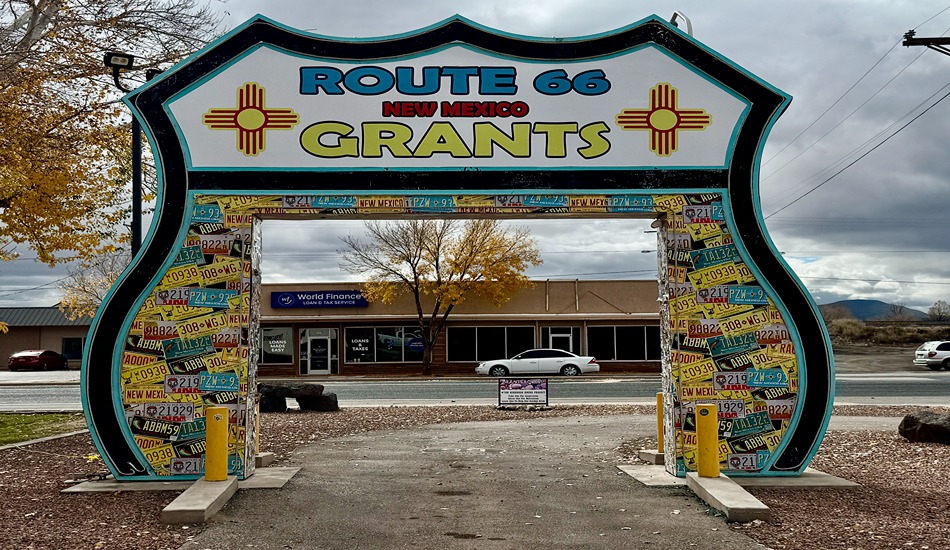
The drive-thru arch in Grants is one of New Mexico’s great Route 66 photo ops. (Randy Mink Photo)
Get Your Kicks in Grants and Gallup, New Mexico
In Grants, a small town 75 miles west of Albuquerque, I made a beeline to the Route 66 Neon Drive-Thru, an arch shaped like a Route 66 sign, for a classic photo op. It’s next to the Grants Rocks Kindness Project, a public art installation where locals and visitors leave rocks painted with positives messages for people to take. Bring your appetite to Rosie’s Cafe, a family-owned Mexican diner where I enjoyed a hearty breakfast burrito.
Gallup, a town of 20,000 located 60 miles west of Grants, abounds with stores selling high-quality Indian arts and crafts, especially those of Navajo and Zuni Pueblo artisans. Called trading posts, these shops deal in silver-and-turquoise jewelry, pottery, textiles, cow and buffalo hides, and other wares marketed by tribes in the Southwest. Most prominent and right on Route 66 is Richardson’s Trading Post, a hub for Native American art and jewelry since 1913. Gallup has been called the Indian Capital of the World.
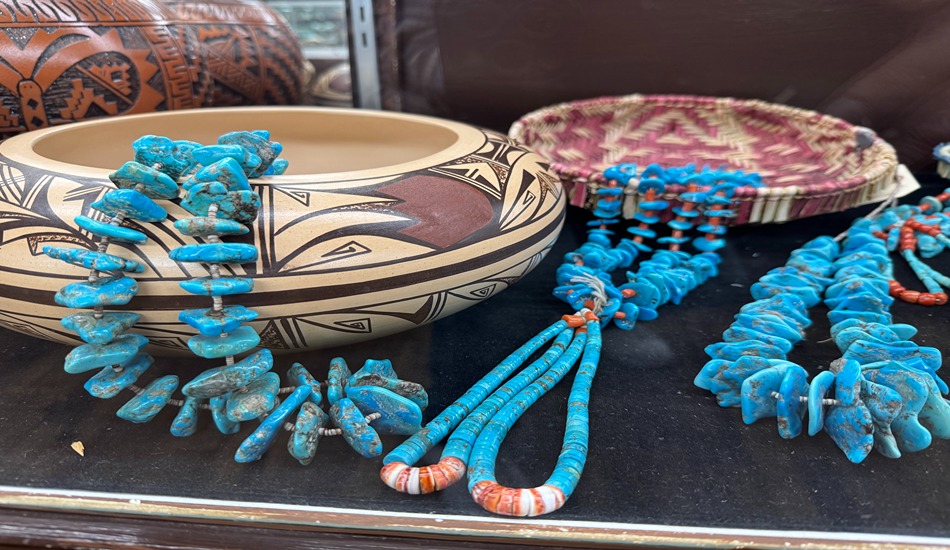
Richardson’s Trading Post in Gallup deals in fine jewelry and handicrafts made by Native American tribal members in the area. (Randy Mink Photo)
Gallup also has retro neon signs and an enviable collection of museum-quality murals adorning commercial buildings. Downtown’s murals, which you can see in a 30-minute walk-around, depict subjects as diverse as Route 66, Marilyn Monroe, and Native American and Hispanic heritage. One of these wall paintings honors the Navajo Code Talkers, the U.S. Marines in World War II who transmitted secret messages using a complex Navajo language-based code. The Gallup Cultural Center, a local history museum on Old Route 66, chronicles the soldiers’ exploits with a movie and major exhibit.
One of the best neon signs in Gallup advertises “Mexican American Food” at Jerry’s Cafe, its crooked yellow arrow aimed at the building. Two others lure Route 66 travelers to historic Hotel El Rancho, once home to movie stars working on location.
My Route 66 travels in New Mexico ended on a high note with breakfast at Glenn’s Bakery, where I had the best apple fritter ever. As a fritter aficionado since college days and fan of small-town bakeries, I was in heaven savoring the crispy crust and moist dough bursting with bits of apple. A large aquarium dominates the nine-table seating area. Blue starbursts accent the Route 66 neon sign outside. I left Glenn’s with a bagful of donuts, cookies and sugar-dusted fruit turnovers for the road.
Travel smarter, plan better – Get top destinations, itineraries, and industry trends by subscribing to Leisure Group Travel now.
Lead Photo – Imperial Inn, a restored Route 66 motel on Central Avenue in Albuquerque. (Photo credit: New Mexico Tourism Department)