
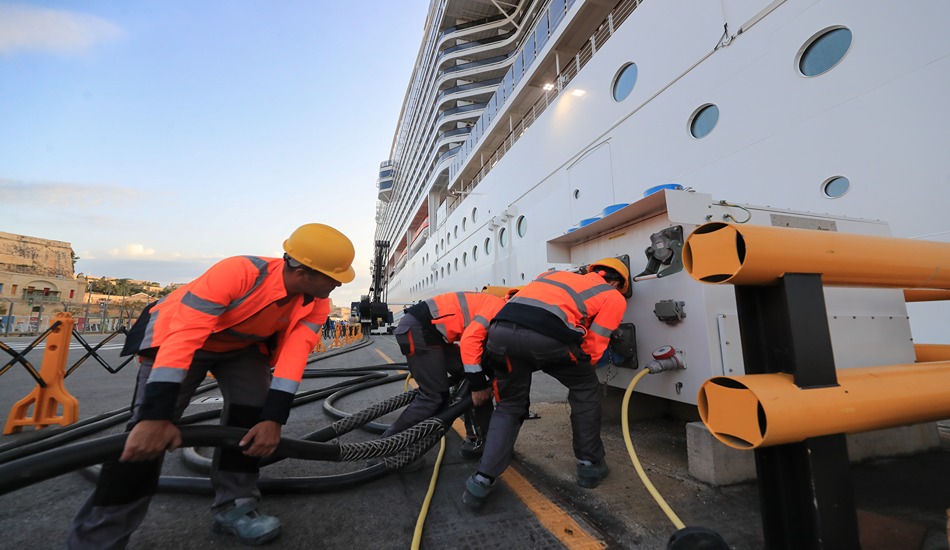
Cruise lines are employing environmental technologies to promote energy efficiency and marine conservation. MSC Cruises is one company leading the way.
The cruise industry continues to focus sustainability efforts in diverse ways.
In late 2021, Cruise Lines International Association (CLIA) announced that its member cruise lines pledged to achieve net-zero emissions by 2050. This included employing a range of environmental practices and technologies to advance sustainability initiatives, reducing emissions at sea and when ships were docked, and utilizing liquified natural gas (LNG) to operate ships.
CLIA’s annual Environmental Technologies and Practices (ETP) Report, released on September 10, 2025, provided details, highlighting environmental technologies being used by member cruise lines. Testing and piloting biofuels, increasing the use of lower-emission fuels, maximizing energy-efficiency measures and investing in fuel-flexible engines contribute to progress being made.
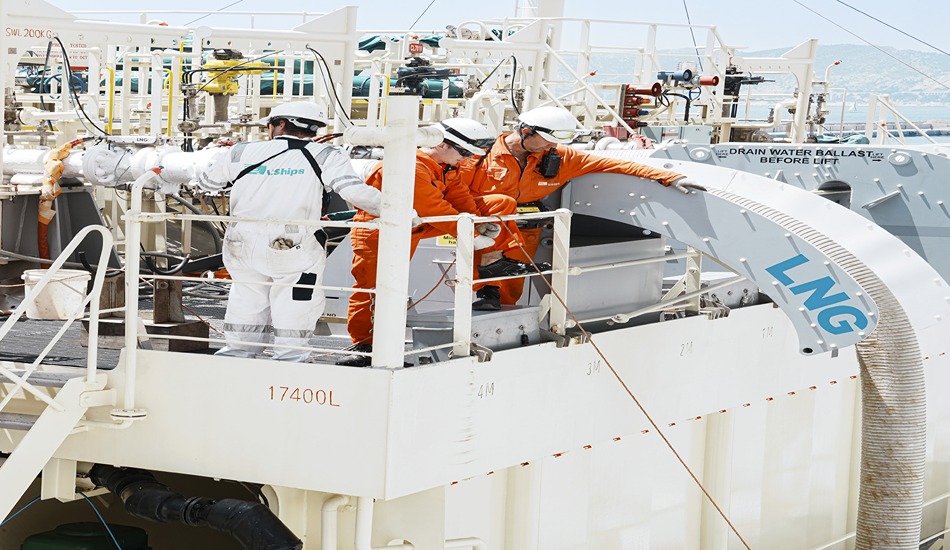
Sustainability initiatives include using liquified natural gas (LNG) to fuel ships.
Budd Darr, President and CEO of CLIA said, “Cruise lines are early adapters and innovators of maritime technology – examples include advanced wastewater systems, onshore power supply, air lubrication systems, and the newest generation of dual-fuel engines – from which other sectors of maritime also benefit.”
He added, “Cruise lines are investing tens of billions of dollars to build the fleet of the future.”
CLIA’s Report on Environmental Technologies
The report covers key areas, including:
- Pursuit of Net-Zero Emissions and Operational Sustainability – Cruise lines continue their use of alternatives to heavy fuel oil. Also onshore power supply connectivity, which allows ships to turn off their engines while in port
- Shipboard Water Production – State-of-the- art systems enable ships to produce the majority of their water needs onboard.
- Waste Management – Cruise lines are beginning to deploy a new generation of shipboard waste management technologies, recycling or repurposing nearly all the waste generated onboard ships.
- Wastewater Treatment – Cruise lines are utilizing advanced wastewater treatment systems and are committed to not releasing untreated sewage anywhere in the world during normal operations.
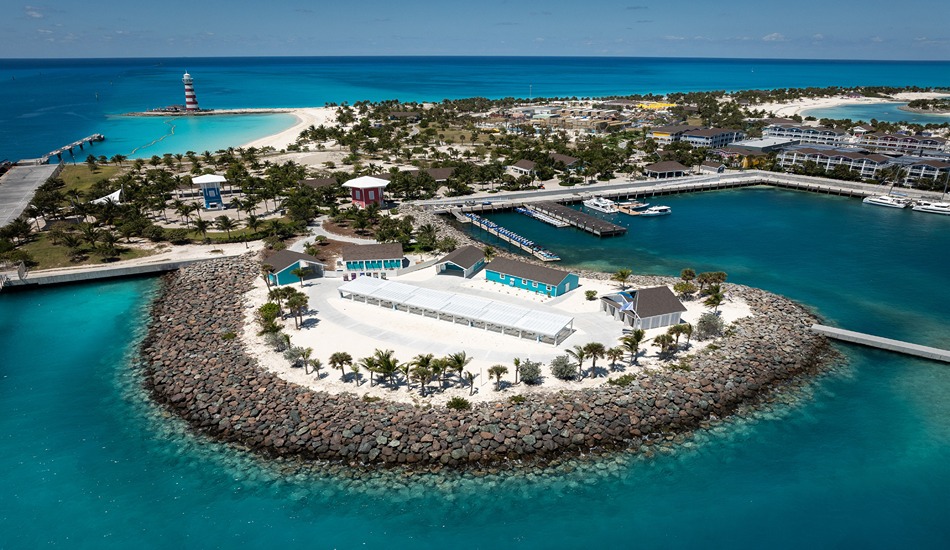
MSC Cruises’ private island, Ocean Cay MSC Marine Reserve, hosts the Marine Conservation Center.
MSC Foundation is a nonprofit organization that is part of the MSC Group, which owns MSC Cruises and Explora Journeys. It promotes marine conservation, humanitarian efforts and sustainable development worldwide.
One of the foundation’s projects is the Marine Conservation Center on the cruise line’s private island in the Bahamas—Ocean Cay MSC Marine Reserve.
In December 2015, MSC Cruises Executive Chairman Pierfrancesco Vago and Bahamian Prime Minister Perry Christie signed a 100-year lease agreement for Ocean Cay MSC Marine Reserve. It opened in late 2019 but was forced to close shortly afterwards due to Covid-19 pandemic.
The MSC Seashore was named and christened on the island on November 18, 2021. On that afternoon MSC Cruises held a groundbreaking ceremony for the Marine Conservation Center.
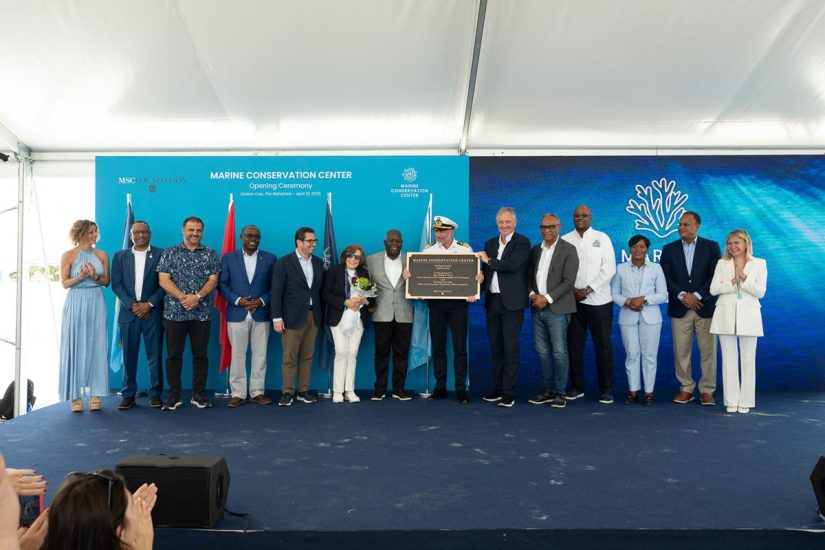
Official Opening of the Marine Conservation Center
On the celebratory christening sailing of the MSC World America in April 2025, the new ship docked at Ocean Cay and was there for two days. At that time the Marine Conservation Center opened with a ribbon-cutting ceremony. The state-of-the-art center features a fully equipped Bio Lab, a land-based coral nursery with a multifunctional lecture hall, and a welcome hub.
Since opening the Marine Conservation Center, the MSC Foundation has established a strong on-the-ground presence, advancing coral restoration, delivering hands-on training for over 20 marine science students, and engaging more than 17,000 visitors in ocean education, all while reinforcing its long-term commitment to The Bahamas’ globally significant marine ecosystems. In addition, more than 600 corals have been grown in the underwater nursery and over 250 have been successfully planted onto the surrounding reef, demonstrating resilience during the peak summer temperatures.
In February 2026, the MSC Foundation and Perry Institute for Marine Science (PIMS) further advanced their partnership through a coral species exchange at Ocean Cay. This involved boosting the nursery diversity and reef resilience.
In addition, the MSC Foundation has deepened its collaboration with the University of the Bahamas, supporting the development of a dedicated marine science laboratory to bolster national research capacity and teaching.
Travel smarter, plan better – Get top destinations, itineraries, and industry trends by subscribing to Leisure Group Travel for FREE.
By Cindy Bertram
Lead Photo – Connectivity to an onshore power supply allows ships to turn off their engines while in port.
Photos courtesy of MSC Cruises