A Brother Klaus pilgrimage in Switzerland offers more than a visit to one devotional site. It connects travelers to the life of Nicholas of Flüe, known as Brother Klaus, while also opening the door to some of Switzerland’s most important Reformation landmarks. For faith-based groups, the route can combine pilgrimage, church history, mountain scenery, and quiet reflection in a compact and highly accessible country.
Brother Klaus, who lived from 1417 to 1487, is remembered in Switzerland as a mystic, peacemaker, and hermit. Official Swiss tourism materials describe him as Switzerland’s national saint, while heritage sources note that pilgrimages to Sachseln and the Ranft gorge began soon after his death. He was beatified in 1649 and canonized in 1947, and his legacy still draws pilgrims and visitors to central Switzerland.
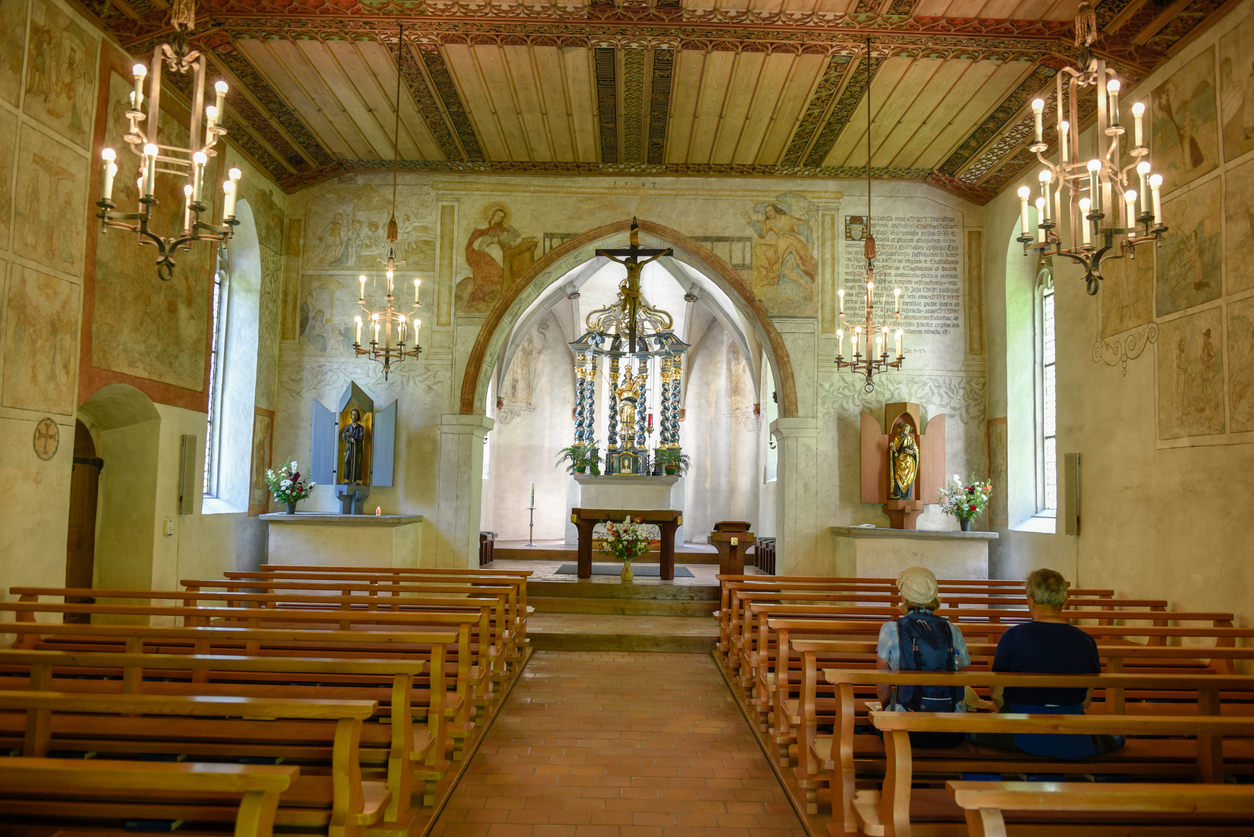
The heart of a Brother Klaus pilgrimage is the area around Sachseln, Flüeli-Ranft, and the Ranft gorge in canton Obwalden. This compact sacred landscape includes his birthplace, the home where he lived with his wife Dorothee Wyss and their children, the hermit’s cell in the Ranft ravine, and his grave in the parish and pilgrimage church at Sachseln. Because these sites lie so close together, they lend themselves especially well to a contemplative small-group or motorcoach itinerary.
Flüeli-Ranft today remains the best base for understanding Brother Klaus in context. Switzerland Tourism highlights it as the place where he first lived as a farmer and councilman before spending the last 19 years of his life as a hermit and spiritual adviser. Obwalden Tourism also notes that guided tours are available for groups and that the principal remembrance sites are open to the public, making the region especially practical for organized pilgrimage travel.
Travelers can also follow a meditative walking route between Flüeli-Ranft and Sachseln. Official pilgrimage materials describe the Path of Visions as a route that begins near Brother Klaus’s birthplace and ends at his grave in the parish church. For groups that want more than a museum visit, this walk adds a reflective dimension and helps turn the visit into a true pilgrimage rather than a simple sightseeing stop.
Brother Klaus’s importance in Swiss memory extends beyond devotional tradition. Swiss heritage materials note that he was revered during his lifetime as a trusted counselor whose advice was sought by peasants, nobles, and political leaders alike. He is particularly associated with the crisis of 1481, when his counsel helped preserve unity within the Swiss Confederation. That long-standing reputation as a mediator helps explain why his pilgrimage sites still resonate with visitors from many backgrounds, not only Catholics.
The route also connects naturally with the wider Way of St. James. The pilgrimage region around Sachseln and Flüeli-Ranft sits on Switzerland’s ViaJacobi, the Swiss section of the historic St. James route. Swiss mobility sources describe ViaJacobi as a path running from Lake Constance to Geneva as part of the wider European Jakobsweg, making Brother Klaus country a meaningful stop for travelers interested in larger pilgrimage networks across Europe.
For groups that want to broaden the tour beyond Brother Klaus, Geneva offers a strong second chapter focused on the Swiss Reformation. St. Peter’s Cathedral remains one of the city’s defining Protestant landmarks and identifies itself as the historic cradle of the Reformation led by Jean Calvin in the 16th century. This makes Geneva a natural complement to central Switzerland, especially for Protestant groups interested in pairing pilgrimage spirituality with Reformation history.
The International Museum of the Reformation strengthens that Geneva experience. The museum describes itself as the only secular museum devoted to the history of both the Reformation and Protestantism, and its official walking itinerary links the museum with St. Peter’s Cathedral, the Calvin Auditorium at Collège Calvin, and the Reformers’ Wall. For planners, that creates an easy, ready-made framework for a half-day or full-day Geneva extension.
The Reformers’ Wall, in Parc des Bastions, remains one of Geneva’s best-known visual landmarks from the Protestant past. Geneva Tourism notes that the monument features John Calvin, William Farel, Theodore Beza, and John Knox, with the city’s motto, Post Tenebras Lux, engraved in the wall. For religious groups, it provides a memorable final stop and a strong visual summary of Geneva’s role in the Reformation.
Switzerland may not be the first destination many planners consider for a faith-based European itinerary, but it rewards travelers with unusual depth. A Brother Klaus pilgrimage in Switzerland can offer sacred quiet, mountain beauty, historic churches, and meaningful walking routes, while a Geneva extension adds some of the most important Reformation sites in Europe. Together, they create a distinctive journey that honors both pilgrimage tradition and Protestant history.