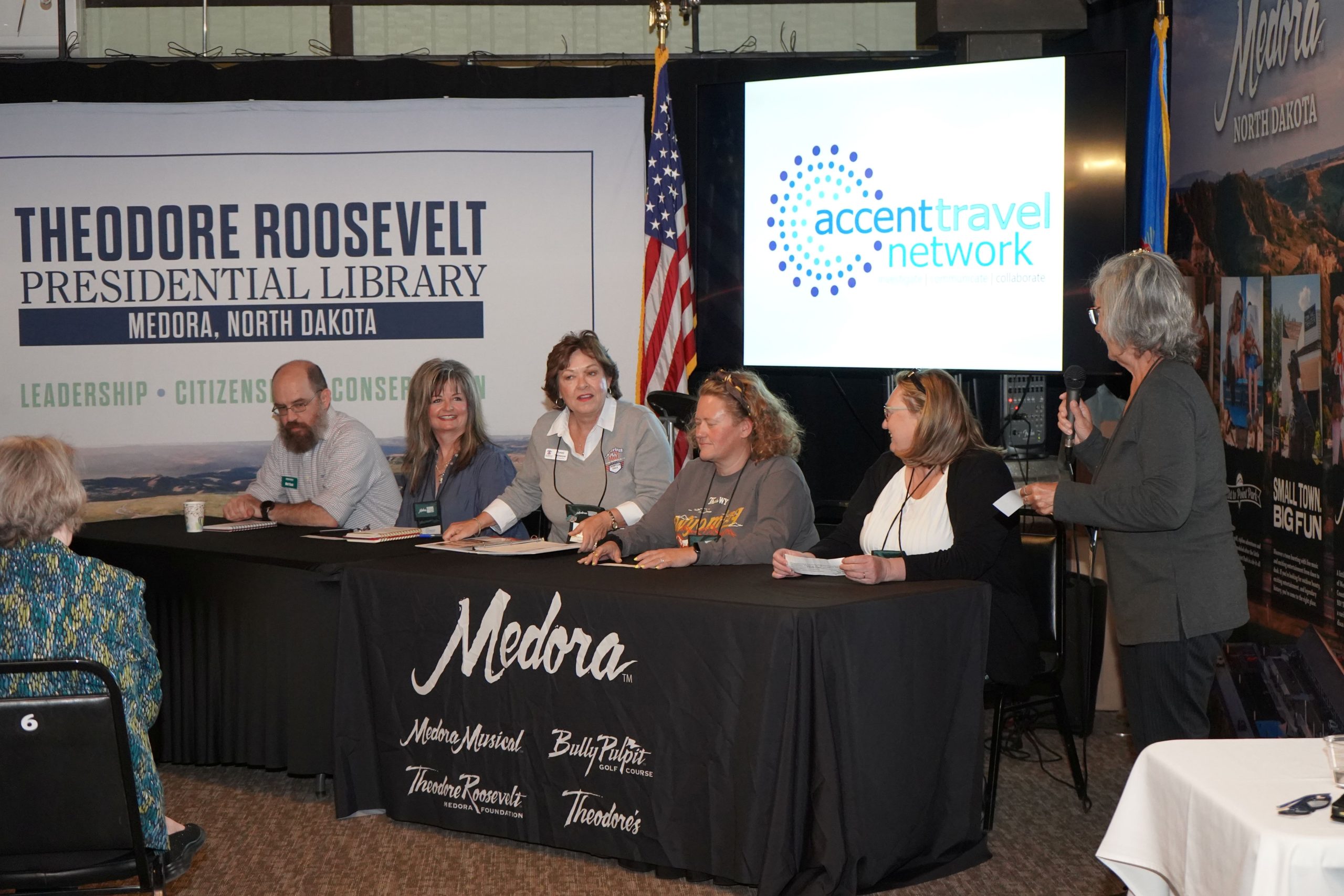
Tour operators, DMOs, hotels, and attractions converged at the Accent West Travel Conference with a shared agenda: fix what’s broken, and grow what’s working.
At the 2026 edition of Accent West, hosted by the Medora Foundation in North Dakota, delegates broke into small groups to tackle the issues that don’t often get airtime at larger industry events. What came back to the room was candid, actionable, and pointed in one clear direction: the group travel industry has work to do, and the players who do it together will be the ones who thrive.
The themes that emerged cut across visibility, data, shifting traveler expectations, economic headwinds, and a persistent disconnect between tour operators and the destination partners who want to help them most.
The Visibility Problem: DMOs Are Flying Blind
One of the most pressing issues raised was a fundamental gap in communication: tour operators are arriving at destinations without telling the local DMO they’re coming. For a DMO, this is more than a courtesy issue, it’s existential.
“Our funding, our ability to come to trade shows and do marketing, depends on being able to show our tourism office that we’re spending money wisely. If I don’t know who’s coming to my state and I don’t know where money is being injected, they’ll find other ways to spend tourism resources.”
The problem is compounded by hotel partners. Operators often have direct relationships with hotels and attractions, but those partners don’t pass group visit data to the state or local DMO. The main reason being competitive sensitivity. Once data is shared with a DMO, that information can become public record.
Related: 3rd Annual Accent West in Mesa Was a Huge Success
However, without reliable group visitor data, local DMO’s can’t justify its market investment, and an operator risks loses a valuable planning ally.
High hotel staff turnover makes this worse. New hotel contacts frequently don’t understand why tracking group tours matters, and that institutional knowledge disappears with every transition.
The fix isn’t complicated. Operators who proactively notify their DMO contacts when booking a destination create a low-effort, high-return relationship that opens doors to future collaborations.
Measuring What’s Working: The ROI Gap
A second major topic was attribution: how do you know if your marketing is actually driving group business? Participants acknowledged that this is a challenge without a clean solution, but one that demands attention as budgets tighten.
QR codes were raised as one practical tool for connecting advertising exposure to destination arrivals. But the broader point is that DMOs and operators alike need to get more disciplined about measurement. This is not just for internal reporting, but to make the case to tourism boards, state offices, and advertising partners that group travel delivers real economic return similar to meetings and sports.
The Economy Is a Variable, Not an Excuse
Northern tier destination participants acknowledged real headwinds that fall outside the industry’s control. Canadian group travel, historically a significant source of inbound business has softened, and the broader global perception of traveling to the United States has taken a hit.
The travel industry’s response to those headwinds matters. When international arrivals are soft, domestic group travel is a reliable counterbalance. The operators and DMOs who stay nimble by pivoting their programming, diversifying their source markets, and double down on the domestic group travel market will be far better positioned. The worst response to a soft market is to wait it out passively.
Join the conversation at Accent West 2027.
Smaller Groups Are Not a Consolation Prize
Perhaps the most significant mindset shift to emerge from the discussion was around group size. The industry has long measured success by the number of seats filled on a 55-passenger motorcoach. That benchmark is overdue for retirement.
“I think 25 passengers on a group tour is still success. We just need to change the mindset of what a successful group tour looks like.”
Smaller groups are not a symptom of decline — they’re a reflection of what today’s traveler actually wants. Participants noted a clear shift away from checklist tourism toward immersive, experiential travel. Travelers want to go deep, not wide. They want a Native American cultural experience in the West. They want a private dinner for 12 with a chef. They want the kind of personalized access that a large group simply can’t get.
The operators leaning into this shift by designing tighter, richer itineraries for smaller cohorts are finding that the experience quality goes up, and so does traveler satisfaction. For DMOs, smaller groups also mean more flexibility to offer exclusive access: early museum openings, private venue hours, and customized programming that larger groups can’t accommodate.
Don’t overlook a destination, and don’t overlook an experience, just because it doesn’t fit a pre-built mold. That creative flexibility is where the best group travel is happening right now.

DMO Websites: Put the Welcome Mat Back Out
A practical frustration surfaced around DMO websites: group tour information has quietly disappeared from most of them. Where once operators could find curated lists of group-friendly restaurants, hotels, and attractions, they now find content built for families, bachelorette parties, and weddings.
The ask from operators was simple: build a dedicated section for group tour planners. List restaurants that want groups. List hotels that want groups. List attractions that can handle groups — and flag the ones that cap at 15 people so nobody wastes time. A tour operator shouldn’t have to spend hours on a website to extract three usable contacts.
That said, participants also offered a counterpoint: don’t write off a destination just because the website is thin. Behind many of those sites is a knowledgeable sales rep who can unlock everything the website fails to surface. Pick up the phone.
The DMO Partnership Is the Competitive Advantage You’re Not Using
Across every topic, one thread ran consistently: operators who work closely with their DMO partners build better trips. DMOs offer one-stop planning, insider access, and customized programming that operators can’t replicate on their own — and that sometimes other group has already done.
“What I love about when you work with your DMO is there’s no other group that has done that dining or attraction experience. It is so unique.”
The DMO can get the museum to open early for a group visit at 8 a.m. The DMO knows the restaurant manager who will do the private dinner. The DMO has relationships that take operators years to build independently. And they want to use those relationships to help operators succeed.
The message from the floor was direct: reach out, especially in smaller markets. Ask for help designing the package. Lean on the DMO as a creative partner, not just a resource directory.
The conversations at Accent West made clear that the group travel industry isn’t short on solutions. Tour operators and destination partners are often working toward the same goal with the same traveler in mind, and the gap between them is largely communication. Close that gap, embrace the shift toward smaller and more experiential travel, and stay nimble when the market moves. That’s the formula that came out of the room.
Events like Accent West exist precisely to have these conversations. For operators and suppliers who want to stay current on the issues shaping group travel, a subscription to Leisure Group Travel keeps the dialogue going year-round.